

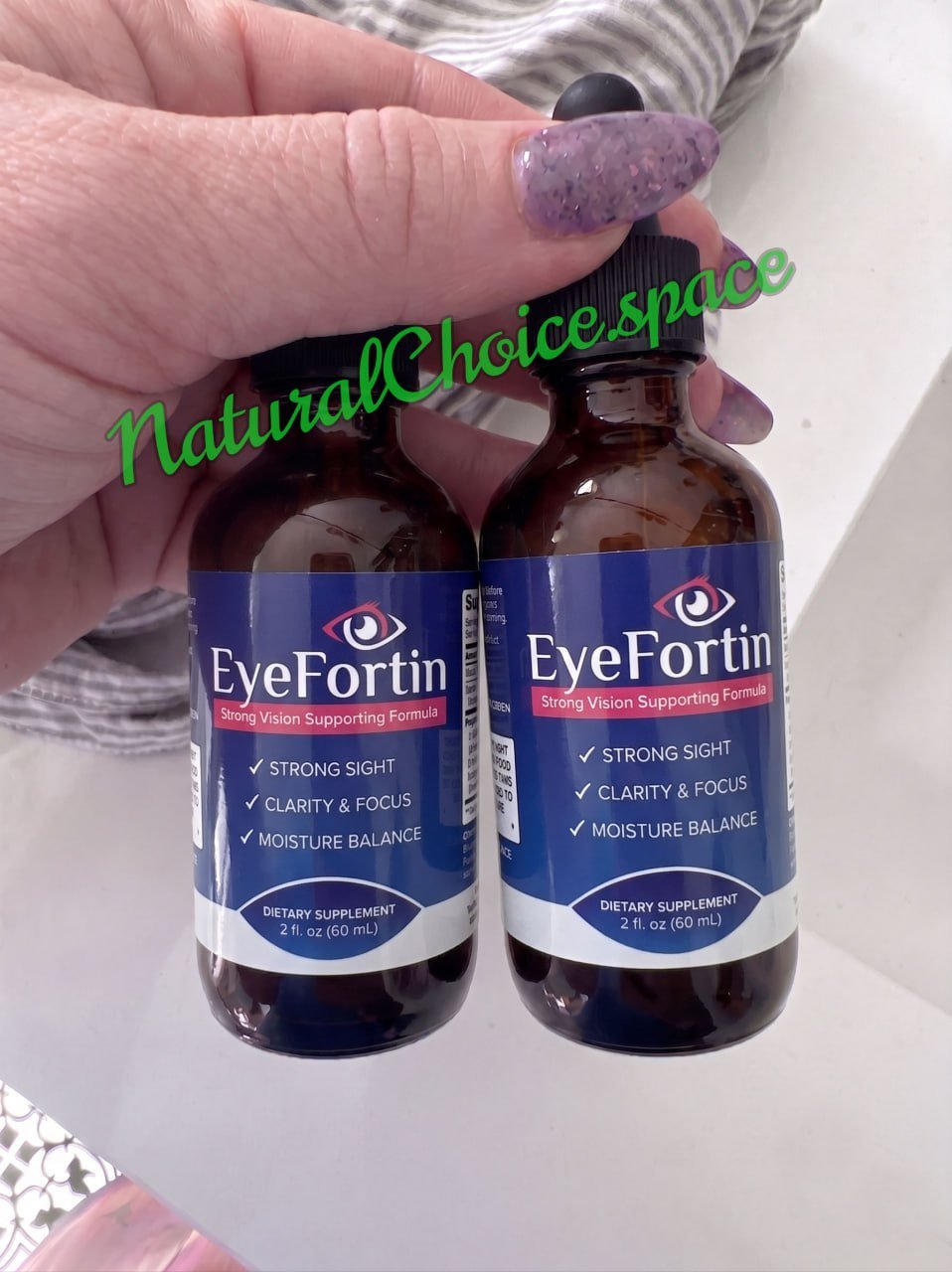
EyeFortin takes a noticeably different route from the typical vision supplement. Rather than building its identity almost entirely around carotenoids such as lutein and zeaxanthin, the liquid formula combines amino acids, botanical extracts, vitamin B3, taurine, Alpha GPC, and Huperzine A. Its central premise is that maintaining comfortable, functional vision involves not only the structures inside the eye but also the neurological pathways responsible for processing visual information.
This detailed EyeFortin review examines what the formula contains, how its ingredients may contribute to visual wellness, possible benefits, safety considerations, limitations, side effects, customer experiences, and the research relevant to its ingredients. The aim is to determine how EyeFortin fits into a sensible vision-support routine and where expectations should remain realistic. It is a nutritional supplement rather than a treatment for glaucoma, cataracts, macular degeneration, diabetic retinopathy, or other diagnosed eye diseases.
EyeFortin Overview: Key Facts Before Buying
The table below brings the most useful EyeFortin information into one place. It is especially helpful for readers who want to understand the formula quickly before looking more closely at the science and individual ingredients.
| EyeFortin Details | Information |
|---|---|
| Product Name | EyeFortin |
| Supplement Type | Liquid dietary supplement for eye and vision wellness |
| Main Focus | Supporting retinal nutrition, comfortable vision, neurological signaling, and general long-term eye wellness |
| Formula Format | Ultra-absorbable liquid dropper |
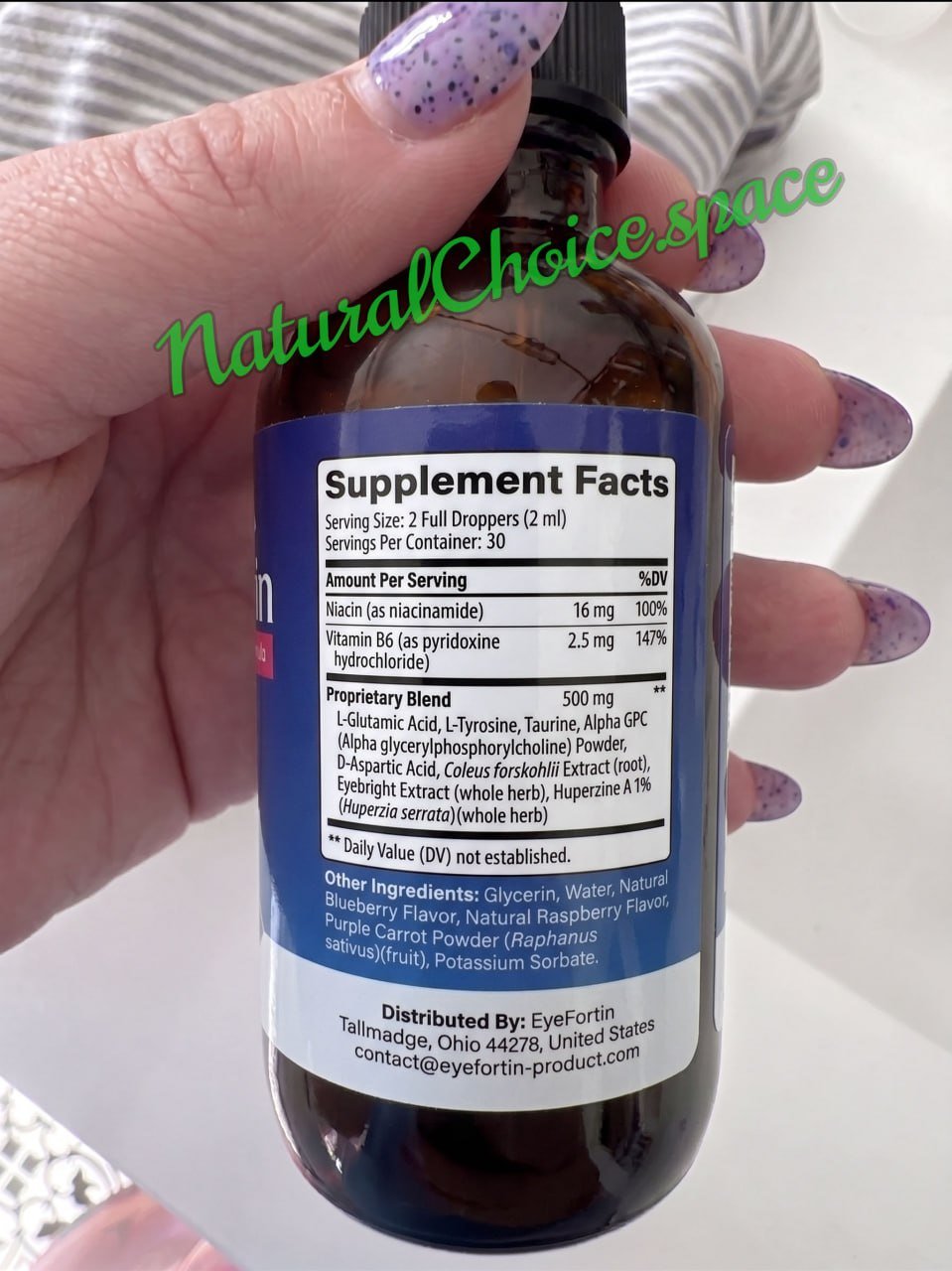
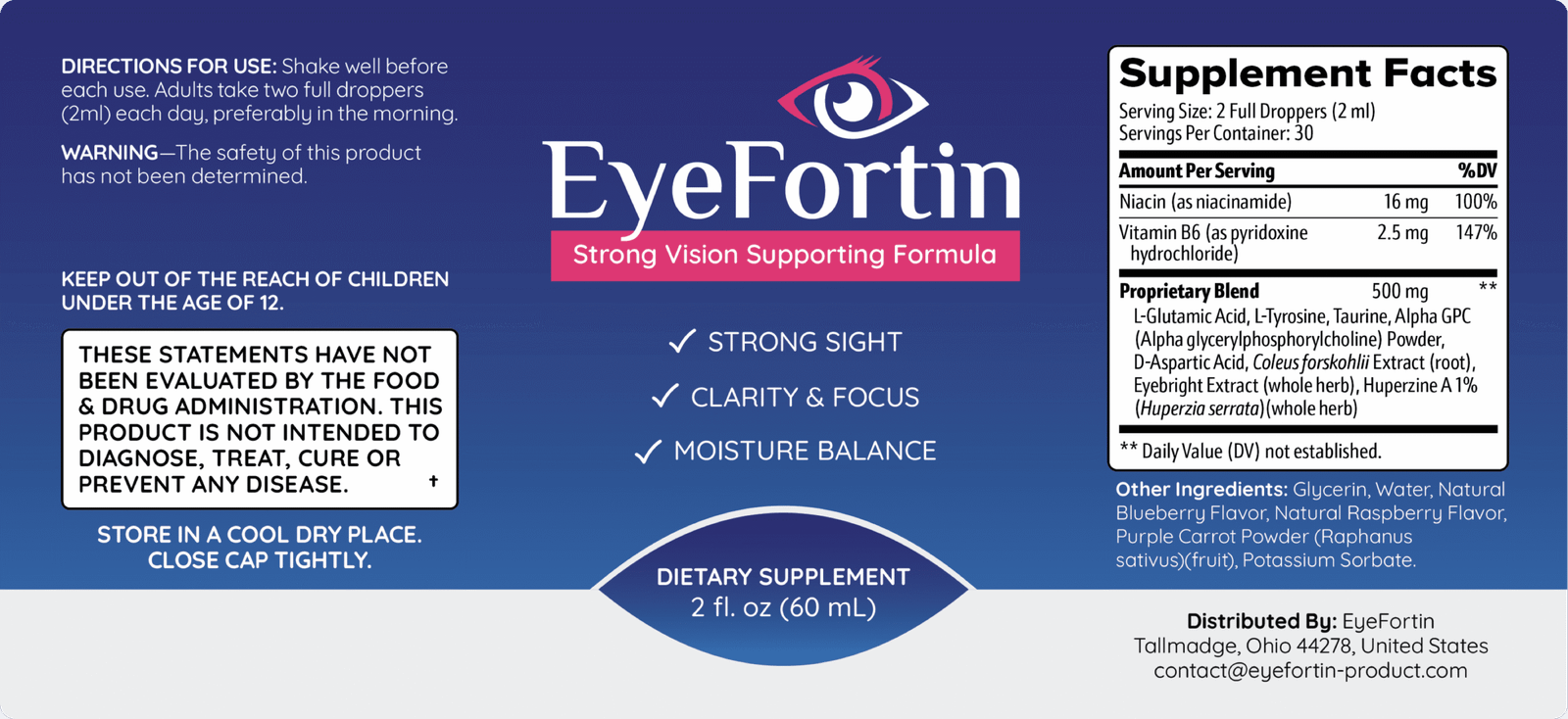
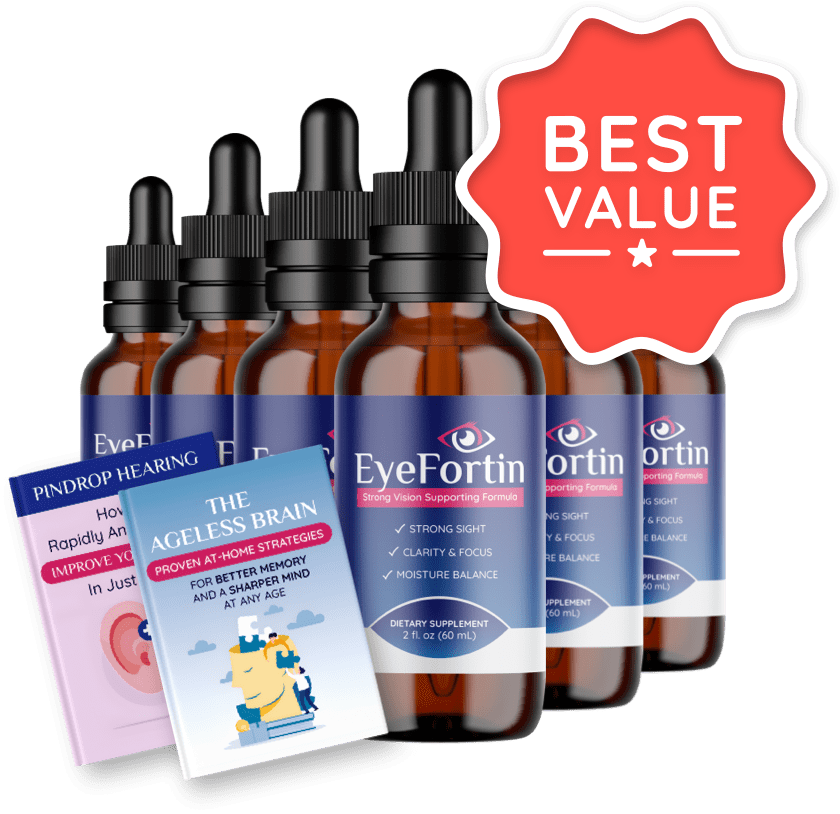
| Notable Ingredients | Niacin, L-Glutamic Acid, L-Tyrosine, Taurine, Alpha GPC, D-Aspartic Acid, Coleus Forskohlii Extract, Eyebright Extract, and Huperzine A |
| Suggested Intake | Two full droppers in the morning |
| How It Can Be Taken | Directly by mouth or mixed with coffee, tea, water, or another beverage |
| Manufacturing Claims | Marketed as made in the USA and produced according to GMP manufacturing standards |
| Formula Positioning | Natural ingredient-based vision-support formula |
| Refund Policy | 60-day money-back guarantee on qualifying purchases made through the designated official sales channel |
| Best Suited For | Adults seeking nutritional support for eye comfort, retinal health, and visual wellness |
| Official Website | ✅ Click Here |
What Is EyeFortin and What Makes Its Approach Different?
EyeFortin is a liquid dietary supplement created for adults interested in supporting healthy vision through nutrition. Its formula is based partly on the relationship between the eyes and the nervous system. Light entering the eye must ultimately be converted into electrical and chemical signals that can be processed by the brain. Consequently, retinal cells, neurotransmitters, healthy neuronal membranes, blood flow, nutritional status, and the integrity of visual pathways all contribute to normal visual function.
The product’s marketing places particular emphasis on glutamate receptors and eye-to-brain communication. Glutamate is an important neurotransmitter throughout the central nervous system and participates extensively in retinal signaling. That makes the underlying biological subject legitimate. What should not be assumed, however, is that EyeFortin has been clinically demonstrated to rebuild damaged glutamate receptors or restore impaired eyesight. Research into neurotransmission does not automatically prove the stronger promotional claims made about a commercial supplement.
Where EyeFortin becomes more interesting is in the way its ingredients overlap with several biological areas relevant to vision. Taurine, for example, is highly concentrated in retinal tissue and has received considerable attention in retinal research. Niacin participates in cellular energy metabolism. Alpha GPC supplies choline, while L-Tyrosine and glutamic acid participate in broader neurological processes. Eyebright has a long history of traditional use for eye-related concerns, although oral clinical evidence remains limited.
That produces a formula best viewed as supportive rather than corrective. Someone with otherwise healthy eyes who wants additional nutritional support may find its composition interesting. Someone experiencing sudden vision changes, flashes, new floaters, persistent blurred vision, eye pain, or measurable vision loss should not rely on a supplement in place of an ophthalmological examination.
What Science Says About EyeFortin’s Formula
There does not appear to be strong published clinical evidence demonstrating that the complete EyeFortin formula improves visual acuity or treats eye disease. The scientific case therefore has to be judged primarily by examining its individual ingredients. That distinction is important because a biologically plausible ingredient does not prove that a particular finished supplement will produce the same outcome.
Among EyeFortin’s ingredients, taurine has one of the clearest connections to retinal biology. Scientific reviews describe taurine as abundant in the retina and discuss its involvement in photoreceptor function, calcium regulation, cellular protection, and retinal signaling. Research has also associated taurine deficiency with abnormalities in retinal structure and function.
A more recent review has discussed taurine’s potential as a nutraceutical in retinal degeneration, including its antioxidant, anti-apoptotic, immunomodulatory, and calcium-regulating properties. Importantly, researchers also emphasize that stronger human clinical studies are still required before taurine supplementation can be considered an established treatment for retinal disease.
Eyebright, or Euphrasia, has also been investigated for eye-related applications, although the evidence needs careful interpretation. Clinical research has primarily studied topical Euphrasia eye drops rather than oral supplementation. One randomized trial found no statistically significant improvement in its primary outcome compared with placebo, illustrating why traditional use should not be confused with definitive clinical proof for orally consumed Eyebright Extract.
Huperzine A has been studied much more extensively for cognitive and neurological applications than for eyesight. Research describes it as a compound capable of affecting acetylcholine activity, but available systematic reviews also point to limitations in study quality. Consequently, its presence in EyeFortin is better interpreted as part of the formula’s neurological-support concept, not as evidence that Huperzine A independently improves vision.
Overall, EyeFortin contains several scientifically interesting compounds, but ingredient evidence and product-level proof are different things. The research gives the formula biological plausibility in selected areas, particularly taurine and retinal physiology, while stopping well short of demonstrating that EyeFortin can reverse established vision disorders.
How EyeFortin Is Intended to Work
EyeFortin’s strategy can be understood as supporting several systems that contribute to normal visual function rather than focusing on a single nutrient.
The first area is retinal nutritional support. Taurine is particularly relevant because retinal tissue naturally contains substantial concentrations of this amino acid. Laboratory and clinical literature has examined taurine in relation to photoreceptors, retinal neurons, oxidative stress, and visual fatigue. EyeFortin combines taurine with other amino acids rather than treating eye health as an isolated vitamin deficiency.
Its second angle involves neurological communication. L-Glutamic Acid, L-Tyrosine, Alpha GPC, and Huperzine A all have connections to nervous-system chemistry. Vision depends on rapid communication between retinal cells, the optic pathways, and the brain, so this part of the formulation provides a plausible rationale for including neurologically active compounds.
A third component comes from botanical support. Eyebright is traditionally associated with eye comfort, while Coleus forskohlii contains forskolin-related compounds that have attracted scientific interest for cellular signaling and physiological effects. Neither ingredient should be interpreted as a proven treatment for eye disease when taken orally in this combination.
Finally, the liquid delivery format may appeal to people who dislike swallowing capsules. Liquid supplements can be convenient, although describing a supplement as ultra-absorbable does not by itself demonstrate superior clinical effectiveness compared with tablets or capsules.
Inside EyeFortin: A Closer Look at Every Ingredient
Natural ingredients can still produce biological effects, and that means natural does not automatically equal risk-free. The safety of a multi-ingredient supplement depends on the quantities used, personal health conditions, other supplements being taken, and possible medication interactions. This is particularly relevant to EyeFortin because ingredients such as niacin, Huperzine A, and Coleus forskohlii are biologically active. Anyone taking prescription medication should review the full Supplement Facts label with a qualified healthcare professional before regular use.
🌿 Niacin
Niacin, commonly known as vitamin B3, is required for fundamental cellular processes throughout the body. It contributes to the formation of NAD and NADP, coenzymes involved in hundreds of enzymatic reactions, including cellular energy production. Because the retina and nervous system have substantial metabolic demands, maintaining normal nutritional status is important for their function.
Niacin should not be treated as a direct eyesight enhancer, however. Its contribution is primarily nutritional and metabolic. Dosage matters as well. The NIH notes that supplemental nicotinic acid can cause flushing, itching, dizziness, and other effects at sufficiently high intakes, while very high pharmacological doses carry more serious risks. Knowing the actual amount and form of niacin in the product is therefore more meaningful than simply seeing vitamin B3 on an ingredient list.
🌿 L-Glutamic Acid
L-Glutamic Acid is an amino acid closely associated with glutamate, one of the central nervous system’s major neurotransmitters. Glutamatergic signaling is also important within the retina, where different types of retinal cells exchange information before visual signals travel deeper into the nervous system.
This gives glutamate biology genuine relevance to vision, but it does not establish that consuming L-Glutamic Acid automatically increases visual clarity or repairs glutamate receptors. The nervous system tightly regulates neurotransmitter concentrations. Its inclusion makes more sense when viewed as part of EyeFortin’s broader neurological formulation rather than as a stand-alone treatment for visual deterioration.
🌿 L-Tyrosine
L-Tyrosine is an amino acid that serves as a precursor for catecholamine neurotransmitters such as dopamine and norepinephrine. These compounds contribute to alertness, attention, neurological signaling, and numerous physiological processes.
Its connection with an eye formula is therefore indirect. L-Tyrosine may complement EyeFortin’s emphasis on brain function and neurological communication, but it should not be presented as a clinically established treatment for retinal degeneration or poor eyesight. The value of this ingredient lies more in supporting normal amino-acid availability for nervous-system processes.
🌿 Taurine
Taurine is arguably the most eye-specific ingredient in EyeFortin. It naturally occurs at particularly high concentrations in retinal tissue, and decades of research have explored its role in retinal function. Scientists have investigated taurine in relation to photoreceptors, retinal neurons, oxidative balance, calcium regulation, and cellular protection.
Research has also associated taurine deficiency with impaired retinal function. More recent scientific reviews continue to investigate taurine’s potential neuroprotective role in retinal conditions. This does not mean supplemental taurine cures retinal disease, and modern reviews still call for stronger human clinical trials. Nevertheless, compared with many fashionable vision-supplement ingredients, taurine has a biologically meaningful connection with retinal physiology.
🌿 Alpha GPC Powder
Alpha GPC, or alpha-glycerylphosphorylcholine, is a choline-containing compound. Choline is involved in cell membranes and is a precursor to acetylcholine, an important neurotransmitter.
EyeFortin appears to use Alpha GPC to complement its eye-to-brain signaling approach rather than for a direct structural effect on the lens or retina. Healthy nervous-system communication is undeniably part of vision, but evidence supporting Alpha GPC specifically as a vision-improving supplement remains limited. It is therefore better considered a neurological-support component within the wider blend.
🌿 D-Aspartic Acid
D-Aspartic Acid is an amino acid involved in several physiological signaling processes. It is more commonly encountered in supplements marketed around endocrine or neurological functions than in conventional eye-health formulas.
Its presence makes EyeFortin unusual, but there is limited high-quality human evidence establishing D-Aspartic Acid as a direct vision-support nutrient. Consumers should therefore avoid assuming that every ingredient has equal evidence behind it. Within EyeFortin, it appears to contribute to the broader amino-acid and signaling profile rather than serving as the formula’s central eye-specific compound.
🌿 Coleus Forskohlii Extract
Coleus forskohlii is a botanical traditionally used in herbal practices and is a natural source of forskolin-related compounds. Forskolin has attracted scientific interest because of its influence on cyclic AMP signaling, a pathway involved in numerous cellular functions.
This ingredient deserves more caution than generic descriptions such as plant-based might imply. Botanical compounds can affect cardiovascular function and may interact with medications. Anyone using blood-pressure medicines, anticoagulants, or treatment for cardiovascular conditions should discuss supplementation with a clinician before use. Its inclusion adds pharmacological interest to EyeFortin, but it should not be regarded as an alternative to prescribed glaucoma or eye-pressure treatment.
🌿 Eyebright Extract
Eyebright, botanically known as Euphrasia, has been associated with traditional eye care for generations, which explains why it frequently appears in herbal formulas targeting visual comfort.
Human research has examined topical Euphrasia preparations, although the evidence remains mixed and does not establish that oral Eyebright supplementation restores eyesight. This is an important distinction because EyeFortin is swallowed rather than placed directly into the eyes. Its inclusion contributes traditional botanical heritage to the formula, but claims should remain proportional to the limited oral clinical evidence.
🌿 Huperzine A
Huperzine A is an alkaloid derived from Huperzia plants and is best known for its ability to influence acetylcholine metabolism. It has been investigated primarily in cognitive research.
This ingredient aligns with EyeFortin’s focus on neurological processing rather than conventional eye nutrition. Because Huperzine A has genuine pharmacological activity, more is not necessarily better. People taking medications that influence acetylcholine, heart rate, or neurological function should obtain professional advice before combining them with Huperzine A.
Six Potential Benefits of EyeFortin
EyeFortin’s strongest case comes from the combined purpose of its ingredients rather than a promise that one compound will dramatically transform eyesight. Results can vary considerably because visual discomfort may arise from screen habits, dry-eye problems, refractive errors, inadequate sleep, medical conditions, medications, or age-related changes that supplements cannot correct.
⭐ 1. May Provide Nutritional Support for Retinal Health
The inclusion of taurine gives this benefit the strongest scientific rationale within the formula. Taurine is naturally abundant in retinal tissue, where researchers have associated it with photoreceptor biology, cell signaling, calcium regulation, and cellular protection. Maintaining normal retinal nutrition is particularly important because the retina is metabolically active and continuously exposed to light-related physiological stress.
People using EyeFortin frequently seek support because their eyes feel less resilient than they once did, especially after reading, driving, or spending considerable time on screens. A supplement cannot correct prescription changes or retinal disease, but providing nutrients involved in retinal physiology may complement healthier everyday habits. The practical benefit is best understood as nutritional maintenance rather than restoration of lost eyesight.
⭐ 2. May Support Eye Comfort During Heavy Screen Use
Long periods of computer and smartphone use often coincide with reduced blinking, prolonged near focusing, and visual fatigue. Those factors can produce tiredness, temporary blur, dryness, or difficulty shifting focus after extended work.
EyeFortin does not remove the behavioral causes of digital eye strain, yet its combination of taurine, botanical ingredients, and neurological-support compounds may appeal to frequent screen users looking for additional nutritional support. Published customer feedback commonly describes eyes feeling less fatigued or more comfortable after consistent use, although those experiences remain subjective and cannot establish clinical effectiveness.
⭐ 3. May Complement Healthy Eye-to-Brain Signaling
Seeing involves far more than collecting light through the eye. Retinal neurons process visual information before signals are transmitted through complex neurological pathways to the brain. EyeFortin’s inclusion of L-Glutamic Acid, Alpha GPC, L-Tyrosine, and Huperzine A reflects this neurological side of visual function.
Some users may appreciate this broader approach because it differs from formulas based purely on antioxidant vitamins. However, supporting normal neurological chemistry should not be confused with repairing damaged nerves or receptors. The practical goal is nutritional support for systems already responsible for processing visual information.
⭐ 4. May Help Support Visual Wellness as People Age
Age can bring changes in focusing ability, tear production, retinal health, lens transparency, and sensitivity to contrast. No dietary supplement can prevent every age-related eye problem, and regular eye examinations become more important rather than less important over time.
EyeFortin may nevertheless fit into a preventive wellness routine because its formula contains nutrients and plant compounds aimed at retinal and neurological support. Users who report positive experiences often describe subtle changes such as better eye comfort or less fatigue rather than an overnight change in eyesight. That slower, maintenance-oriented expectation is considerably more realistic.
⭐ 5. Offers a Convenient Alternative to Capsules
A benefit that has nothing to do with biochemical mechanisms is EyeFortin’s liquid format. Some consumers struggle with large capsules, especially when a supplement requires several pills per serving. The dropper allows the serving to be swallowed directly or mixed into a beverage.
Convenience can make a genuine difference because supplements are useful only when taken consistently. Someone who repeatedly forgets capsules may find a morning liquid routine easier to maintain. The dropper format is therefore one of EyeFortin’s most practical advantages, even though liquid delivery should not automatically be assumed to produce dramatically better results than every capsule.
⭐ 6. May Support a Broader Daily Vision-Care Routine
EyeFortin can serve as one element of a more comprehensive approach that includes proper eyewear, UV protection, regular breaks from screens, adequate sleep, hydration, balanced nutrition, and routine eye examinations.
Customers reporting satisfactory experiences often describe using the supplement consistently rather than treating it as an emergency solution. That makes sense. Nutritional support tends to fit better into long-term wellness than quick fixes. EyeFortin is most reasonable when used alongside protective habits rather than as permission to ignore them.
EyeFortin Customer Reviews and Reported Experiences
EyeFortin is promoted with an impressive ⭐⭐⭐⭐⭐ 4.6/5 customer rating, with published sales pages displaying thousands of customer reviews and testimonials. Feedback commonly centers on eye comfort, screen-related fatigue, ease of taking the liquid formula, and perceived improvements in everyday visual clarity.
The examples below summarize themes appearing in published EyeFortin customer feedback. Individual experiences are subjective and do not guarantee identical results.
⭐⭐⭐⭐⭐ 5/5
“After several weeks of consistent use, my eyes seemed much less tired after long computer sessions. The liquid drops also fit easily into my morning routine, which made staying consistent much simpler.”
⭐⭐⭐⭐⭐ 5/5
“I started EyeFortin because reading and screen work were becoming more tiring by the evening. The biggest change for me has been better everyday eye comfort and less of that worn-out feeling after work.”
⭐⭐⭐⭐⭐ 5/5
“The formula was easier to use than the large vision capsules I had tried before. After using it regularly, my eyes felt more comfortable during long periods of reading and driving.”
⭐⭐⭐⭐☆ 4/5
“My experience has been positive overall. The changes were gradual rather than dramatic, but after several weeks I noticed less visual fatigue. I would have preferred faster results, although the dropper is very convenient.”
EyeFortin Complaints: What Less-Satisfied Users May Notice
Even a supplement with predominantly positive promotional feedback will not suit everyone. EyeFortin’s most realistic drawbacks involve variable response time, individual differences, and the absence of guaranteed improvements in visual acuity.
⭐⭐⭐☆☆ 3/5
“The drops were easy enough to take, but the changes were slower than expected. My eyes eventually seemed a little more comfortable during computer work, although I did not notice the dramatic improvement I originally hoped for.”
⭐⭐⭐☆☆ 3/5
“I liked the liquid format and had no major problems taking it, but one bottle was not enough for me to judge the results confidently. Anyone expecting an immediate difference should probably adjust those expectations.”
EyeFortin Compared With Typical Vision-Support Supplements
EyeFortin occupies a different niche from standard eye formulas. Many mainstream products are built around carotenoids, antioxidant vitamins, zinc, or AREDS-style nutrient combinations. EyeFortin instead emphasizes amino acids, retinal-supportive taurine, botanical extracts, and neurological ingredients.


| Comparison Area | EyeFortin | Typical Vision Supplement |
|---|---|---|
| Primary Strategy | Combines retinal nutrition with ingredients connected to neurological signaling and general visual wellness. | Usually focuses on antioxidant nutrition, carotenoids, vitamins, and minerals. |
| Delivery Format | Liquid dropper that can be taken directly or mixed into a drink. | Most commonly capsules, tablets, or softgels. |
| Taurine Content | Taurine is an important part of the formula and has a substantial biological connection with retinal tissue. | Taurine may be absent because many formulas prioritize lutein, zeaxanthin, zinc, and vitamins instead. |
| Neurological Focus | Alpha GPC, L-Tyrosine, glutamic acid, and Huperzine A make neurological signaling a noticeable part of the formula design. | Usually offers little direct emphasis on neurotransmitter-related ingredients. |
| Botanical Components | Includes Eyebright and Coleus forskohlii alongside amino acids and nutrients. | Botanical content varies widely and may be limited. |
| Ease of Use | Useful for people who dislike swallowing multiple capsules. | Convenient for travelers but may require several capsules per serving. |
| Evidence Profile | Some individual ingredients have scientifically interesting research, especially taurine, but the complete formula lacks strong independent clinical evidence. | Established carotenoid formulas may have considerably stronger ingredient-specific research for defined populations. |
| Best Fit | Adults attracted to an alternative liquid formula that combines retinal and neurological nutritional support. | People who prefer conventional antioxidant and carotenoid-based eye nutrition. |
| Main Limitation | The unconventional formula also means several ingredients lack strong clinical evidence for directly improving eyesight. | Conventional formulas can be less innovative but may use ingredients with more established eye-specific evidence. |
EyeFortin therefore is not automatically better simply because its ingredient list is more unusual. Its advantage lies in formula breadth and delivery convenience, while conventional supplements may have an advantage when they use nutrients backed by large eye-health trials. The more appropriate choice depends on what a person wants from supplementation and, in people with diagnosed eye disease, what their eye-care professional recommends.
How to Take EyeFortin Correctly
The suggested routine is straightforward:
Take two full droppers in the morning. The liquid can be placed directly into the mouth or added to coffee, tea, water, juice, or another preferred beverage.
Consistency matters more than repeatedly changing the serving in pursuit of faster results. Taking extra drops does not necessarily produce additional benefits and can increase exposure to biologically active ingredients. Follow the amount provided on the current product label unless a healthcare professional advises otherwise.

EyeFortin Pros and Cons
| Pros | Cons |
|---|---|
| Liquid format improves convenience: EyeFortin avoids the large capsules associated with many eye formulas and can be mixed into an everyday morning beverage. | No guaranteed vision improvement: A nutritional supplement cannot promise sharper eyesight, corrected refractive errors, or reversal of diagnosed eye disease. |
| Taurine has genuine retinal relevance: Research has repeatedly examined taurine because it naturally occurs in high concentrations within the retina and participates in retinal physiology. | Evidence varies considerably by ingredient: Some components have neurological or traditional uses but comparatively limited evidence for improving vision in humans. |
| Broader neurological approach: Alpha GPC, L-Tyrosine, glutamic acid, and Huperzine A make the formula substantially different from ordinary vitamin-only eye products. | Huperzine A increases interaction considerations: Its neurological activity means people taking certain medications need more caution than they might with a basic multivitamin. |
| Contains botanical and amino-acid components: Consumers wanting something different from a conventional lutein-based supplement may appreciate the formula’s variety. | Not the conventional AREDS approach: Anyone specifically advised by an ophthalmologist to use an AREDS or AREDS2 formulation should not assume EyeFortin is an equivalent substitute. |
| Simple daily routine: Two droppers in the morning are easy to incorporate into an existing routine. | |
| Money-back period reduces purchasing risk: Qualifying direct purchases are promoted with a 60-day refund policy, giving customers an opportunity to evaluate whether the supplement suits them. |
What Side Effects Could EyeFortin Cause?
EyeFortin is marketed for routine use, but a multi-ingredient supplement can still produce unwanted effects. Possible reactions may include digestive discomfort, headache, dizziness, nausea, flushing, or individual sensitivity to one of the plant compounds.
Niacin deserves particular attention because certain forms can produce flushing, warmth, itching, or tingling at sufficiently high supplemental doses. The actual risk depends heavily on the amount and form provided.
Huperzine A can also cause pharmacological effects because of its influence on acetylcholine. Individuals who develop persistent dizziness, gastrointestinal symptoms, unusual heart-rate changes, allergic symptoms, or other concerning effects should stop taking the supplement and seek professional advice.
Is EyeFortin Safe?
EyeFortin is marketed as being made in the United States with naturally sourced ingredients and manufactured according to GMP standards. Some product pages describe the manufacturing facility as FDA registered.
One important clarification deserves attention: FDA registration is not the same thing as FDA approval of a dietary supplement or manufacturing facility. Dietary supplements generally do not receive FDA premarket approval in the way prescription medications do, although manufacturers are subject to federal requirements and applicable current Good Manufacturing Practice regulations.
For a healthy adult following the labeled serving, the formula may be tolerated without difficulty, but individual circumstances matter. Anyone with a medical condition, pregnancy, nursing, upcoming surgery, or prescription medication use should obtain professional advice first.
Can EyeFortin Be Taken With Other Medications?
Combining EyeFortin with medication deserves more consideration than combining a basic food-based multivitamin with medication because the formula contains several biologically active ingredients.
Huperzine A is especially relevant because it affects acetylcholine activity. Coleus forskohlii may also require caution in people using blood-pressure, cardiovascular, or blood-thinning medication. Niacin can interact with particular medications at substantial supplemental doses.
Anyone taking regular prescriptions should show the EyeFortin label, including exact ingredient amounts, to a physician or pharmacist before starting it. This is particularly important for people taking cardiovascular drugs, anticoagulants, neurological medications, diabetes medication, or multiple prescriptions.
Who May Consider EyeFortin, and Who Should Avoid It?
EyeFortin may appeal to healthy adults who spend significant time using digital devices, want additional nutritional support for visual wellness, prefer liquid supplements, or are interested in a formula combining retinal and neurological ingredients.
It is less suitable for anyone expecting a supplement to replace glasses, contact lenses, prescribed glaucoma medication, injections, surgery, or treatment for retinal disease.
Pregnant or breastfeeding women, minors, people preparing for surgery, individuals with significant cardiovascular or neurological conditions, and anyone using medication that could interact with the ingredients should avoid starting EyeFortin without professional guidance.
People experiencing unexplained visual loss, eye pain, halos around lights, sudden flashes, a sudden increase in floaters, or a curtain-like shadow across the visual field need prompt medical assessment rather than supplementation.
What Could Be Better About EyeFortin?
EyeFortin has several appealing qualities, but there are legitimate weaknesses worth considering before purchasing.
- The finished formula needs stronger direct clinical research. Taurine has interesting retinal evidence, yet that does not prove EyeFortin itself produces measurable improvements in vision. A randomized clinical trial of the complete formulation would make the product considerably easier to evaluate.
- Several ingredients are more neurological than eye-specific. Alpha GPC, Huperzine A, L-Tyrosine, and D-Aspartic Acid make the formula distinctive, but people expecting a traditional evidence-centered eye supplement may prefer ingredients such as lutein and zeaxanthin.
- The marketing language can be more confident than the available evidence. Claims suggesting that a supplement can rebuild glutamate receptors or restore eyesight go beyond what can presently be concluded from ingredient research.
- Results are likely to be highly individual. Eye fatigue caused by inadequate glasses, dry-eye disease, cataracts, retinal disorders, or uncontrolled blood sugar cannot reasonably be expected to disappear simply because nutritional supplementation begins.
- The formula requires extra caution with medications. Huperzine A and botanical extracts make medication review more important than it would be with a simple vitamin formula.
Is EyeFortin a Scam?
EyeFortin appears to be marketed as a genuine dietary supplement rather than an imaginary product, but buyers should separate the existence of the product from the strength of every promotional claim attached to it. The formula contains recognizable ingredients, and several of those ingredients have legitimate biological research behind them. That still does not mean every claim about dramatic vision restoration has been independently proven. The safest interpretation is that EyeFortin is a nutritional eye-wellness supplement, not a cure for vision loss or an alternative to professional eye care.
A separate concern involves where the supplement is purchased. Third-party marketplace listings on platforms such as Amazon or eBay can change frequently, and there is no reliable basis for assuming that every listing comes from an authorized seller. Counterfeit, expired, improperly stored, or differently formulated products are possible risks with supplements sold through uncontrolled third-party channels. Buying through the designated official sales channel also matters because the advertised 60-day money-back guarantee is tied to qualifying direct purchases. Consumers should verify the seller, bottle seal, ingredient label, return conditions, and contact information rather than assuming every online listing carries the same protections.
Five Ways to Get More From an EyeFortin Routine
Build Consistency Instead of Chasing Overnight Changes
Nutritional supplements generally make more sense as part of a routine than as occasional rescue products. Taking EyeFortin one day, skipping several days, and then doubling the serving is unlikely to provide a sensible way to judge it. Follow the labeled amount consistently and evaluate the experience over an appropriate period.
Keep expectations equally consistent. Visual acuity depends on anatomy, refractive correction, retinal function, neurological processing, and underlying health. A supplement should be judged on supportive benefits such as comfort and wellness rather than unrealistic overnight transformation.
Reduce the Screen Habits Working Against Your Eyes
A bottle of EyeFortin cannot compensate for staring at a screen continuously for twelve hours. Frequent screen users should consciously blink, adjust glare, improve lighting, enlarge small text when necessary, and periodically focus on more distant objects.
These habits address common contributors to digital eye discomfort directly. Combining practical screen management with nutritional support makes considerably more sense than relying on drops while leaving every visual-stress habit unchanged.
Give Sleep and Hydration More Attention
Poor sleep affects concentration, tear-film stability, general fatigue, and the way visual discomfort is perceived. Chronic dehydration can also contribute to feelings of dryness and physical fatigue.
EyeFortin works best conceptually within a healthy routine rather than outside one. Adequate sleep, sufficient fluids, and balanced meals provide the basic physiological environment in which nutritional supplementation is most reasonable.
Continue Eating for Eye Health
Do not allow a supplement to replace foods rich in carotenoids, omega-3 fatty acids, vitamin C, vitamin E, zinc, and other nutrients associated with healthy aging and eye nutrition.
Dark leafy vegetables, colorful vegetables, eggs, fish, nuts, seeds, and other nutrient-dense foods bring considerably more to the diet than an isolated supplement. EyeFortin should add to good nutrition rather than excuse poor nutrition.
Keep Regular Eye Examinations
This is the most important practical advice in the entire review. Eye conditions can progress before noticeable symptoms become severe. Routine examinations help detect refractive changes and medical problems that no supplement review can identify.
Someone who believes EyeFortin is helping should still attend scheduled eye appointments. Someone who believes it is not helping should resist increasing the dose blindly and instead consider whether an uncorrected or medical issue is responsible.
EyeFortin Bonuses

EyeFortin 60-Day Money-Back Guarantee
EyeFortin is promoted with a 60-day money-back guarantee for qualifying purchases made through its designated official sales channel. That protection is important because dietary supplements do not produce identical experiences for every person.
The guarantee gives eligible customers a defined period in which to decide whether the product fits their routine without carrying the entire financial risk of an unsuccessful purchase. Buyers should still read the current refund terms before ordering because return instructions, eligible orders, bottle-return requirements, shipping charges, and refund procedures can change.
Purchasing from an unrelated third-party seller may not provide the same protection. Someone who specifically values the 60-day guarantee should verify that the order is being placed through the sales channel covered by that policy and keep the order confirmation and packaging until the evaluation period has ended.
Frequently Asked Questions About EyeFortin
Q: What is EyeFortin primarily designed to do?
A: EyeFortin is designed as a nutritional supplement for visual wellness. Its ingredients target areas including retinal nutrition, neurological signaling, eye comfort, and general cellular function. It should not be viewed as a prescription treatment or a replacement for corrective lenses.
Q: How long does EyeFortin take to work?
A: There is no scientifically established timeframe applicable to every user. Published customer feedback describes experiences occurring over several weeks, but personal reports cannot predict individual results. Nutritional status, age, eye health, screen habits, medication use, and the reason for visual discomfort can all influence the experience.
Q: Can EyeFortin restore damaged eyesight?
A: Evidence does not establish EyeFortin as a treatment capable of restoring eyesight lost through retinal disease, cataracts, glaucoma, refractive errors, or neurological damage. Several ingredients have relevant biological research, but that is different from proof that the finished supplement reverses established eye disease.
Q: Can EyeFortin replace glasses or contact lenses?
A: Glasses and contact lenses correct refractive errors involving how light focuses inside the eye. Nutritional supplements do not perform that optical correction. Anyone requiring prescription lenses should continue using them unless an eye-care professional changes the prescription.
Q: Is EyeFortin appropriate for people who work on computers all day?
A: Frequent screen users are among the consumers likely to find the product’s positioning appealing, particularly when eye fatigue is a concern. However, proper screen distance, blinking, regular breaks, appropriate lighting, and treatment of dry eye remain important regardless of supplementation.
Q: Why does EyeFortin contain taurine?
A: Taurine is naturally abundant in retinal tissue and has been extensively investigated in relation to retinal physiology. Research has explored its roles in photoreceptor function, calcium regulation, oxidative balance, and retinal cellular protection. It is one of the ingredients that gives EyeFortin a meaningful scientific connection to eye biology.
Q: Can EyeFortin be taken with prescription medication?
A: Medication combinations should be reviewed individually because EyeFortin contains Huperzine A, niacin, and botanical ingredients with physiological activity. A physician or pharmacist can assess the actual label and determine whether the formula is appropriate alongside a particular medication regimen.
Q: Where should EyeFortin be purchased?
A: Consumers wanting the advertised refund protection should use the designated official sales channel covered by the current 60-day money-back guarantee. Third-party marketplace products may not necessarily come with identical return rights, storage history, or seller verification.
Conclusion: Where EyeFortin Makes Sense
EyeFortin is an unusual entry in the vision-supplement category because it does not simply duplicate the standard carotenoid-heavy formula found on countless store shelves. Its combination of taurine, amino acids, Alpha GPC, Eyebright, Coleus forskohlii, niacin, and Huperzine A gives it a clear neurological and retinal-support theme. Taurine is particularly noteworthy because its relationship with retinal physiology is well established at a biological level, even though more clinical research is necessary to determine exactly how supplementation translates into benefits for different eye conditions.
The formula also has limitations that informed consumers should understand before ordering. Evidence supporting the complete EyeFortin product is much weaker than evidence describing individual biological mechanisms. Some ingredients have little direct clinical evidence for improving eyesight, and promotional language surrounding glutamate receptors should not be interpreted as proof that the supplement regenerates damaged visual pathways. EyeFortin makes more sense as nutritional support for healthy adults than as a solution to diagnosed eye disease or significant vision loss.
For someone dealing with long screen hours, increasing concern about long-term visual wellness, or a preference for liquid supplements over capsules, EyeFortin provides an interesting combination that is easy to incorporate into a morning routine. Its strengths are convenience, an unconventional ingredient profile, and the inclusion of taurine. Its shortcomings are the limited finished-product research and the need for additional caution around several biologically active ingredients. Those weaknesses do not automatically make the formula poor, but they do place reasonable boundaries around what buyers should expect from it.
The most sensible way to approach EyeFortin is therefore to combine it with the fundamentals that protect vision over time: regular comprehensive eye examinations, appropriate corrective lenses, protection from excessive UV exposure, healthier screen habits, adequate sleep, balanced nutrition, and prompt medical attention for unexplained visual changes. Adults who are comfortable with its ingredient profile and want to try a liquid nutritional supplement can consider purchasing through the designated official channel, particularly if they want access to the advertised 60-day refund protection. Expectations should remain grounded: the goal is supportive eye wellness, not an overnight transformation of eyesight.
References
- Lombardini JB. Taurine: Retinal Function. Brain Research Reviews. PubMed. Research examining taurine’s presence and physiological roles in retinal tissue. PubMed – Taurine: Retinal Function
- García-Ayuso D, et al. Taurine: A Promising Nutraceutic in the Prevention of Retinal Degeneration. Neural Regeneration Research. PubMed. Review of taurine, retinal neuroprotection, oxidative stress, photoreceptors, and retinal ganglion cells. PubMed – Taurine and Retinal Degeneration
- Duan H, Song W, Guo J, Yan W. Taurine: A Source and Application for the Relief of Visual Fatigue. Nutrients. PubMed. Review discussing taurine and research surrounding visual fatigue and eye health. PubMed – Taurine and Visual Fatigue
- National Institutes of Health, Office of Dietary Supplements. Niacin Fact Sheet for Consumers. Evidence-based guidance covering niacin requirements, supplemental intake, adverse effects, and medication considerations. NIH Office of Dietary Supplements – Niacin
- U.S. Food and Drug Administration. Information for Industry on Dietary Supplements. Regulatory information regarding dietary supplements, facility registration, labeling, and applicable FDA requirements. FDA – Dietary Supplement Information
Disclaimer
This EyeFortin review is provided for general informational and educational purposes and is not medical advice. EyeFortin is a dietary supplement and is not intended to diagnose, treat, cure, or prevent disease. People with eye conditions, unexplained changes in vision, medical conditions, pregnancy, nursing, or prescription medication use should consult an appropriate healthcare professional before starting a new supplement.
[…] Clear enters a crowded eye-support market with a familiar promise: provide the eyes with vitamins, antioxidants, minerals, and […]