

Foot discomfort has a way of turning ordinary activities into exhausting experiences. According to research on plantar heel pain, foot orthoses can provide modest pain relief for some people, particularly over several weeks of use. However, the results depend on the underlying cause of discomfort, individual foot mechanics, and the type of support provided. This explains why replacing a worn-out shoe insert with something more supportive can sometimes make a meaningful difference.
After years of researching and writing about everyday wellness products, I’ve learned to pay attention to practical design before getting excited about impressive advertising claims. For this review, I examined Akusoli Insoles, looking closely at their orthopedic construction, magnetic acupressure technology, cushioning, potential benefits, limitations, and everyday usability. I’ll also discuss the scientific evidence and safety considerations to help you decide whether these insoles deserve a place in your footwear routine.
What immediately caught my attention was the combination of conventional foot support with unusual comfort features. Akusoli promises more than a softer surface beneath your feet, and I wanted to determine which parts of that promise have a reasonable foundation.
Akusoli Insoles Overview: Essential Product Details
Before examining the design more closely, I like to establish exactly what a product offers. This overview brings together the important specifications, intended uses, and purchasing considerations associated with Akusoli Insoles.
| Product Information | Details |
|---|---|
| Product Name | Akusoli Insoles |
| Product Category | Supportive shoe insoles with magnetic acupressure features |
| Primary Purpose | Everyday foot comfort, arch support, heel cushioning, and fatigue management |
| Design | Full-length, structured, trim-to-fit shoe inserts |
| Key Technology | Magnetic inserts, raised acupressure cushions, and contoured foot support |
| Arch Support | Designed to support the foot’s natural arch and improve weight distribution |
| Heel Support | Cushioned construction intended to reduce concentrated pressure |
| Material Features | Flexible cushioning, breathable surface, and silver-based antimicrobial coating |
| Best Suited For | People who spend extended periods standing or walking |
| Shoe Compatibility | Many everyday shoes, work shoes, sneakers, and boots with adequate interior space |
| Customization | Trim-to-fit sizing guidelines |
| Recommended Usage | Gradual introduction followed by daily wear as tolerated |
| Potential Limitations | Magnets lack convincing evidence of independent pain-relieving effects |
| Possible Side Effects | Initial pressure sensitivity, rubbing, tight-fitting footwear, or discomfort from unsuitable arch support |
| Money-Back Guarantee | Advertised 30-day guarantee, subject to the seller’s applicable terms |
| My Editorial Rating | 4.6/5 – ★★★★☆ |
| Official Website | ✅ Click Here |
My initial assessment is that Akusoli offers an interesting combination of accessibility and comfort-oriented design. However, the strongest reason to consider these insoles is their physical support and cushioning, rather than an expectation that embedded magnets will treat a medical condition.
What Exactly Are Akusoli Insoles?
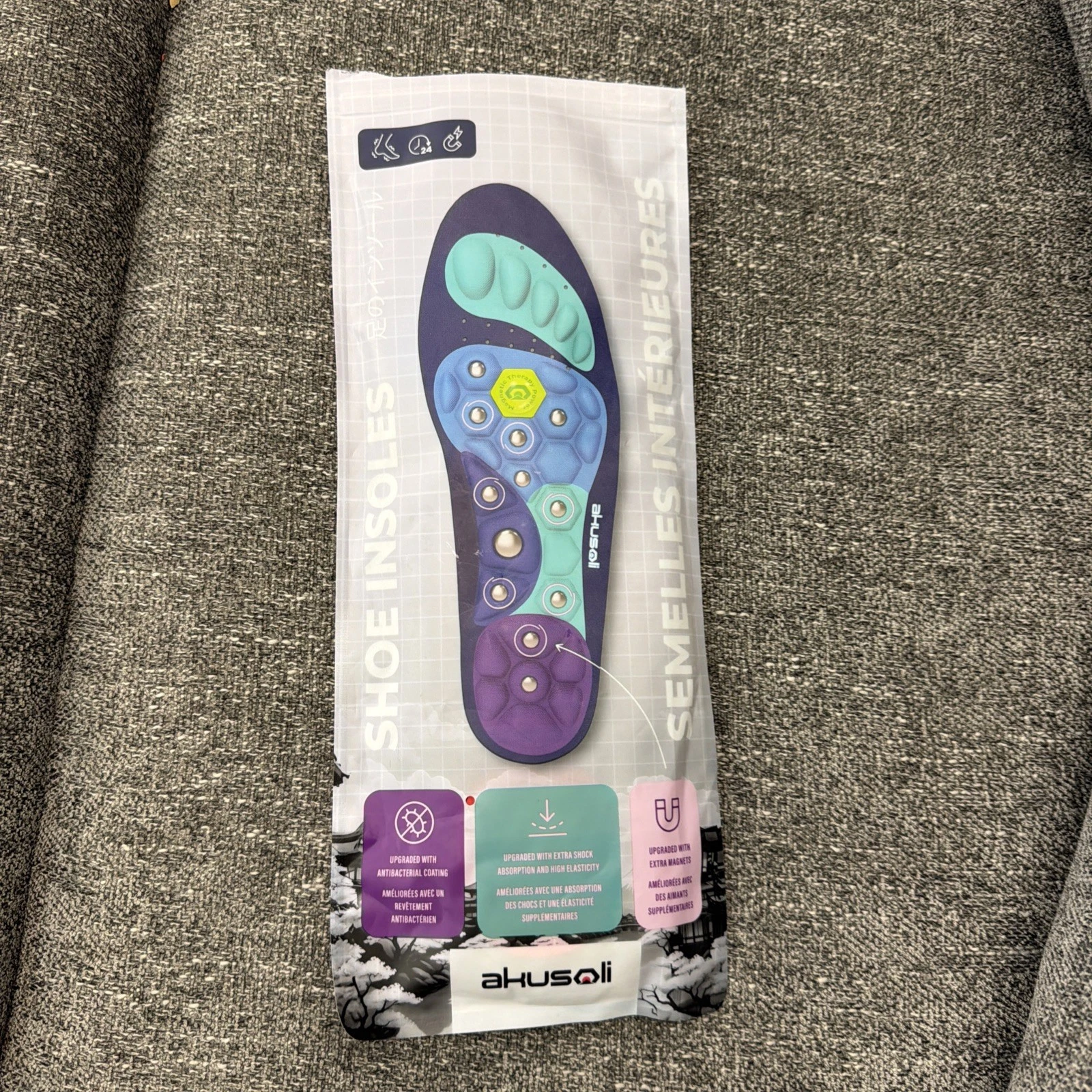
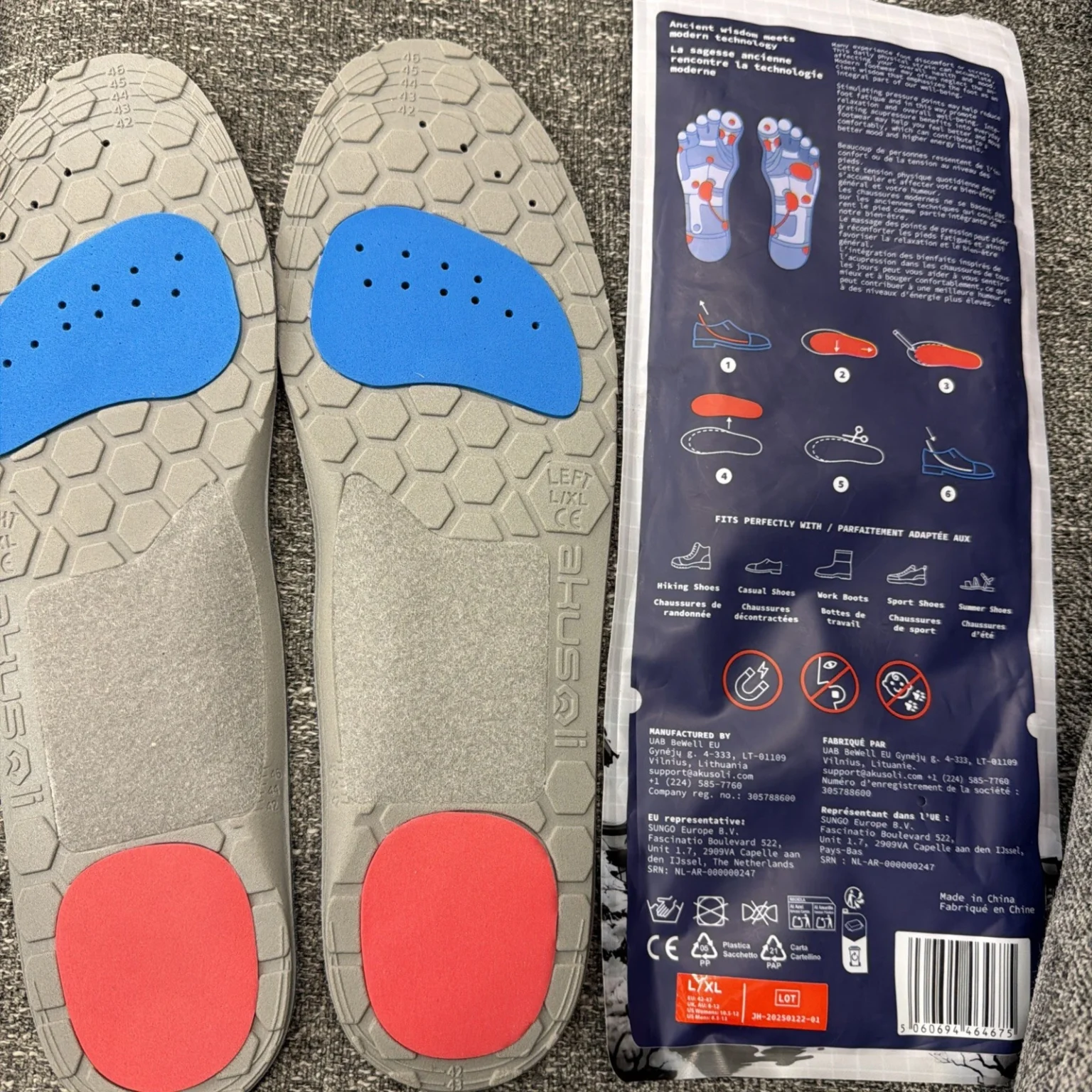
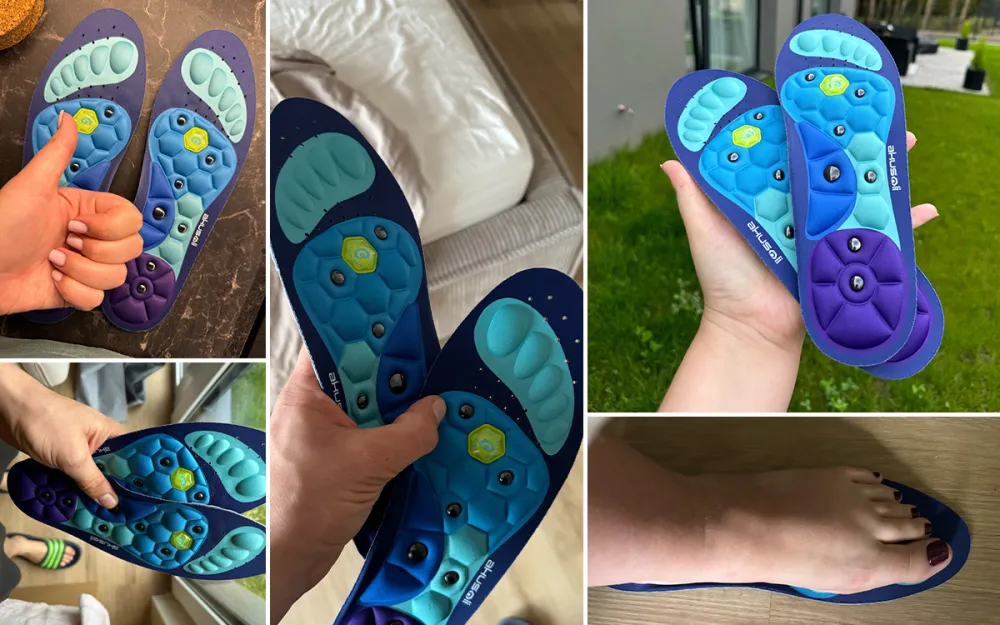
Akusoli Insoles are removable shoe inserts developed for people seeking additional support beneath their feet. Their construction combines an orthopedic-style footbed with cushioning, raised pressure-point elements, magnetic components, and an antimicrobial surface treatment.
Most shoes already contain an insole, but the quality of that insert varies considerably. Many standard factory inserts primarily provide a thin layer between the foot and the shoe’s internal structure. Over time, the material can compress, leaving less cushioning beneath areas that repeatedly absorb body weight.
Akusoli attempts to address that limitation through a more structured design. Its contoured shape is intended to support the arch, while the cushioning helps distribute pressure across the underside of the foot. This combination may be particularly appealing to people whose shoes feel increasingly uncomfortable during long shifts or extended walks.
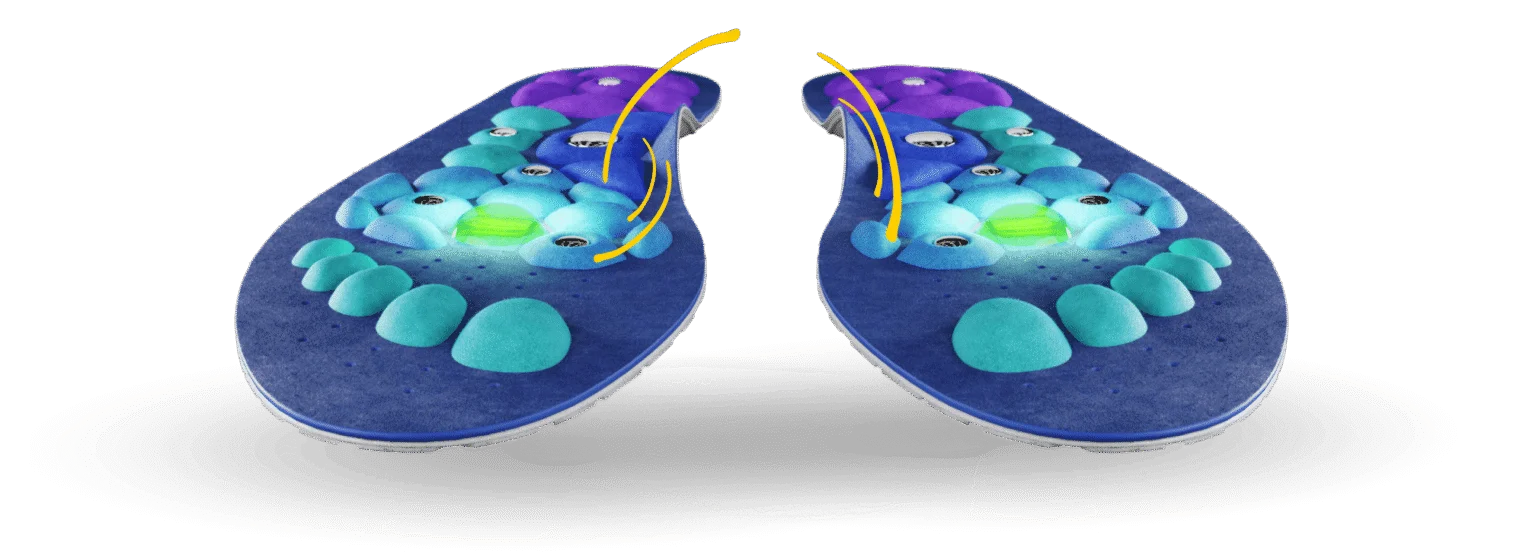
The feature that distinguishes Akusoli from conventional inserts is its magnetic acupressure system. Small magnets and raised cushions are positioned within the footbed to create localized contact as the wearer moves. The resulting sensation may feel massage-like, although the pressure created by the raised cushions should be distinguished from the unproven therapeutic claims associated with static magnets.
Another useful feature is the silver-based antimicrobial coating. This is intended to discourage bacterial growth and reduce odor development, although product-specific laboratory evidence would be needed to confirm its effectiveness under normal wearing conditions.
Overall, I see Akusoli as a general-purpose comfort accessory with additional design features. It may complement supportive footwear, but it should not be confused with a professionally prescribed custom orthotic.
The Science Behind Akusoli Insoles: What Research Actually Supports
The scientific discussion surrounding Akusoli Insoles becomes much clearer when their conventional orthopedic features are considered separately from the magnetic elements.
Orthopedic Support and Pressure Distribution
Foot orthoses have been investigated for conditions involving plantar heel pain, mechanical stress, and discomfort during walking. A systematic review published in the British Journal of Sports Medicine examined 19 randomized trials involving 1,660 participants.
Researchers found moderate-quality evidence that foot orthoses provided a small reduction in plantar heel pain compared with sham inserts over approximately 7–12 weeks. However, the benefit was modest, and the researchers questioned whether the improvement was clinically important for everyone.
This distinction is important. Supportive insoles may improve comfort for certain people, but they cannot be expected to produce identical results across different foot conditions.
Cushioning and Biomechanical Support
Cushioning can help change how pressure is experienced beneath the foot, while a contoured structure may influence how the foot interacts with the shoe.
The relationship between foot position and discomfort is complicated. An insert that supports one person’s arch comfortably may create excessive pressure for another. Correct fit, footwear compatibility, and individual anatomy remain essential.
For this reason, I place more confidence in Akusoli’s potential as a supportive insert than in broad promises about correcting posture or eliminating pain.
Magnetic Acupressure and Pain Relief
Magnetic therapy requires more skepticism. The National Center for Complementary and Integrative Health reports that static magnets have not been conclusively demonstrated to relieve pain.
That finding applies to the general category of static magnetic products, including magnetic shoe inserts. Research on pulsed electromagnetic treatments cannot automatically be used to validate the permanent magnets embedded in ordinary insoles.
The raised acupressure cushions may create a noticeable massaging sensation, but there is insufficient product-specific evidence to establish that Akusoli’s magnet-and-cushion arrangement produces superior clinical outcomes.
Antimicrobial Silver Technology
Silver has recognized antimicrobial properties and is incorporated into various consumer and medical materials. However, performance depends on how the coating is formulated, its concentration, and the conditions under which the material is used.
The presence of silver alone does not establish that a particular insole eliminates odor, prevents infection, or maintains its antimicrobial activity indefinitely.
My scientific assessment: Akusoli’s conventional cushioning and supportive construction provide its most credible foundation. The magnetic and antimicrobial features remain interesting additions, but their specific performance claims require stronger independent verification.
How Akusoli Insoles Work During Everyday Movement
To understand the practical purpose of Akusoli Insoles, I find it useful to think about the repeated pressure our feet experience throughout an ordinary day.
Standing, walking, and shifting body weight continuously load different regions of the foot. The heel absorbs substantial force during initial contact with the ground, while the middle and front sections help support and propel the body forward.
A supportive insole can change the contact between the foot and the shoe, potentially making this repeated loading feel more comfortable.
Supporting the Arch
The contoured section beneath the middle of the foot provides a more defined surface than a flat shoe insert. For some wearers, this can improve the sensation of support and reduce localized discomfort associated with unsuitable footwear.
The ideal degree of arch support varies. Higher or firmer is not automatically better, particularly for people with sensitive feet.
Cushioning the Heel
Akusoli’s cushioned construction is intended to make repeated heel contact more comfortable. This can be valuable for people who spend long periods walking across concrete, tile, or other hard surfaces.
Cushioning does not eliminate impact forces, but it may improve the way those forces are experienced.
Creating Localized Stimulation
The raised acupressure elements contact selected areas of the sole as body weight shifts. This creates a textured sensation that some users may find pleasant.
The magnets are incorporated into the same general system, although there is no convincing clinical evidence that their magnetic fields provide an additional pain-relieving effect.
Supporting a More Comfortable Walking Pattern
When footwear feels uncomfortable, people sometimes change their walking pattern to avoid pressure. Properly fitted inserts may help reduce the need for those adjustments.
Nevertheless, improvements in posture, knee discomfort, or back pain cannot be guaranteed merely by wearing an insole. Those outcomes depend on multiple physical factors.
Six Key Features That Make Akusoli Insoles Interesting
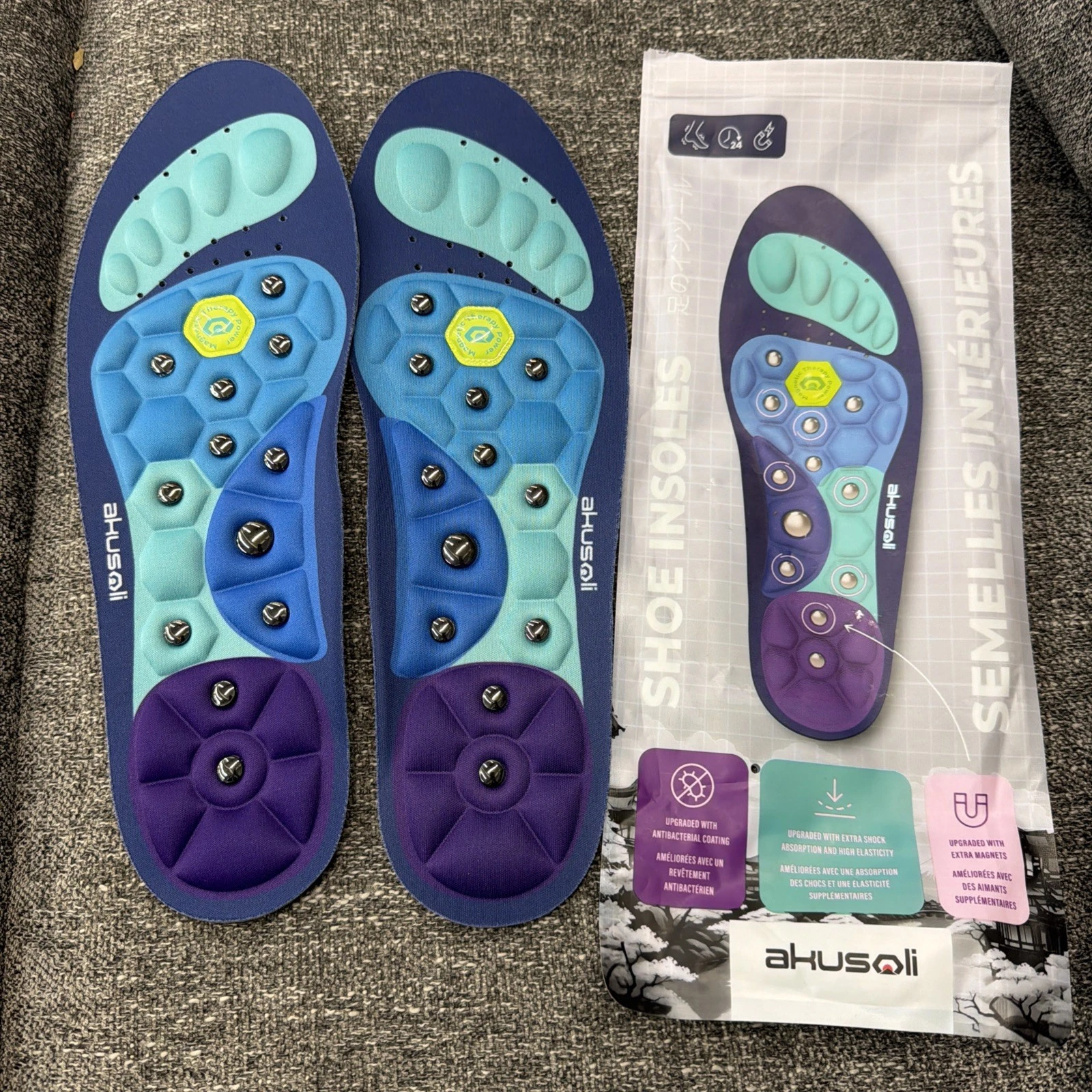
The design of Akusoli Insoles brings together several features that are normally discussed separately in the foot-comfort market. While not every element has equal scientific support, the combination may appeal to someone who wants a convenient replacement for basic shoe inserts.
- 1. Magnetic Acupressure Construction: The defining feature is the arrangement of magnets and raised pressure-point cushions throughout the footbed. The cushions create additional contact with the sole during movement, which may feel like mild stimulation. I would treat this as a comfort preference rather than a proven medical treatment because static magnetic therapy lacks convincing evidence of pain relief.
- 2. Contoured Arch Support: Instead of relying entirely on uniform padding, the insoles provide a shaped surface intended to support the middle of the foot. This may be particularly useful for people whose current shoes have thin, flattened inserts. The effectiveness will depend on whether the contour suits the wearer’s arch height and foot mechanics.
- 3. Heel Cushioning and Stability: Heel discomfort can become especially noticeable during long periods of standing. Akusoli incorporates cushioning to provide a more forgiving surface beneath this heavily loaded region. A properly fitted insert may also reduce unwanted movement within a suitable shoe, although the insole cannot compensate for footwear that is fundamentally unstable.
- 4. Silver-Based Antimicrobial Surface: The antimicrobial coating is designed to limit bacterial buildup associated with unpleasant footwear odor. This is an attractive convenience feature for people who wear work shoes for many consecutive hours. Nevertheless, odor control still depends on moisture management, ventilation, cleaning, and allowing shoes to dry between uses.
- 5. Soft, Flexible, Breathable Materials: Comfort requires balancing cushioning with sufficient structure. Akusoli aims to provide a softer contact surface without abandoning support altogether. Its breathable construction may make prolonged wear more pleasant, although warmth and moisture will also depend on socks and shoe materials.
- 6. Customizable Trim-to-Fit Sizing: The ability to trim the inserts is particularly practical because footwear sizing varies between manufacturers. Following the trimming guidelines can help reduce excess material around the toe area. However, trimming primarily adjusts length and front-foot shape; it cannot correct an arch contour that does not match the user’s anatomy.
Of these features, the arch support, heel cushioning, and adjustable sizing are the ones I consider most important when assessing everyday usefulness.
Six Potential Benefits of Akusoli Insoles for Everyday Comfort
The appeal of Akusoli Insoles becomes easier to understand when their features are connected to common everyday problems. People generally purchase replacement insoles because their shoes have become uncomfortable, their feet feel tired, or they want better support during demanding routines.
These are potential benefits rather than guaranteed treatment outcomes. A properly fitted insole can make a positive difference for some individuals, but expectations should remain realistic, particularly when foot pain has an underlying medical cause.
★ 1. Greater Comfort During Long Hours of Standing
Standing for extended periods can place sustained pressure beneath the heels and forefeet. Workers in retail, hospitality, healthcare, and other physically demanding environments often experience discomfort that becomes progressively more noticeable throughout the day.
Akusoli’s cushioning and contoured design may provide a more comfortable surface than a thin factory insert. By changing how the foot contacts the shoe, the insoles could help reduce the sensation of localized pressure.
The benefit may be most noticeable in shoes with limited existing cushioning. However, an insole should be combined with appropriately sized footwear, regular movement, and rest breaks whenever possible.
★ 2. Improved Arch Support for Daily Activities
The arches contribute to load management and foot movement, so inadequate or unsuitable support may contribute to discomfort for some individuals.
Akusoli introduces a defined contour beneath the middle of the foot. This may help users who prefer more support than their regular shoe inserts provide, particularly during ordinary walking or prolonged standing.
I would emphasize personal comfort rather than promises about permanently correcting arch structure. Supportive insoles do not rebuild arches or universally correct flat feet, and some individuals may require professionally selected orthoses instead.
★ 3. Reduced Sensation of Foot Fatigue
Foot fatigue is often described as heaviness, tenderness, or an increasing desire to remove one’s shoes after a long day. It can develop from repetitive loading, limited cushioning, unsuitable footwear, and insufficient recovery time.
Akusoli’s combination of padding and a textured surface may make walking and standing feel less demanding for certain wearers. If the original shoe insert has become compressed, replacing it may produce a noticeable improvement in comfort.
The key is to assess fatigue gradually. A good insole should remain comfortable after several hours, rather than feeling pleasant initially and creating pressure later.
★ 4. More Comfortable Heel Contact
The heel repeatedly absorbs load throughout walking, and insufficient cushioning can make hard surfaces particularly unpleasant. People who notice mild pressure-related heel discomfort may appreciate a more cushioned shoe interior.
Akusoli attempts to provide this comfort while retaining a structured shape. Its potential advantage lies in combining heel padding with an overall footbed rather than relying solely on an isolated heel pad.
Persistent first-step heel pain, swelling, or sharply localized tenderness deserves medical assessment. Although insoles are sometimes part of conservative foot-care plans, Akusoli should not be considered a proven treatment for plantar fasciitis or other diagnosed conditions.
★ 5. Better Freshness Inside Everyday Shoes
Footwear odor is influenced by moisture, bacteria, shoe ventilation, and hygiene. People who wear the same shoes daily may notice that odor becomes harder to manage as the internal materials absorb perspiration.
Akusoli’s silver-based coating is designed to discourage bacterial accumulation on the insole surface. If the treatment performs as intended, it may contribute to a fresher shoe environment.
This feature is especially convenient for enclosed work shoes and boots. Still, the coating should be considered an additional hygiene measure rather than a substitute for clean socks, washing feet, drying shoes, or treating a fungal infection.
★ 6. More Convenient Support Across Different Footwear
One of the least exciting but most practical benefits is the trim-to-fit design. An insole that cannot fit securely inside a favorite pair of shoes has little value, regardless of how impressive its advertised technology sounds.
Akusoli can be trimmed to accommodate many types of everyday footwear, potentially allowing buyers to improve comfort without replacing the entire shoe. This makes the product appealing for people who already own suitable shoes but dislike the original inserts.
Compatibility remains important. Shoes with shallow interiors, narrow toe boxes, or nonremovable footbeds may not accommodate the added thickness comfortably.
Akusoli Insoles vs Popular Insole Brands: A Detailed Comparison
When comparing Akusoli Insoles with popular mainstream alternatives, I believe the most useful approach is to examine the features that affect everyday wear. Rather than comparing advertising slogans, the table below focuses on construction, comfort, fit, and practical limitations.
The competing column represents typical characteristics of basic mass-market cushioned inserts, not every model produced by established insole brands. Specialized orthotics can offer substantially different features.
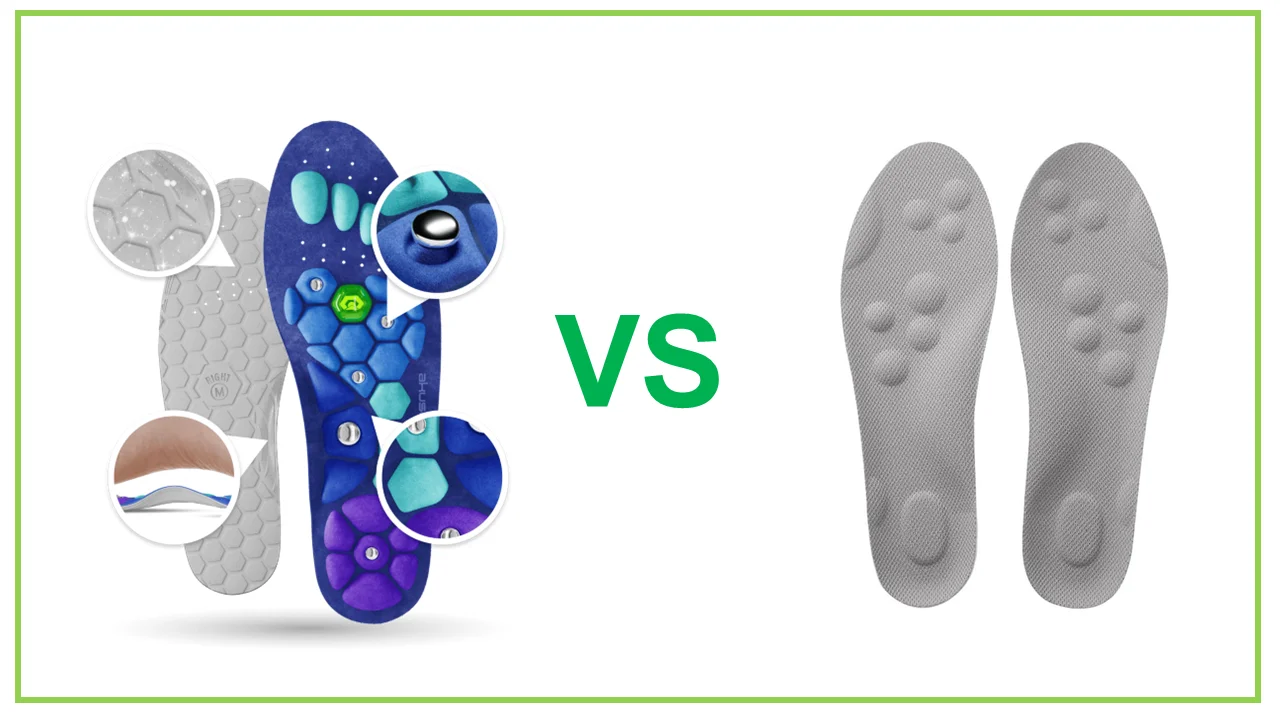
| Comparison Criteria | Akusoli Insoles | Typical Popular Cushioned Insoles |
|---|---|---|
| Overall Design | Combines structured support, cushioning, raised acupressure elements, and embedded magnets in one insert. | Many entry-level products emphasize soft cushioning, although specialized models may also provide firm orthopedic support. |
| Arch Support | Contoured construction is intended to provide more defined support than a flat foam insert. | Basic models may offer limited contouring, while dedicated arch-support products can provide stronger or more specialized shapes. |
| Heel Comfort | Uses a cushioned footbed intended to reduce pressure concentration and improve everyday comfort. | Frequently relies on foam or gel padding, with effectiveness depending on material thickness and individual shoe fit. |
| Acupressure Texture | Raised cushions provide localized contact that may create a massage-like sensation while walking. | Most ordinary inserts have relatively smooth upper surfaces, although textured massage alternatives are available. |
| Magnetic Components | Includes static magnets as a distinctive design feature, without conclusive evidence of additional pain relief. | Usually contains no magnets and relies primarily on cushioning, support, or shock-absorbing materials. |
| Odor Management | Advertises a silver-based antimicrobial coating intended to reduce bacterial buildup. | Some alternatives use antimicrobial treatments, while others depend on breathable fabrics and moisture control. |
| Sizing Flexibility | Trim-to-fit construction allows adjustment to many shoe lengths. | Many brands offer either trim-to-fit inserts or multiple predefined sizes. |
| Adaptation Period | Users may need time to adjust to both the footbed contour and textured pressure points. | Soft inserts may feel familiar immediately, while firmer orthotics may also require gradual adaptation. |
| Workday Practicality | Particularly appealing to people seeking an all-in-one comfort insert for standing and walking. | Basic cushioning models can suit general use, while specialized work insoles may offer stronger targeted support. |
| Clinical Evidence | Independent clinical testing specifically validating Akusoli’s combined design is not established here. | Research exists for foot orthoses as a category, but findings cannot automatically validate every individual product. |
| Potential Drawbacks | Pressure points may irritate sensitive feet, and the magnetic feature adds uncertain therapeutic value. | Flat cushioning may lack support, while firmer competing designs can also feel uncomfortable if improperly fitted. |
| Overall Value | Attractive when the buyer wants cushioning, contouring, adjustable sizing, and textured stimulation together. | Potentially preferable for buyers who want a simpler insert, specialized arch geometry, or a clearly defined support level. |
Where I Think Akusoli Has an Advantage
Akusoli’s strongest competitive feature is its combination of several comfort-oriented elements within a single product. Someone comparing it against a basic flat foam insert may appreciate the additional contouring, textured surface, and antimicrobial treatment.
The product also offers a reasonably approachable entry point for buyers who want more than ordinary cushioning but are not yet considering professionally fitted orthotics.
Where Conventional Alternatives May Be Better
A specialist arch-support insole may be a more appropriate choice for someone who needs a particular firmness, heel-cup depth, or support geometry. Similarly, individuals who dislike pressure-point stimulation might prefer a smooth footbed.
My conclusion is that Akusoli has a distinctive feature package, but it is not demonstrably superior to every popular orthopedic brand. Its value depends on comfort, appropriate fit, and whether the added features match the buyer’s preferences.
Akusoli Insoles Customer Reviews
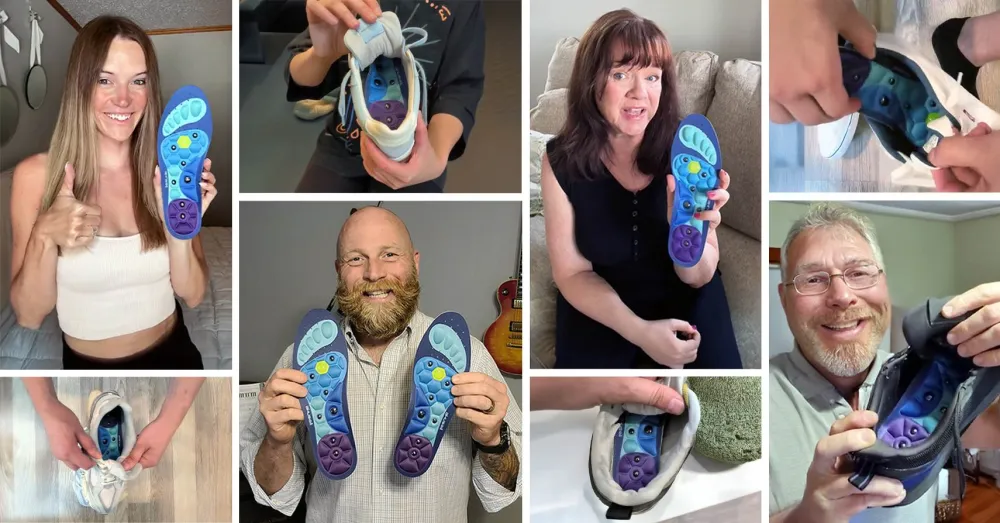
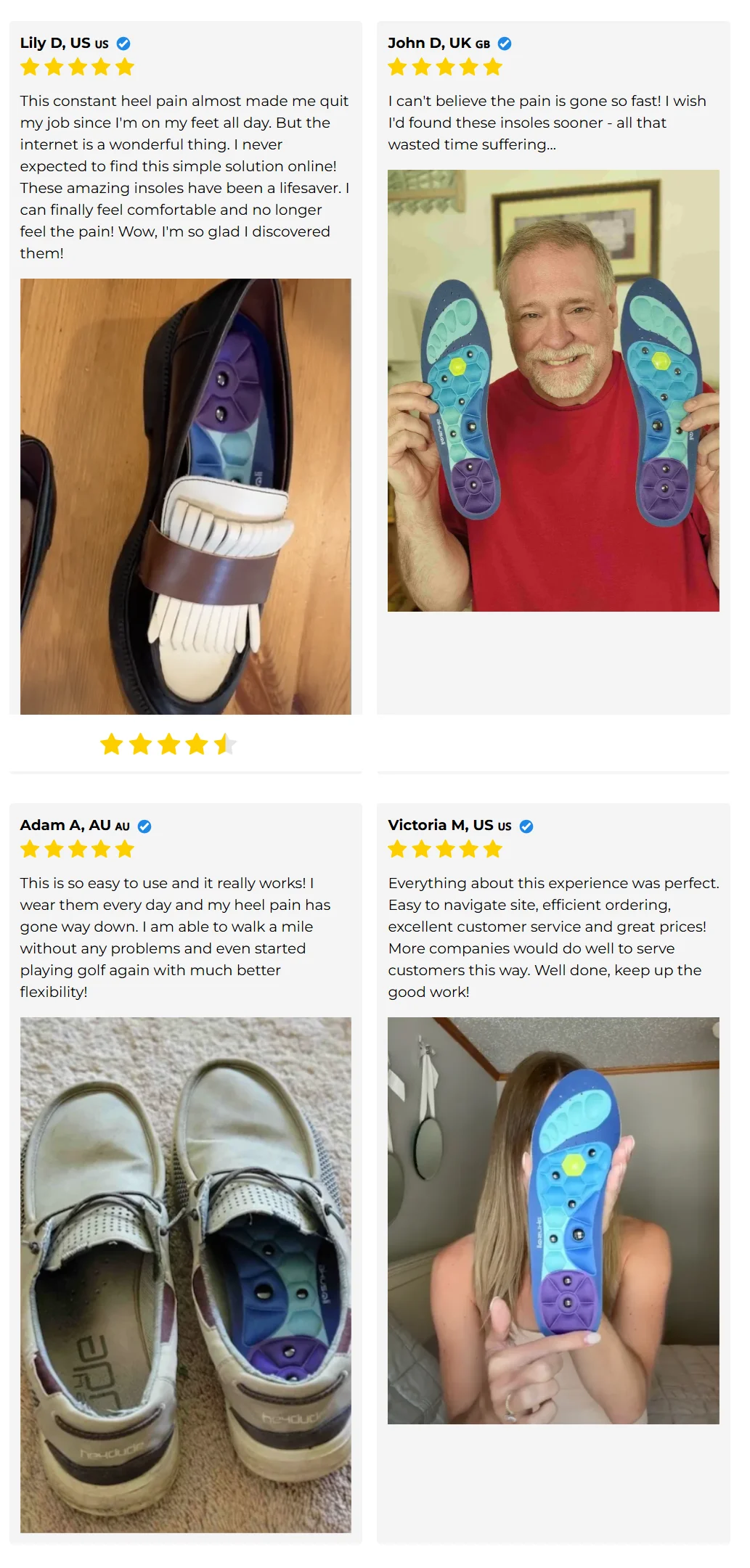
My Rating of Akusoli Insoles: 4.6 Out of 5
After evaluating the design, practical usability, advertised features, and available research, I give Akusoli Insoles an overall editorial score of 4.6 out of 5.
Overall Editorial Rating: 4.6/5
★★★★☆ (4.6/5)
This rating reflects my assessment of the product’s design and everyday comfort potential. It is not a verified customer-average score, a clinical effectiveness measurement, or the result of personally wearing the product.
Category Ratings
Comfort-Oriented Design: 4.8/5
★★★★★
The combination of a cushioned contact surface and contoured construction earns a strong design score. These are practical features for people looking to replace thin factory inserts. The result still depends on matching the insole to suitable footwear and individual foot shape.
Arch and Heel Support: 4.7/5
★★★★★
Akusoli includes structural features intended to support the arch and provide a more comfortable heel surface. I consider that more useful than relying exclusively on soft padding. However, the actual support characteristics have not been independently measured for this assessment.
Features and Versatility: 4.7/5
★★★★★
Trim-to-fit sizing, antimicrobial surface treatment, cushioning, and textured pressure points create a broad feature set. I especially appreciate the practical emphasis on fitting different everyday shoes, provided they have adequate room.
Ease of Use: 4.8/5
★★★★★
Installation is relatively straightforward, and the trimming guidelines make customization accessible. Buyers should still cut carefully and introduce the insoles gradually, since an incorrect fit can compromise comfort.
Scientific Substantiation: 4.0/5
★★★★☆
Conventional foot orthoses have some supporting research for particular conditions, although findings are mixed. The lack of conclusive evidence for static magnets prevents me from giving the scientific category a higher score.
Overall Value: 4.6/5
★★★★★
I consider the design appealing for buyers who want several convenience and comfort features together. Actual value will depend on the final purchase price, how well the insoles fit, and whether they provide meaningful personal comfort.
Final Rating: 4.6/5. My score favors the practical orthopedic-style design and usability, while acknowledging the limited evidence supporting the magnetic claims. Buyers should interpret it as an editorial product assessment rather than a promise of medical results.
How to Use Akusoli Insoles Correctly
Getting the fit right is essential if you want Akusoli Insoles to feel comfortable. Improper installation can create pressure, bunching, or an unnecessarily tight shoe.
Step 1: Trim for a Comfortable Fit
Remove the original shoe insert if it is designed to be removable. Compare its shape with the Akusoli insole and identify the appropriate trimming guidelines.
Use sharp scissors to trim gradually, removing small amounts at a time. Avoid cutting beyond the marked sizing area or altering the arch structure.
Step 2: Position the Insoles Inside Your Shoes
Place the trimmed insoles inside the shoes with the cushioned, textured surface facing upward.
Make sure the heel section rests flat and that the insert is not folded beneath the toes. Check that the magnets and raised cushions remain securely incorporated into the footbed.
Step 3: Test the Fit and Make Adjustments
Put on your shoes and walk around indoors. Pay attention to heel placement, toe room, arch pressure, and any sensation of rubbing.
If the front section is too long, make another small trimming adjustment. If the shoe feels too tight because of the insole’s thickness, use roomier footwear rather than forcing the fit.
Step 4: Introduce Daily Wear Gradually
Begin with shorter periods of use and increase wearing time as comfort allows. This is particularly important if you are unfamiliar with structured arch support or textured insoles.
Once properly adapted, the insoles may be worn during ordinary daily activities. Remove them if you develop persistent pressure, numbness, increased pain, or skin irritation.
Pros and Cons of Akusoli Insoles: What Buyers Should Consider
I never consider an evaluation complete without looking carefully at the trade-offs. Akusoli Insoles include several appealing practical features, but they also have limitations that deserve attention before purchasing.
| Pros | Cons |
|---|---|
| 1. Supportive Footbed Design: The contoured construction offers a more structured alternative to thin, flat inserts. It may improve everyday comfort for buyers whose current footwear provides insufficient arch support. | 1. Magnetic Benefits Remain Unproven: Although the magnets distinguish Akusoli from standard inserts, current scientific evidence does not conclusively support static magnets for pain relief. |
| 2. Comfortable Heel Cushioning: Padding beneath the heel may reduce the sensation of repeated pressure during walking and prolonged standing, especially in shoes with worn-out original inserts. | 2. Adjustment May Be Necessary: The contoured shape and raised cushions can feel unfamiliar initially. People with sensitive feet may find the pressure-point texture uncomfortable rather than relaxing. |
| 3. Convenient Trim-to-Fit Sizing: Buyers can adapt the front section to many shoes without searching for an exact premade size. This flexibility is helpful for everyday footwear, provided the arch contour fits correctly. | 3. Not Suitable for Every Shoe: Narrow, shallow, or tightly fitted footwear may lack sufficient space. Additional insole thickness can create unwanted pressure even after careful trimming. |
| 4. Antimicrobial Surface Treatment: The silver-based coating is intended to discourage odor-producing bacteria, providing a useful convenience feature for frequently worn shoes. Product-specific effectiveness remains unverified. | 4. Results Vary Between Users: Comfort depends on foot anatomy, footwear, activity levels, and the cause of discomfort. The inserts cannot replace individualized medical treatment or guarantee improved posture. |
| 5. Combination of Support and Stimulation: The textured cushions provide a different underfoot sensation from ordinary smooth inserts. People who enjoy mild foot stimulation may appreciate this feature. | |
| 6. Everyday Convenience: The removable construction makes Akusoli practical for use in compatible work shoes, sneakers, and casual footwear without permanently modifying the shoes themselves. |
My strongest positive impression comes from the practical features that buyers can evaluate directly: fit, contour, cushioning, and daily comfort. The main limitation is that some advertised effects extend beyond what independent research currently establishes.
Are Akusoli Insoles Safe for Daily Wear?
For many generally healthy adults, Akusoli Insoles may be a reasonable comfort accessory when appropriately fitted. Their noninvasive construction means that the most likely problems involve localized discomfort, excessive pressure, rubbing, or irritation.
People with pacemakers, insulin pumps, or other implanted medical devices should consult their healthcare provider before using magnetic insoles, because magnets can interfere with certain devices. People who are pregnant should also seek medical advice before using magnetic therapy products.
Anyone experiencing numbness, impaired circulation, diabetes-related loss of foot sensation, open wounds, or unexplained persistent pain should obtain professional guidance before trying a new insert.
Stop using the insoles if discomfort increases. A supportive accessory should never be used to delay medical assessment of a potentially serious foot problem.
Who Should Consider Akusoli Insoles, and Who Should Avoid Them?
Choosing the right footwear accessory depends on your routine, existing shoes, and physical needs. Akusoli Insoles may suit several common situations, although certain individuals should proceed carefully.
People Who May Find Them Useful
- Workers Who Stand for Extended Periods: Retail employees, hospitality workers, and others who spend hours on hard flooring may benefit from additional cushioning and supportive foot contact.
- People With Tired Feet After Walking: Those experiencing ordinary fatigue following long walks may appreciate replacing compressed or unsupportive shoe inserts with a more structured option.
- Individuals Seeking Everyday Arch Support: Buyers who prefer a contoured footbed rather than flat padding may find Akusoli worth considering, provided the shape matches their feet comfortably.
- People Concerned About Footwear Odor: The antimicrobial surface may appeal to individuals who frequently wear enclosed shoes, although normal shoe hygiene remains necessary.
People Who Should Avoid Them or Seek Advice First
- Individuals With Implanted Medical Devices: The magnets warrant particular caution around pacemakers, insulin pumps, and certain other electronic medical devices.
- People With Significant Foot Disorders: Severe flatfoot deformity, unexplained swelling, persistent plantar heel pain, or structural problems may require individualized professional assessment.
- People With Reduced Foot Sensation: Those with diabetic neuropathy or other conditions affecting sensation may not notice excessive pressure or developing skin irritation.
- Wearers of Extremely Tight Shoes: An additional insole can reduce available space and cause more discomfort than it solves when footwear is already too narrow.
What I Didn’t Like About Akusoli Insoles and Why
Although I appreciate several aspects of Akusoli Insoles, there are details that keep me from treating them as a universal recommendation.
- Too Much Emphasis on Magnetic Technology: I would prefer marketing that places greater importance on mechanical comfort, because the evidence for static magnetic pain relief remains inconclusive. The product has useful conventional features without needing exaggerated therapeutic expectations.
- Limited Independent Product-Specific Research: Studies involving general foot orthoses cannot establish that Akusoli’s exact construction performs better than competing inserts. Independent trials examining this particular model would make its clinical claims more convincing.
- The Pressure Points May Not Suit Sensitive Feet: A textured surface can feel pleasant to some people and irritating to others. I would have liked more detailed guidance on how pressure sensitivity varies and when users should discontinue wear.
- Sizing Does Not Guarantee Anatomical Compatibility: Trimming helps an insole fit the length of a shoe, but it does not change the contour of the arch. This distinction deserves greater emphasis because poor arch positioning can create discomfort.
- Purchase Terms Require Careful Review: I recommend checking the total checkout cost, quantity selected, shipping charges, and refund conditions before completing an order. A return guarantee is valuable only when the buyer understands its restrictions.
These limitations do not automatically make Akusoli a poor purchase. They explain why I believe realistic expectations are essential when evaluating a product promoted through strong comfort and pain-relief claims.
Is Akusoli Insoles a Scam or a Legitimate Product?
Akusoli Insoles are an identifiable consumer product with advertised construction features and an established customer-support presence. I would not describe the insoles themselves as a scam simply because some of their marketing claims are more ambitious than the available science. However, legitimacy does not establish that every advertised benefit has been clinically demonstrated.
My concern is primarily with expectations. Buyers should understand that static magnets are not proven to relieve pain, and that supportive inserts cannot cure every cause of foot discomfort. Purchasing through the intended official sales channel, confirming the final order details, and reviewing the return policy are sensible ways to reduce unnecessary purchasing risk.
Alternatives to Akusoli Insoles Available on Amazon
Although Akusoli Insoles offer a distinctive combination of features, several established insole products are also worth considering. These alternatives are commonly marketed through Amazon and other retailers, although actual availability, sizing, and pricing can vary.
1. PowerStep Pinnacle Insoles
PowerStep Pinnacle insoles focus on contoured arch support and cushioning. They may appeal to buyers who prefer a more conventional orthopedic-style insert without magnetic elements.
Their structured design is intended to provide support during everyday walking and standing. Compared with Akusoli, they place greater emphasis on traditional footbed geometry rather than acupressure stimulation.
2. Superfeet All-Purpose Support Insoles
Superfeet offers several support profiles designed for different footwear and arch preferences. Some versions feature a structured heel area and a relatively firm support platform.
I would consider these especially relevant for shoppers who want to select a particular support category. However, firmer designs are not automatically more comfortable, and choosing the right model is important.
3. Dr. Scholl’s Work All-Day Insoles
These insoles are positioned toward people who spend long hours standing or walking at work. Their main selling point is cushioning intended for demanding daily routines.
They may suit buyers who prioritize underfoot softness over textured stimulation. Akusoli provides a different experience through its contoured and acupressure-oriented construction.
4. Spenco Total Support Insoles
Spenco’s Total Support range combines cushioning with contoured foot support in selected models. These inserts are generally aimed at everyday comfort and repetitive foot loading.
They provide another conventional alternative for someone who wants to compare footbed shapes before deciding whether Akusoli’s additional features are worthwhile.
My advice is to select an insole according to foot shape, shoe compatibility, and comfort requirements, rather than treating the most heavily advertised product as automatically the best option.
Akusoli Insoles Money-Back Guarantee: Understanding the 30-Day Policy
A clearly explained return policy matters because foot comfort is highly individual. Akusoli Insoles are advertised with a 30-day money-back guarantee, intended to provide buyers with some purchasing reassurance.
For the manufacturer’s advertised guarantee, I recommend ordering through the official sales channel and retaining the order confirmation. Purchases made through unrelated third-party sellers should not be assumed to qualify for the same 30-day guarantee. Those transactions may instead be governed by separate marketplace or retailer policies.
Before purchasing, verify when the 30-day period begins, whether trimmed or worn insoles are eligible for return, who pays return shipping, and whether original packaging is required. These details can materially affect the practical value of the guarantee.
If you need to request a refund, contact the support team associated with your original order, follow the written return instructions, and retain shipping or tracking evidence where required.
I consider a transparent guarantee an important purchasing safeguard, but I would never interpret it as proof that a product works. The actual written conditions at checkout should determine your expectations, and they take precedence over broad advertising summaries.
Frequently Asked Questions About Akusoli Insoles
Q: How long should I wear Akusoli Insoles each day?
A: The most sensible approach is to introduce the insoles gradually, particularly if you are not accustomed to contoured arch support or textured footbeds. Begin with a comfortable period of wear and increase the duration as your feet adapt.
There is no established clinical schedule proving that longer daily use produces better medical outcomes. Your comfort should guide the process, and persistent irritation or increasing pain is a reason to stop.
Q: Can Akusoli Insoles help with plantar fasciitis?
A: Foot orthoses are sometimes included in conservative management plans for plantar heel pain, and research suggests that certain inserts may provide modest benefits over several weeks. However, results vary considerably across individuals and studies.
Akusoli has not been established as a clinically proven treatment specifically for plantar fasciitis. Persistent heel pain deserves evaluation so that appropriate treatment can be selected.
Q: Do the magnets in Akusoli Insoles really relieve pain?
A: The magnets are designed to provide ongoing magnetic exposure beneath the feet, but current research does not conclusively demonstrate that static magnets provide meaningful pain relief.
The raised cushions may create a pleasant pressure sensation, although that physical contact is different from a proven magnetic treatment. I would purchase Akusoli primarily for its supportive construction.
Q: Can I use Akusoli Insoles in my work boots?
A: Many work boots have sufficient interior space for removable inserts, making them a potentially suitable option. However, compatibility depends on the boot’s original footbed, width, available depth, and any occupational requirements.
Remove the original removable insert when appropriate, check that the replacement rests flat, and ensure your toes are not crowded. Safety footwear should continue to meet applicable workplace specifications after inserting accessories.
Q: Will Akusoli Insoles improve my posture?
A: Footwear and insoles can influence how the feet interact with the ground, which may affect comfort and movement. However, posture involves multiple joints, muscles, and individual movement habits.
There is insufficient evidence to conclude that Akusoli reliably corrects posture or resolves knee and back discomfort. Any changes should be judged through personal comfort and, where necessary, professional assessment.
Q: Are Akusoli Insoles suitable for flat feet?
A: Some people with flexible flat feet find contoured insoles comfortable, while others experience excessive pressure beneath the arch. The appropriate support depends on foot shape, symptoms, and footwear.
Akusoli may be worth considering for mild everyday support needs, but painful flat feet or significant structural changes should be evaluated by a qualified clinician.
Q: How should I clean and maintain Akusoli Insoles?
A: Remove the inserts periodically to allow both the insoles and shoes to dry. Gently wipe away surface dirt using a slightly damp cloth and allow the materials to air-dry completely before wearing them again.
Avoid machine washing, prolonged soaking, harsh chemicals, or direct heat unless the manufacturer’s care instructions expressly permit them. These practices may damage cushioning, adhesives, coatings, or embedded components.
Q: Where should I purchase Akusoli Insoles to receive the advertised guarantee?
A: The most reliable approach is to use the official purchasing channel associated with the manufacturer’s return policy. This helps ensure you receive the intended product and can identify the correct support team if an issue arises.
Before payment, review the selected quantity, final price, shipping terms, and refund eligibility. Retain your purchase confirmation because it may be needed when contacting customer support.
My Final Verdict: Are Akusoli Insoles a Sensible Purchase?
After examining the available information, I believe Akusoli offers a practical combination of supportive footbed construction, cushioning, adjustable sizing, and additional comfort features. Its appeal is strongest for people who spend considerable time standing or walking and want to improve the feel of their existing footwear without immediately investing in specialized orthotics.
My 4.6/5 editorial rating reflects the product’s overall design potential and everyday convenience, while recognizing important limitations. The scientific evidence for general foot orthoses is mixed, and the magnetic elements should not be treated as proven pain therapy. Individual comfort, proper sizing, and sensible expectations remain central to making a satisfactory purchase.
If you are looking for a convenient way to add structure and cushioning to suitable everyday shoes, Akusoli Insoles deserve consideration. I recommend reviewing the current offer and written 30-day return conditions before ordering, then assessing the insoles gradually to determine whether they provide the comfort your feet need.
References
The following evidence-based resources informed my assessment of foot orthoses, magnetic therapy, and the limitations of available clinical research.
- Whittaker, G. A., et al. (2018). Foot orthoses for plantar heel pain: A systematic review and meta-analysis. British Journal of Sports Medicine. Evaluates randomized trials investigating orthotic interventions for plantar heel pain.
https://pubmed.ncbi.nlm.nih.gov/28935689/ - Rasenberg, N., et al. (2018). Efficacy of foot orthoses for the treatment of plantar heel pain: A systematic review and meta-analysis. British Journal of Sports Medicine. Examines the comparative effectiveness of prefabricated, custom, and sham orthoses.
https://pubmed.ncbi.nlm.nih.gov/29555795/ - National Center for Complementary and Integrative Health (NCCIH). Magnets for Pain: What You Need to Know. Reviews research findings and safety considerations relating to static magnets and electromagnetic therapies.
https://www.nccih.nih.gov/health/magnets-for-pain-what-you-need-to-know - Pittler, M. H., Brown, E. M., & Ernst, E. (2007). Static magnets for reducing pain: Systematic review and meta-analysis of randomized trials. Canadian Medical Association Journal. Examines clinical evidence concerning static magnetic therapy for pain relief.
https://pubmed.ncbi.nlm.nih.gov/17893349/ - National Center for Complementary and Integrative Health (NCCIH). Osteoarthritis: In Depth. Provides an evidence-based discussion of complementary approaches, including magnetic therapy and its limitations.
https://www.nccih.nih.gov/health/osteoarthritis-in-depth
Disclaimer: This review is provided for educational and informational purposes only and does not constitute medical advice. Akusoli Insoles are consumer footwear accessories, not established treatments for medical conditions. Individual results may vary. Consult a qualified healthcare professional for persistent pain, medical conditions, or concerns involving magnetic devices. This article contains affiliate links, meaning I may earn a commission from qualifying purchases at no additional cost to you.