

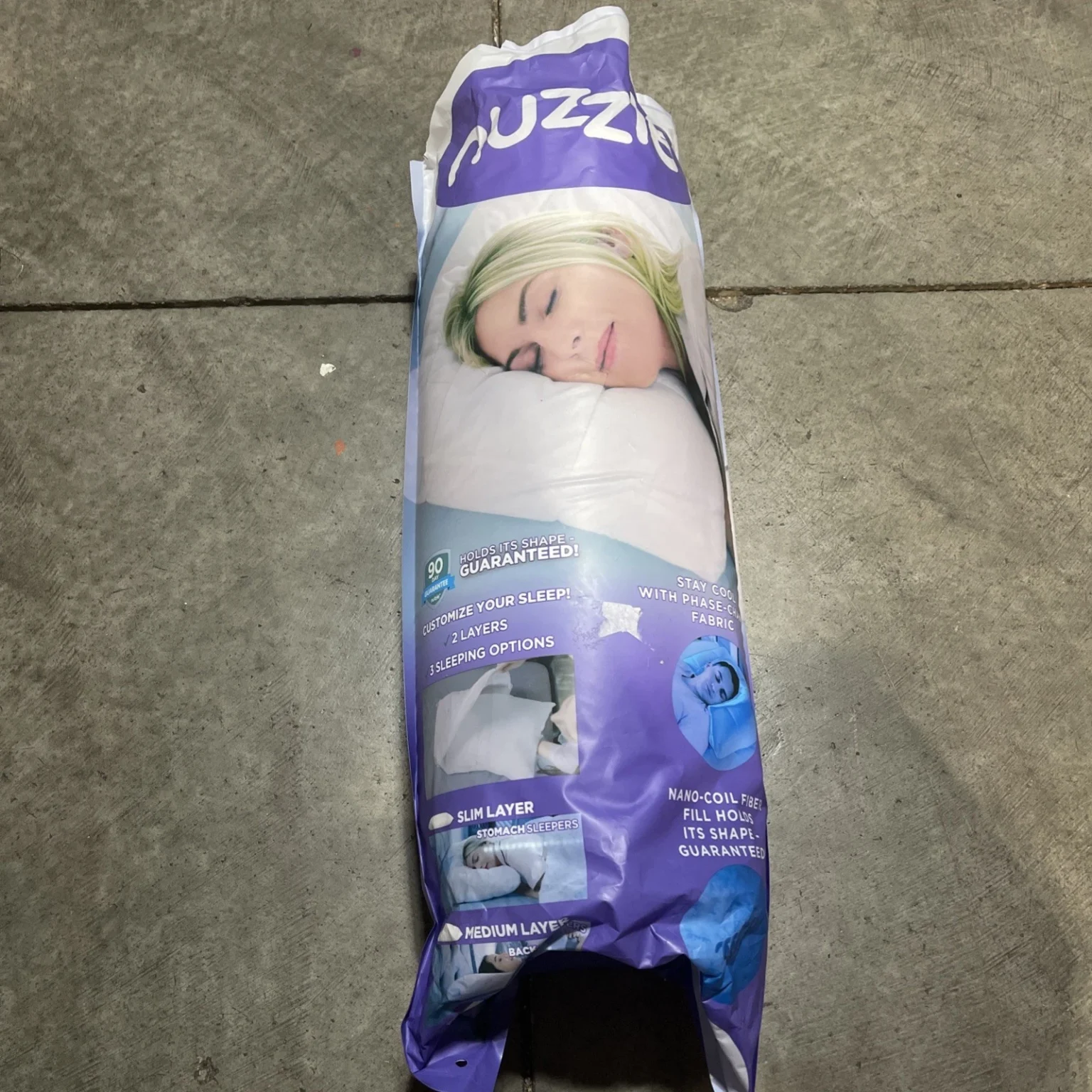
A pillow seems like a simple piece of bedding, yet the relationship between pillow height, neck support, sleeping position, and cervical alignment is more complicated than it first appears. Research examining pillow design has found that factors such as shape and height can influence cervical positioning, pressure distribution, morning discomfort, and how comfortable a pillow feels. At the same time, the research does not support the idea that one pillow design automatically works for every sleeper. Shoulder width, mattress firmness, preferred sleeping position, body size, and personal sensitivity to firmness can completely change the experience.
That is exactly why I wanted to look beyond the advertising surrounding Nuzzle Pillow. In this detailed review, I’m examining Nuzzle Pillow from the practical perspective that matters most: how convincing its support concept is, where it may help, where it can fall short, and whether there is a more structured option for people who need stronger neck support. I will cover the benefits, limitations, possible comfort issues, common complaints, and overall value of the pillow. Nuzzle has qualities I can appreciate, and its approach may suit some sleepers, but I ultimately wanted something that gave me more deliberate support around the head and cervical area. That search is what led me to the alternative I recommend later in this review.
What Is Nuzzle Pillow?
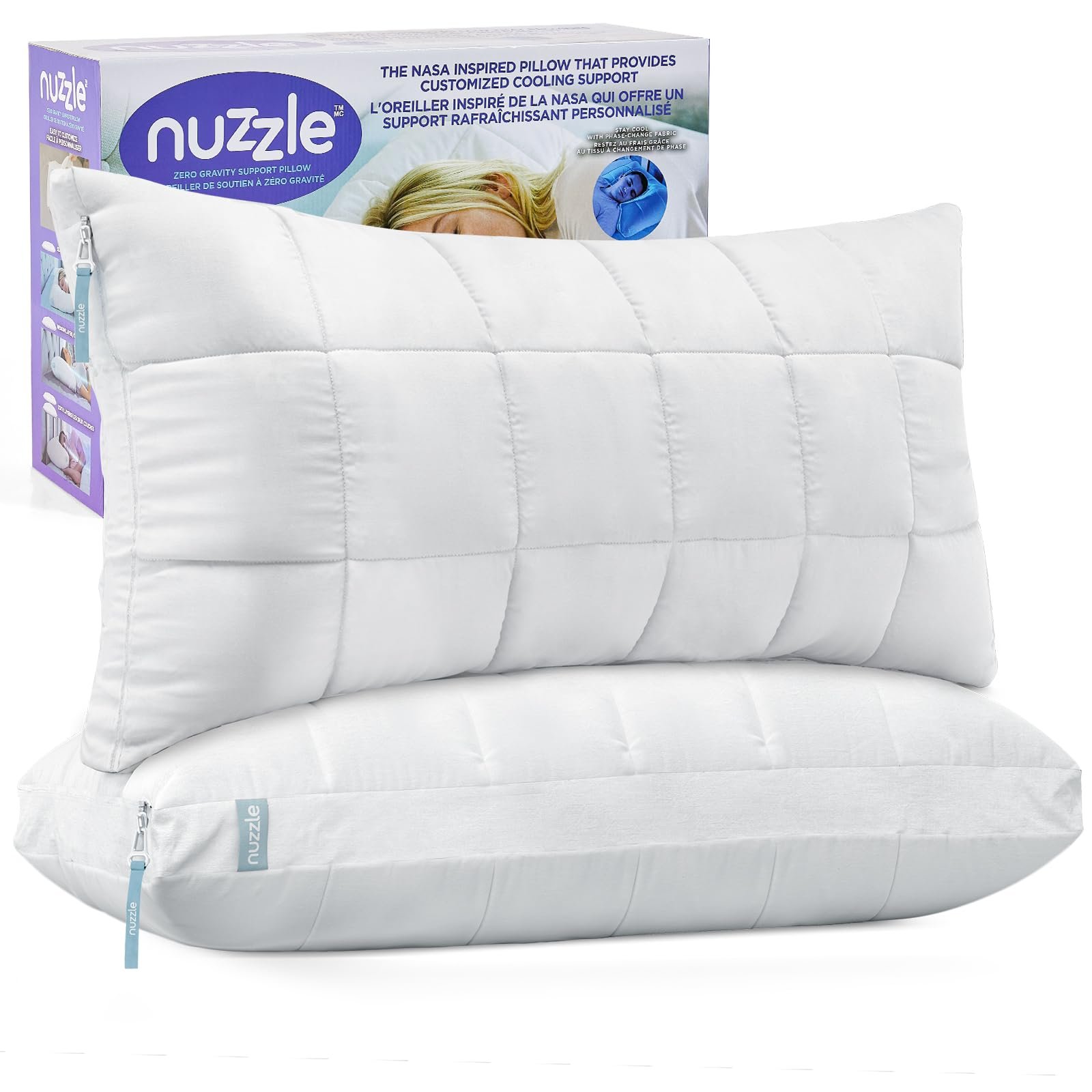
Nuzzle Pillow is positioned as a premium sleep pillow aimed at people who want better head and neck support without relying on a completely traditional, fixed-loft pillow. The underlying idea is that a pillow should do more than create a soft surface underneath the head. It should help maintain a comfortable relationship between the head, neck, shoulders, and mattress throughout several hours of sleep.
One important point I found while researching Nuzzle is that its current construction should not be confused with the molded cervical pillows that use a permanently sculpted memory-foam surface. Nuzzle takes a more conventional-looking approach, with its support coming primarily from its internal fill and adjustable layering rather than a rigid butterfly or wave-shaped contour. The current design uses separate inner components that can be arranged to change the pillow’s loft.
That adjustment system is one of the more practical aspects of the product. A pillow that feels comfortable to a broad-shouldered side sleeper may be far too thick for someone who sleeps primarily on the back. Being able to alter the height therefore gives Nuzzle more versatility than a standard pillow with one fixed configuration.
The pillow is also marketed around cooling and comfort. Its construction is designed to avoid the heavy, trapped feeling associated with some dense foam pillows, while the exterior materials are intended to provide a softer sleeping surface. For someone moving away from an inexpensive polyester pillow, Nuzzle can feel like a noticeable upgrade in construction and adjustability.
Where I became less convinced was in the type of support it provides. There is an important difference between adjustable loft and anatomical contouring. Adjustability can change how high the head sits, but it does not necessarily create a defined cervical support zone underneath the neck. For me, that distinction became increasingly important.
I would therefore describe Nuzzle as an adjustable comfort-focused pillow with ergonomic intentions, rather than the type of dedicated cervical pillow that physically shapes where the head and neck rest. That difference explains both what I like about it and why I eventually preferred another option.
How Does Nuzzle Pillow Work?
Nuzzle’s support concept revolves primarily around controlling pillow height and maintaining enough fill underneath the head to prevent excessive flattening. Conventional fiber-filled pillows can gradually migrate away from pressure areas. During the night, the filling may bunch toward the edges while the center becomes compressed, leaving the head lower than it was when the sleeper initially went to bed.
Nuzzle attempts to make that experience more predictable by allowing sleepers to alter the internal configuration. Depending on the setup used, the pillow can provide a lower or higher sleeping surface. This is useful because pillow height has a substantial effect on neck position.
For a back sleeper, excessive loft can push the head forward and bring the chin closer to the chest. A pillow that is too flat can create the opposite issue by allowing the head to extend backward. Side sleepers face another challenge because the pillow must fill the distance between the mattress and the side of the head while taking shoulder width and mattress sink into account.
The practical advantage of Nuzzle is that its adjustable construction gives the sleeper some control over that height relationship. Instead of replacing the entire pillow because it feels too high or low, the internal configuration can be changed.
The filling itself also contributes to pressure distribution. Rather than resting against an extremely rigid surface, the head settles into the material while the surrounding fill continues to provide resistance. This creates the softer, more familiar feel many people prefer when moving from a traditional pillow.
Cooling is another part of the concept. Dense foams can absorb body heat, especially when the sleeper’s face and head remain in the same location for several hours. Nuzzle emphasizes breathable materials and temperature-regulating features intended to limit that problem.
Where I think the design becomes less compelling is neck-specific stabilization. Loft adjustment changes overall height, but the pillow still does not provide the same clearly defined head recess and raised cervical section that I look for in a dedicated ergonomic pillow.
I noticed that this difference matters particularly when changing positions. With a contoured pillow, the location of the neck support remains fixed. With a softer filled pillow, some redistribution and compression are naturally going to occur.
Nuzzle therefore makes sense to me as a customizable pillow for sleepers who still enjoy the feel of a fairly traditional pillow. If the main goal is more structured cervical positioning, however, I think there are stronger designs available.
Key Features Of Nuzzle Pillow
Nuzzle contains several thoughtful design choices, and I do not want my preference for a more structured pillow to overshadow them. The product has legitimate practical advantages, particularly for sleepers who value adjustability and a softer pillow sensation. The key is understanding what each feature actually contributes rather than assuming every advertised characteristic will automatically translate into better sleep.
- Adjustable Internal Configuration:
One of Nuzzle’s strongest characteristics is the ability to alter its effective loft. This matters because there is no universally correct pillow height. A side sleeper with broad shoulders may require considerably more material underneath the head than a smaller-framed back sleeper. Nuzzle provides several configurations rather than forcing everyone to accept one predetermined height. I consider this a meaningful advantage over inexpensive fixed-loft pillows, although it still offers fewer fine adjustments than pillows where individual amounts of loose fill can be removed. - Supportive Fiber-Based Construction:
The internal material is designed to produce a combination of softness and resistance. Instead of the slow sinking sensation associated with solid memory foam, the pillow has a more familiar cushioned feel. People who dislike the dense sensation of molded foam may actually prefer this approach. The limitation is that fiber-based support tends to feel less anatomically precise than a shaped foam core. - Multiple Sleeping-Position Potential:
Because the loft can be changed, Nuzzle can potentially accommodate back, side, and combination sleepers. I place emphasis on potentially because sleeping position alone does not determine the correct pillow. Shoulder width, mattress firmness, head size, and individual posture all matter. Still, having several possible configurations gives the pillow a broader usable range than a fixed-height design. - Pressure-Distributing Feel:
The pillow allows the head to settle into the filling rather than remaining completely on top of a rigid surface. This can create a pleasant cradling sensation around the ears and sides of the head. For sleepers primarily concerned with general comfort rather than targeted cervical support, this may be one of Nuzzle’s more appealing characteristics. - Cooling-Oriented Construction:
Nuzzle emphasizes temperature regulation because excessive warmth can make even a supportive pillow unpleasant. Breathable materials and its cover construction are intended to help heat move away from the immediate sleeping surface. I would still temper expectations because individual room temperature, bedding, humidity, and personal heat sensitivity play large roles in whether any pillow actually feels cool throughout an entire night. - More Traditional Pillow Feel:
Nuzzle does not require the same adjustment in sleeping technique that a strongly contoured cervical pillow sometimes does. Someone transitioning directly from a conventional bed pillow may therefore find it easier to become accustomed to. This familiarity is valuable for sleepers who dislike highly sculpted orthopedic-style designs. - Premium-Focused Exterior Construction:
The pillow has been positioned above basic budget bedding, and part of that appeal comes from the exterior presentation and finishing. The cover and overall construction are intended to feel more refined than an inexpensive department-store pillow. That does not automatically make it ergonomically superior, but materials and stitching certainly influence durability and day-to-day comfort. - Less Dependence on Pillow Stacking:
People who cannot find the correct height frequently end up stacking two pillows. That can introduce instability because the two layers move independently and create more extreme neck angles. Nuzzle’s adjustable loft may reduce the temptation to create an improvised two-pillow stack.
Overall, Nuzzle’s features are strongest when viewed through the lens of customizable comfort. The pillow becomes less distinctive if the buyer specifically wants a shaped cervical support system, because its design does not control head and neck positioning as deliberately as a molded ergonomic pillow.

Pros and Cons of Nuzzle Pillow
The table below reflects how I would evaluate Nuzzle after separating genuine practical features from the broader expectations created by ergonomic pillow marketing. There are things it does well, but there are also several reasons I would hesitate before choosing it specifically for stronger cervical support.
| Pros | Cons |
|---|---|
| 1. Adjustable loft provides useful flexibility. Nuzzle allows the sleeping height to be altered instead of locking the user into one thickness. This can help people experiment with a lower or higher configuration depending on whether they sleep on their back, side, or a mixture of positions. | 1. It lacks the clearly defined cervical contour I prefer. Adjusting overall pillow height is helpful, but it is different from having a raised section specifically underneath the neck and a recessed area underneath the head. For sleepers looking primarily for structural cervical positioning, this is an important limitation. |
| 2. Softer, familiar feel compared with rigid molded foam. People who dislike the dense sensation of memory foam may appreciate Nuzzle’s more conventional cushioning. The head can settle naturally rather than feeling locked into a fixed recess. | 2. Finding the right configuration may require experimentation. The pillow’s versatility does not mean every configuration will immediately feel right. A setup that is comfortable on the back may feel too low for side sleeping, while adding more height can become excessive for smaller-framed sleepers. |
| 3. Cooling-oriented materials add comfort potential. Temperature regulation is a useful consideration because head and face warmth can interrupt comfort during the night. Nuzzle’s construction makes cooling part of the design instead of treating it as an afterthought. | 3. The support can feel less precise than molded foam. A filled pillow naturally compresses differently depending on pressure and movement. I prefer the more predictable resistance of a shaped memory-foam core when the main objective is keeping the cervical area consistently supported. |
| 4. Side sleepers may still struggle with ideal height. Shoulder width and mattress firmness dramatically change the loft a side sleeper needs. An adjustable pillow increases the chance of finding a suitable height, but it cannot guarantee that the available configurations will match an individual’s anatomy. | |
| 5. Soft comfort and neck support are not always the same thing. Nuzzle can feel comfortable immediately while still being less structured than someone with persistent morning stiffness may want. I think this is one of the biggest distinctions buyers need to understand before ordering. | |
| 6. It may not satisfy buyers expecting an orthopedic-style design. Marketing around alignment can create the expectation of highly targeted neck positioning. In practice, Nuzzle remains closer to an adjustable premium pillow than a heavily sculpted cervical-support device. |
Common Complaints With Nuzzle Pillow
The complaints surrounding Nuzzle do not point to one obvious universal flaw. Instead, they reinforce something I consider much more important: pillow comfort is extremely individual, and even a well-made pillow can fail when its loft, firmness, or support pattern does not match the sleeper.
One recurring issue is firmness preference. Some sleepers describe Nuzzle as comfortable and supportive, while others find the feel firmer than expected. That is not unusual with bedding. A person coming from a nearly flat feather pillow may experience an adequately supportive pillow as surprisingly firm, while someone accustomed to dense memory foam may interpret the same surface as relatively soft.
Height is another concern. The ability to change configurations helps, but the available settings still may not land exactly where an individual needs them. Side sleepers in particular require enough height to account for the shoulder-to-head gap, and that distance can vary substantially from one person to another.
Another complaint I can understand is the adjustment period. Switching from a heavily compressed pillow to a more supportive one changes the resting angle of the neck. Even when the new height is appropriate, the sensation can initially feel unusual. I would not judge any supportive pillow from one night unless it creates clear pain or significant discomfort.
There are also occasional comments in public customer feedback about ordering, shipping, or return experiences. These appear alongside a large amount of positive feedback, so I would not characterize them as evidence of a systemic problem. Still, I always recommend reading the current return policy before buying any pillow online, because the ability to test a pillow properly at home is particularly important with ergonomic bedding.
My bigger complaint is more fundamental. Nuzzle gives me more control over loft, but not as much control over where that support is concentrated. If my neck needs slightly more elevation while my head needs to sit slightly lower, a molded contour design solves that mechanically. With a more traditional filled pillow, those two variables are harder to separate.
That does not make Nuzzle a poor pillow. It simply makes it a different type of pillow than the one I ultimately prefer.
Is Nuzzle Pillow a Scam?
I would not call Nuzzle Pillow a scam. It is a real pillow with legitimate design features, an established customer base, adjustable components, and a clear comfort concept. There are also many buyers who report being satisfied with it.
The more useful question is whether the pillow delivers the specific type of support an individual expects.
My hesitation comes from the gap that can exist between marketing language and realistic ergonomic expectations. Words such as alignment, support, cooling, and ergonomic can sound almost medical when presented in advertising. In reality, pillow science is much more individualized.
Research on pillow design supports the idea that height and shape can influence cervical position and morning symptoms, but studies do not establish one universal pillow construction as the best solution for every sleeper. One systematic review found evidence that certain pillow materials and designs may reduce neck symptoms while also noting that pillow height and shape can influence cervical alignment.
That is the standard I use when evaluating Nuzzle. I do not expect it to correct a medical neck condition, guarantee pain relief, or transform sleep for everyone. I look at whether its construction gives the sleeper useful tools for achieving a comfortable position.
It does.
Where it falls short for me is that I wanted more anatomically defined support instead of primarily adjustable cushioning.
So my verdict here is straightforward. Nuzzle appears to be a legitimate pillow, but legitimacy and suitability are separate questions. It may be perfectly adequate for someone who wants a customizable traditional-feeling pillow. I would choose something else if the primary goal were stronger head cradling and more deliberate cervical support.
The #1 Recommended Alternative To Nuzzle Pillow: Derila Ergo Pillow
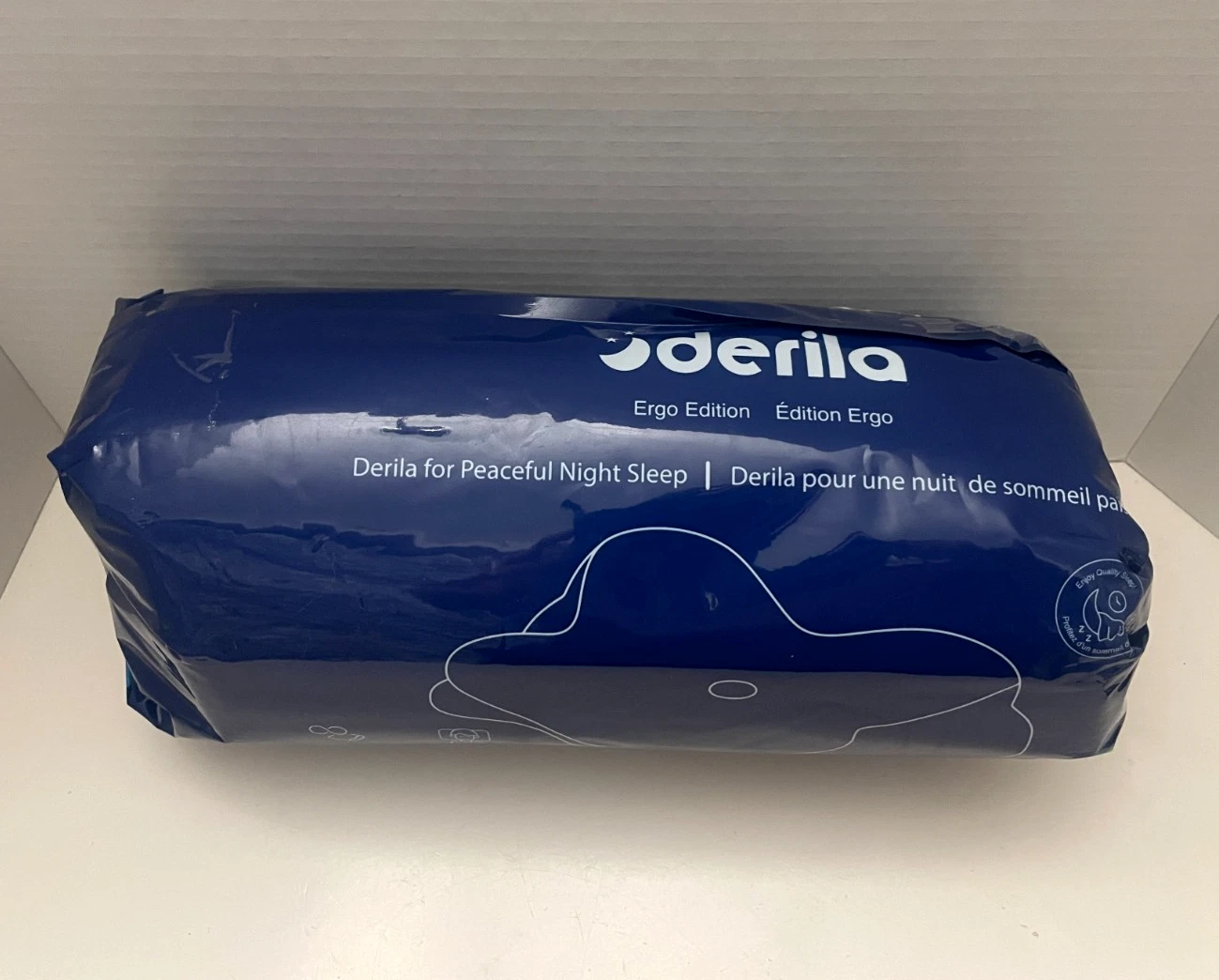
After looking closely at what Nuzzle does well and what I still wanted from an ergonomic pillow, Derila Ergo Pillow is the alternative I would choose first.
My reason is not that Derila Ergo is simply softer, more expensive, or marketed more aggressively. The biggest difference is structural. Nuzzle gives the sleeper flexibility by changing the amount and arrangement of support underneath the head. Derila Ergo approaches the same problem from another direction: it physically shapes the sleeping surface around the head, neck, shoulders, and arms.
That distinction matters to me.
If my main concern were having a fluffy pillow that I could modify for different sleeping positions, Nuzzle would still have appeal. My priority, however, is keeping the head from settling too deeply while maintaining enough material underneath the neck to fill the cervical curve.
A contoured memory-foam design makes that relationship easier to control.
Derila Ergo also feels more purpose-built. Its central recess, raised neck zones, sculpted sides, and dense memory-foam core work together rather than relying primarily on overall pillow thickness. Instead of asking me to create the right support by adjusting the entire pillow, the geometry itself creates several different support areas.
I also like that its memory foam behaves differently from loose or fiber fill. The material compresses under pressure while maintaining resistance beneath the head and neck. It does not migrate toward one corner or require constant fluffing.
None of that means Derila Ergo is perfect for everyone. Some people simply dislike memory foam, and others prefer a completely conventional rectangular pillow. Stomach sleepers also need to be especially careful with contour height.
Still, when I compare the two as solutions for structured neck positioning rather than general pillow comfort, Derila Ergo makes more sense to me.
What Is Derila Ergo Pillow?
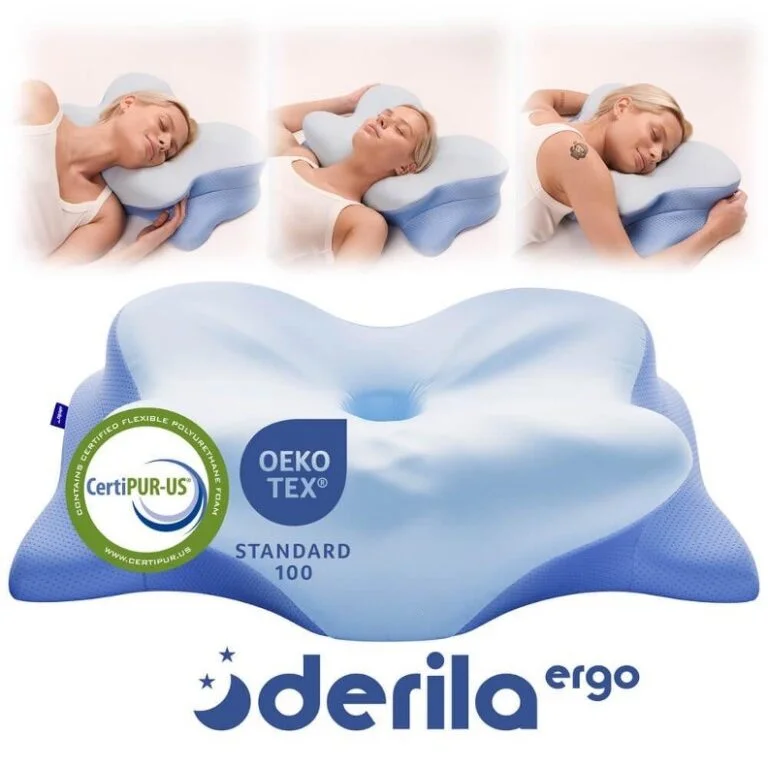
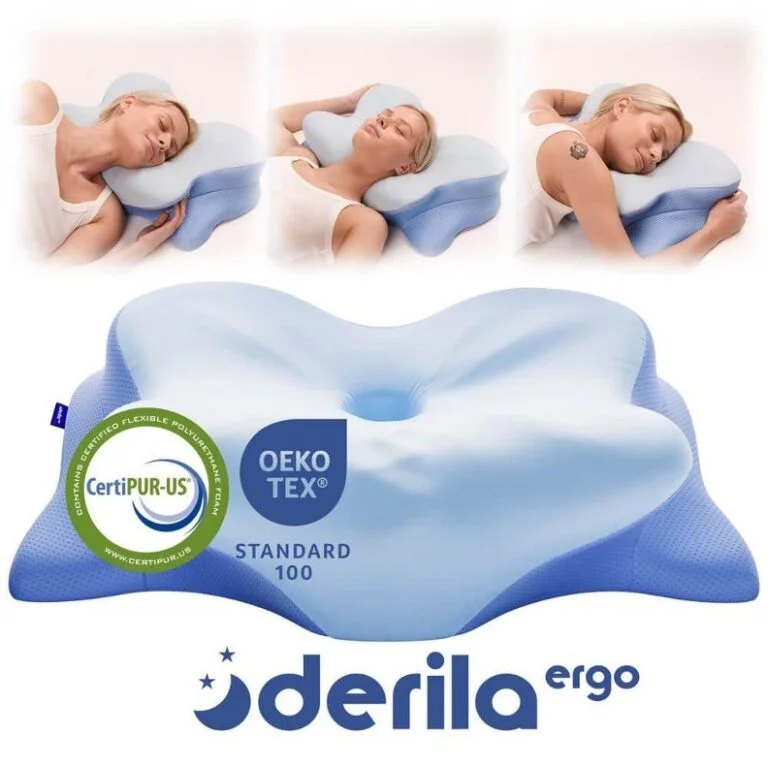
Derila Ergo Pillow is a molded memory-foam pillow built around an ergonomic contoured shape. Instead of being a uniformly thick rectangle, the surface contains raised and recessed areas designed to interact differently with the head, neck, shoulders, and arms.
The central area is recessed so the head can settle slightly lower. Around that center are raised portions intended to provide greater support underneath the cervical region.
That difference is important because the head and neck do not necessarily require the same elevation. If the entire pillow is equally high, the head may sit higher than necessary simply because the neck requires additional support. A contoured pillow attempts to separate those two requirements.
Derila Ergo uses high-density memory foam as its structural core. Unlike loose fill, molded foam has a predetermined shape that remains consistent throughout the night. When pressure is applied, the foam compresses, but the underlying geometry does not disappear.
I see that as the biggest practical difference between Derila Ergo and Nuzzle.
With Nuzzle, the sleeper adjusts the pillow.
With Derila Ergo, the sleeper positions the body within the pillow’s existing support zones.
The design also includes curved areas around the lower sides. These provide additional space around the shoulders and arms, which may be helpful for people who instinctively sleep with one arm near the head.
A removable breathable cover surrounds the foam and makes regular cleaning more practical. The foam itself should not normally be machine washed because saturating dense memory foam can make drying difficult and potentially damage the material.
For me, Derila Ergo makes the most sense for sleepers who repeatedly fold, bunch, stack, or reshape ordinary pillows because they never seem to get enough support underneath the neck.
How Does Derila Ergo Work?
Derila Ergo works by combining a fixed ergonomic contour with pressure-responsive memory foam.
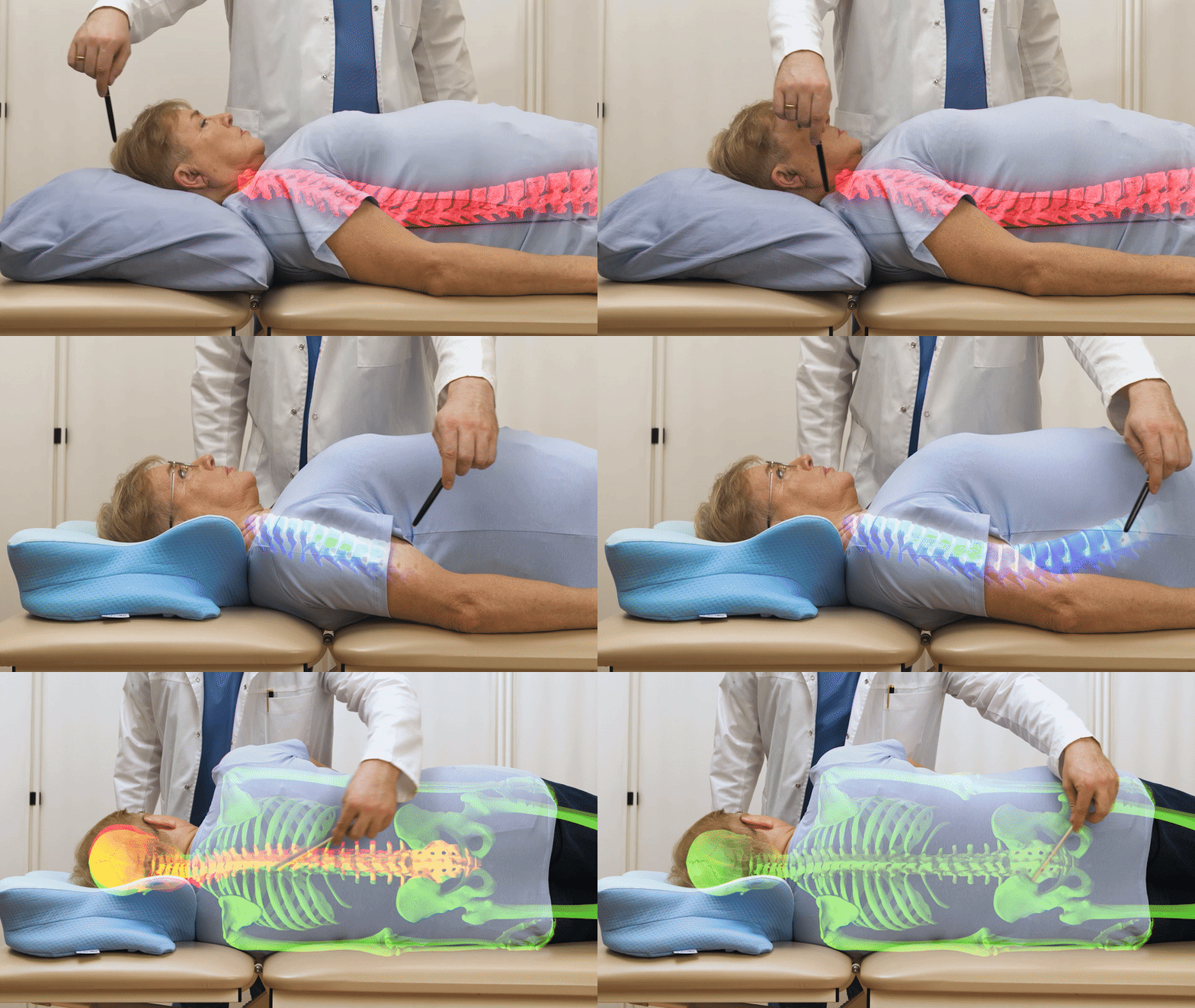
When the head rests near the central recessed section, it sits slightly lower than it would on the raised outer areas. The portion underneath the cervical curve remains higher, helping fill the natural gap between the neck and mattress.
This relationship between head depth and neck elevation is what I find most useful.
The memory foam then adds a second layer of adaptation. Instead of behaving like a hard molded block, the material compresses gradually in response to the weight and warmth of the sleeper. Areas carrying greater pressure sink farther into the foam while areas carrying less pressure remain comparatively elevated.
The result is not a perfectly customized orthopedic support system, and I would never describe it that way. It is simply a more controlled support environment than a loose-filled pillow provides.
For back sleeping, the center can cradle the back of the head while the lower contour supports the neck.
For side sleeping, the thicker sections can provide greater elevation to help fill the distance created by the shoulder. The sleeper still needs to make sure the height is appropriate because even the best-designed pillow cannot compensate for every combination of shoulder width and mattress firmness.
Combination sleepers can transition between zones instead of having to reshape the pillow after every movement.
Another practical difference is resistance to flattening. Loose filling can gradually migrate outward as pressure accumulates. A molded memory-foam core cannot shift from one side of the pillow to the other. The same support geometry remains underneath the sleeper even after several position changes.
This consistency is the main reason I would choose Derila Ergo over Nuzzle.
I am not expecting the pillow to treat an underlying spinal problem. What I want is a sleeping surface that gives my head somewhere to settle while still keeping material underneath the neck. Derila Ergo provides that relationship more deliberately.
Key Features Of Derila Ergo Pillow
Derila Ergo’s individual features matter, but I think the bigger advantage comes from how the features work together as a single support system. The shape controls positioning, the foam controls pressure response, and the exterior construction handles practical issues such as temperature and cleaning.
- Ergonomic Contoured Construction:
The sculpted surface is the defining characteristic of Derila Ergo. Instead of giving every part of the head and neck the same height, different areas of the pillow have different elevations. This creates a more purposeful sleeping surface and is the biggest reason I rank it above Nuzzle for cervical support. - High-Density Memory-Foam Core:
The foam responds gradually to pressure rather than immediately collapsing. This provides a combination of contouring and resistance. When the head presses into the central area, the material conforms around it while the cervical portion continues supporting the neck. - Central Head Cradle:
The recessed middle gives the head a lower resting area. This matters because supporting the neck effectively does not necessarily require elevating the head to the same degree. The central cradle allows those two requirements to be treated separately. - Defined Cervical Support Areas:
Raised contours underneath the neck create more deliberate contact with the cervical region. I prefer this to repeatedly rolling or folding a standard pillow in an attempt to create the same effect manually. - Multi-Position Design:
The pillow can be used by back, side, stomach, and combination sleepers, although the ideal experience will vary. I expect back and side sleepers to make the clearest use of its contouring system. Stomach sleepers should be cautious because excessive pillow height can increase neck rotation. - Shoulder Accommodation:
The curved edges create extra space around the shoulders. This makes the pillow feel less like a large rectangle pressing into the upper body and can help the sleeper move closer to the cervical-support portion. - Arm Placement Areas:
People who sleep with a hand or forearm near the head often end up pushing a traditional pillow into an awkward shape. Derila Ergo’s sculpted sides provide additional room for those positions without completely disturbing the central support area. - Shape-Retaining Construction:
Because the foam is molded, the filling cannot migrate to another side of the pillow. The support profile therefore remains comparatively consistent throughout the night, although any foam will gradually soften with long-term use. - Breathable Cooling-Focused Cover:
Memory foam can retain more warmth than loose fiber, so airflow and cover construction matter. Derila Ergo uses a breathable removable exterior intended to reduce the closed-in feeling that some people associate with dense foam. - Removable Washable Cover:
Being able to remove the exterior cover simplifies routine hygiene. I would still protect the pillow with an additional pillowcase because washing the core itself is generally not appropriate for molded memory foam.
Taken together, these features make Derila Ergo feel more like a structured ergonomic sleep tool and less like a premium version of a conventional pillow.
How To Use Derila Ergo Pillow
Getting started with Derila Ergo is simple, although positioning it correctly matters more than it would with an ordinary pillow.
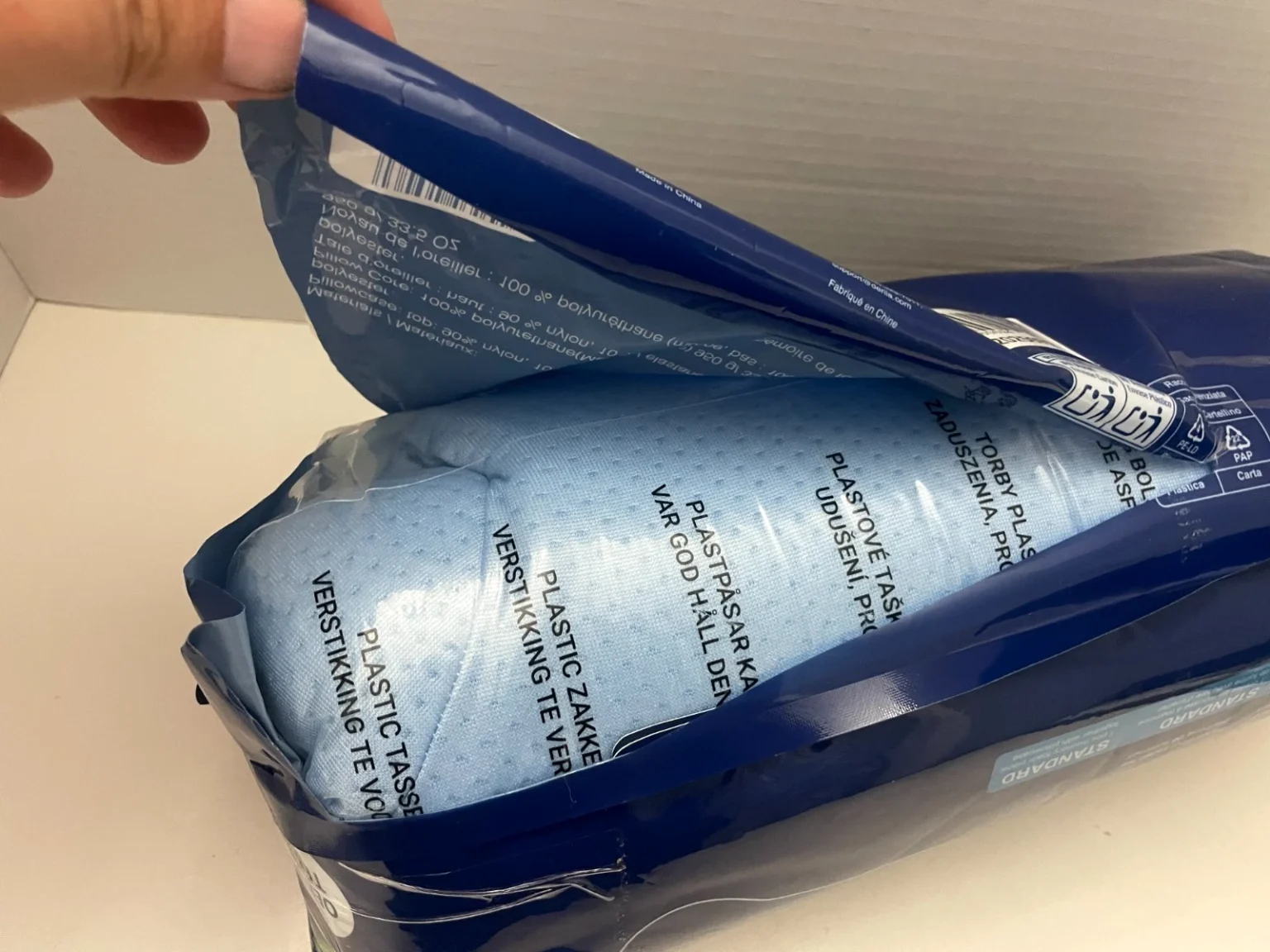
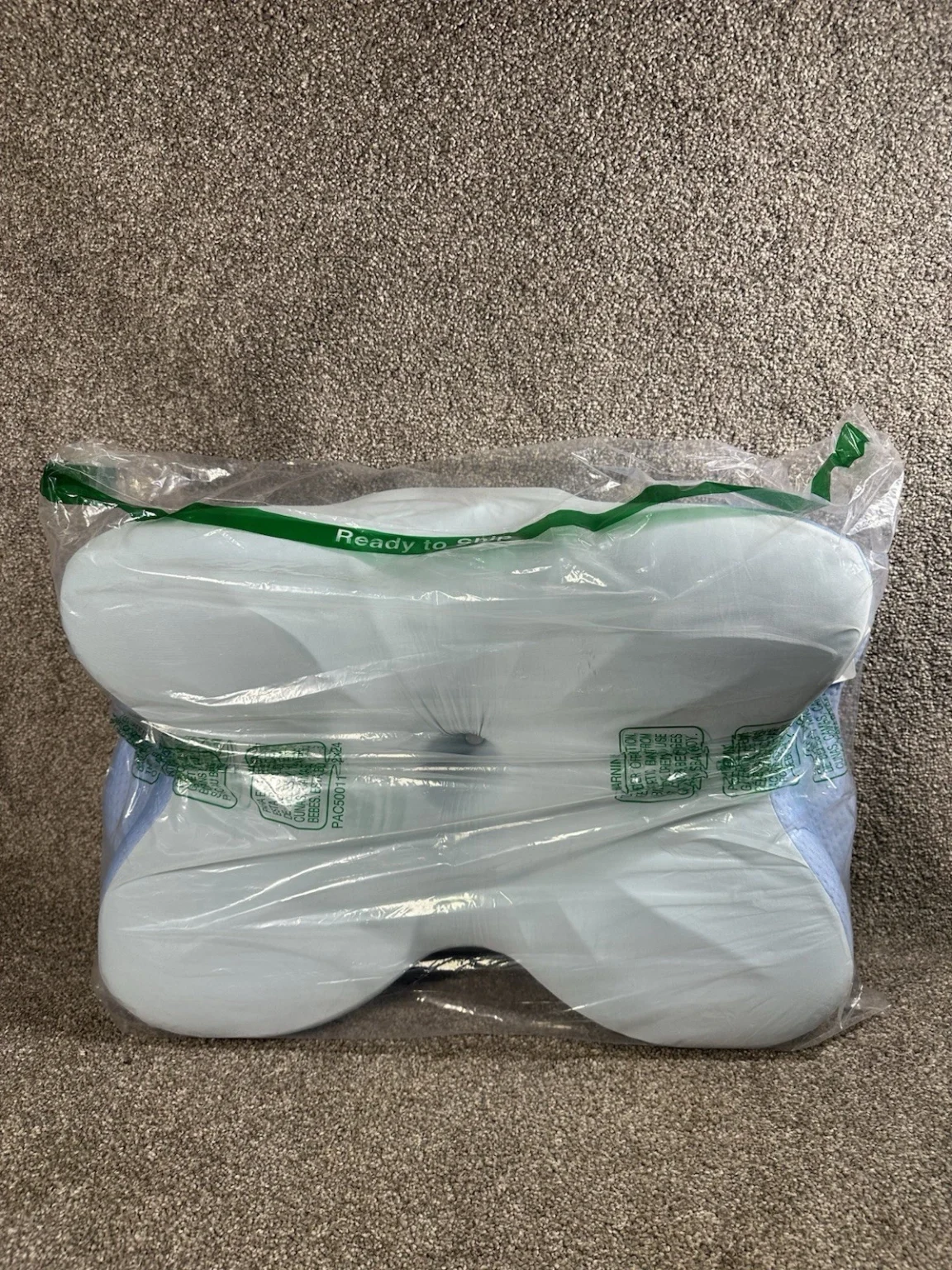
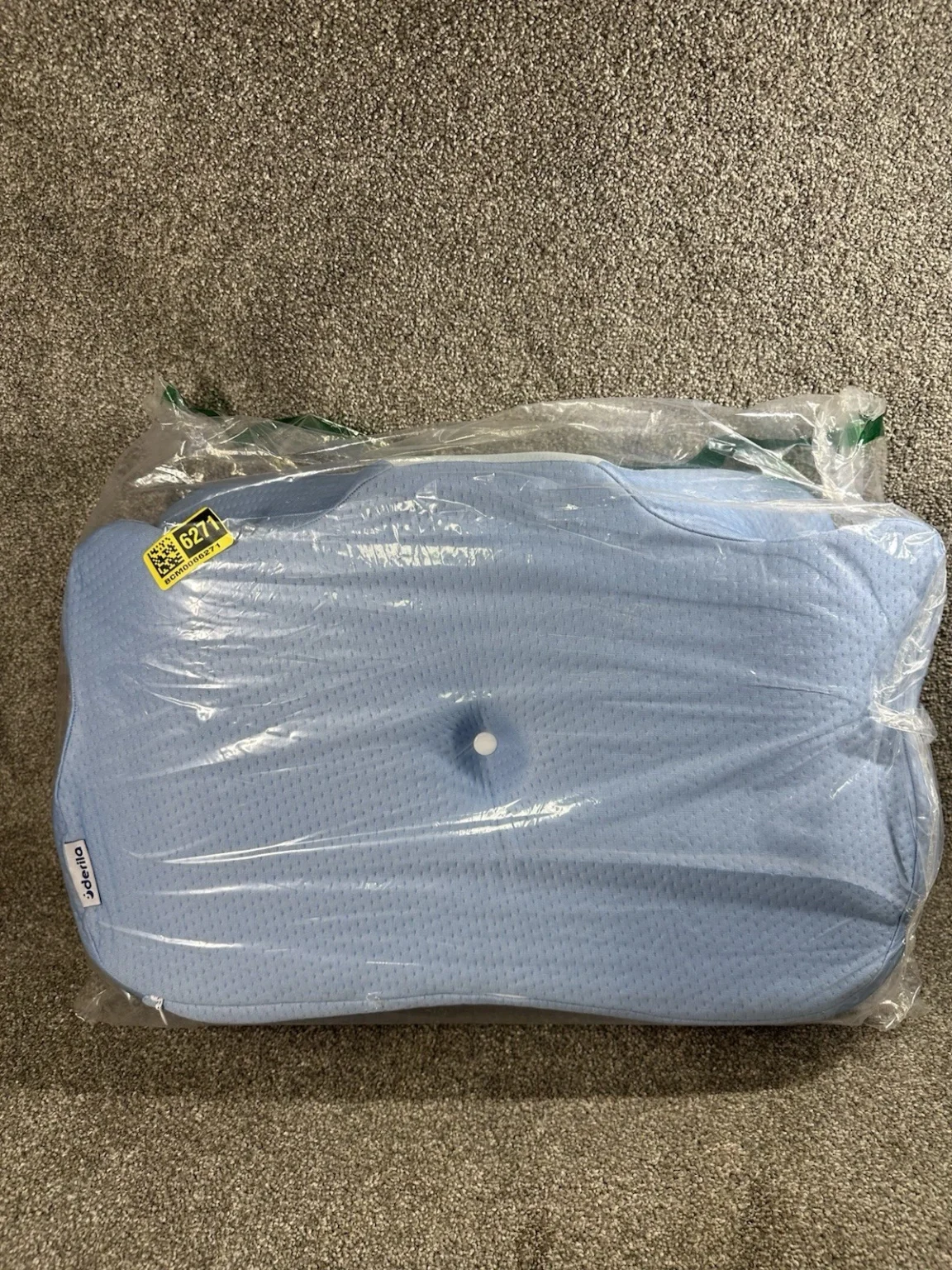
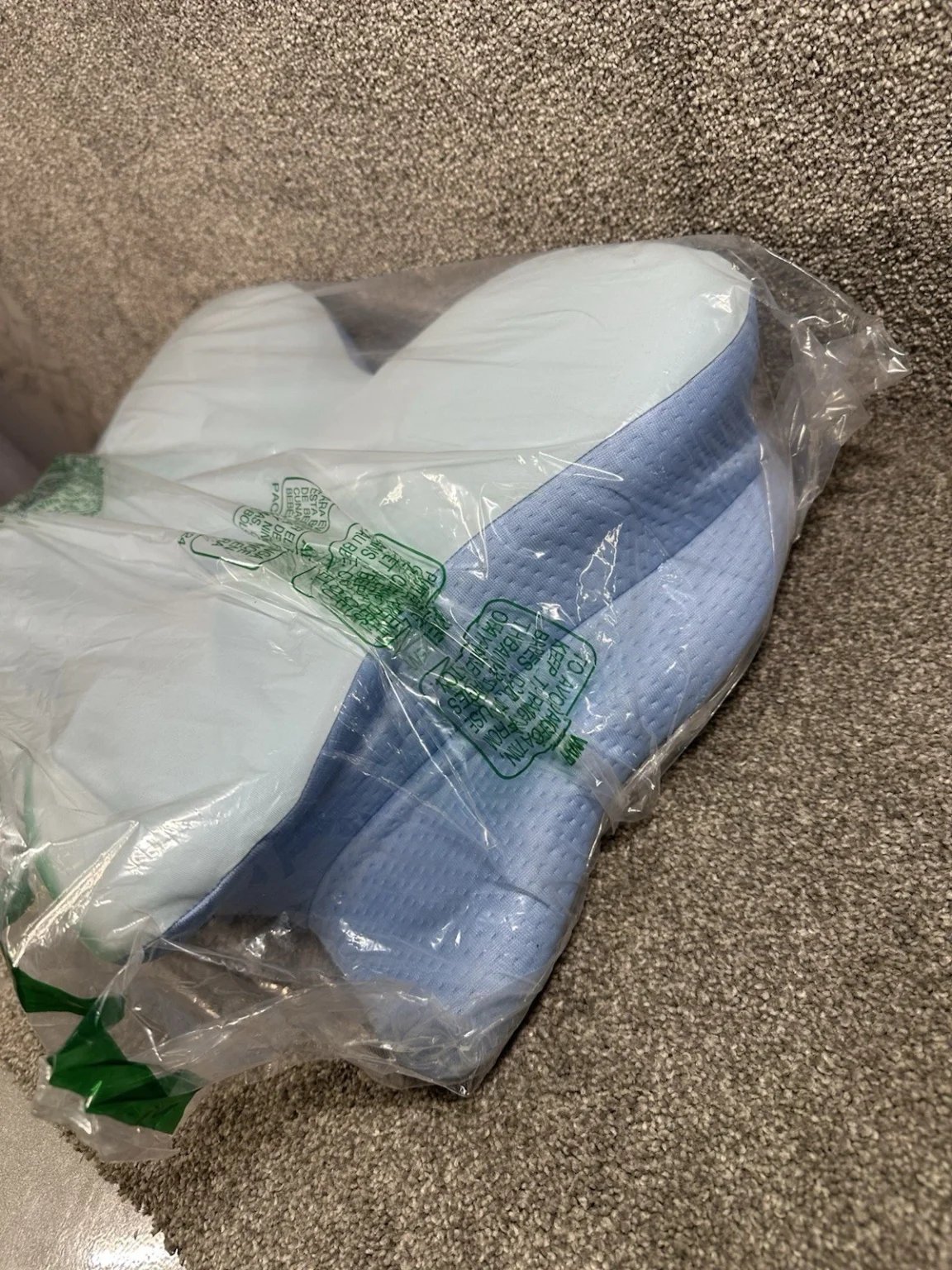
After unpacking the vacuum-compressed pillow, I would allow approximately six to eight hours for the foam to expand fully into its intended shape before judging its firmness or height. Compression during shipping can temporarily alter the appearance and feel of memory foam.
For back sleeping, I would position the natural curve of my neck against the raised front contour and allow the back of my head to rest closer to the recessed center. The goal is comfortable support rather than forcing my chin toward my chest. If I feel the head being pushed too far forward, I know the position is not right for me.
For side sleeping, I would move slightly toward the portion of the pillow where the contour fills the space underneath my neck while keeping my head reasonably level with my spine. Shoulder width and mattress firmness will strongly influence whether the height feels appropriate.
A soft mattress allows the shoulder to sink deeper, reducing the pillow height required. A firm mattress leaves more of the shoulder above the sleeping surface, increasing the amount of space underneath the head.
Stomach sleepers need to be more conservative because high pillows can rotate or extend the neck. I would use the lower portion of the contour whenever possible and stop using the pillow if the shape forced my neck into an uncomfortable position.
Combination sleepers can move between the center and side support zones during the night. It may take several nights before these movements become automatic because a contoured pillow feels different from a completely flat pillow.
For best results, I would never stack Derila Ergo on top of another sleeping pillow unless a healthcare professional specifically recommended that setup. Doing so dramatically changes the height that the ergonomic contour was designed to provide.
I would also give my body several nights to adapt before making a final judgment. A supportive pillow can feel strange initially simply because the neck is resting differently from the position it has used for months or years.
Is Derila Ergo Safe?
For most healthy adults, Derila Ergo is used in the same general way as other commercially available memory-foam pillows. Its design does not require electrical components, mechanical traction, medication, or invasive intervention.
The bigger safety consideration is fit.
A pillow that is too high, too firm, or incorrectly positioned can create discomfort regardless of how sophisticated its design appears. People with recent neck surgery, significant cervical disease, nerve symptoms, unexplained arm weakness or numbness, serious injury, or physician-directed sleeping restrictions should not substitute a pillow purchase for medical guidance.
I would also pay attention to any persistent increase in pain. A short adjustment period and mild unfamiliarity are different from worsening symptoms.
Memory foam can have a noticeable odor after vacuum packaging. I prefer to unpack it in a ventilated room and allow it to expand before sleeping on it.
Another practical issue is cleaning. The removable exterior cover can be cleaned according to its care instructions, while the memory-foam core should generally be protected from machine washing or prolonged saturation.
In short, I consider Derila Ergo a reasonable consumer pillow for ordinary sleep use, but I would never treat it as a medical device or assume that an ergonomic shape makes professional evaluation unnecessary when serious symptoms are present.
Potential Benefits of Derila Ergo Pillow
What interests me about Derila Ergo is not a promise that one pillow can solve every sleep complaint. The appeal comes from several practical design advantages that address common weaknesses of conventional pillows. These benefits depend on individual fit, so I view them as realistic possibilities rather than guaranteed outcomes.
★ 1. More Structured Neck Support
The first benefit is the clearest one. The raised cervical portion provides a specific place for the neck to rest instead of relying on loose filling to happen to remain underneath it. When I compare that concept with a conventional pillow, the support feels more intentional and easier to reproduce from night to night.
That consistency can be particularly useful for people who repeatedly roll a towel underneath their neck or fold the edge of their current pillow trying to create extra elevation. The Derila Ergo shape attempts to build that support directly into the sleeping surface.
★ 2. Better Head-and-Neck Positioning
The central recess lets the head settle slightly lower while the neck remains supported by a higher section. I consider this a smarter arrangement than simply increasing the thickness of the entire pillow.
Research suggests that pillow height can influence cervical alignment and pressure, although there is no universal ideal height for everyone. A design that separates head depth from neck support gives the sleeper another way to pursue a comfortable neutral position.
★ 3. More Predictable Support Throughout the Night
One frustration I have with loose-filled pillows is how differently they can feel at midnight compared with bedtime. Filling shifts, the center becomes compressed, and I end up pulling material back underneath my neck.
Derila Ergo’s molded foam cannot migrate in the same way. The material compresses but remains in its intended location. That makes the pillow’s support pattern more consistent when I change positions during the night.
★ 4. Reduced Need to Fold or Stack Pillows
Using two ordinary pillows may seem like an easy way to increase support, but the stack can become surprisingly unstable. One pillow slides against the other, and the combined height can flex the neck more than expected.
Derila Ergo provides different elevations within a single piece of foam. For me, that is a cleaner way of creating neck support than building an improvised stack every night.
★ 5. Pressure-Responsive Comfort
High-density memory foam distributes pressure differently from a very firm solid surface. The material gradually yields underneath heavier areas while continuing to support surrounding regions.
That characteristic can create a comfortable cradle around the head without producing the uncontrolled collapse associated with extremely soft filling. I especially like this balance for people who want firmness underneath the neck without feeling as though the back of the head is resting on a hard block.
★ 6. Support for Several Sleeping Positions
A highly specialized pillow is not useful if the sleeper constantly changes position. Derila Ergo attempts to address that problem through multiple zones instead of one uniform surface.
The center can accommodate back sleeping, while the raised side regions offer additional height for side sleeping. The curved edges also provide room for the shoulders and arms. That makes the design more practical for combination sleepers than a simple cervical roll or single-height orthopedic block.
Derila Ergo Pillow Customer Reviews
Pros and Cons of Derila Ergo Pillow
Derila Ergo is my preferred option in this comparison, but I still think it should be evaluated realistically. Its advantages come largely from the same structured design that can also create a learning curve for people accustomed to soft conventional pillows.
| Pros | Cons |
|---|---|
| 1. Purpose-built cervical contour. The head recess and raised neck areas create separate support zones rather than giving the entire head and neck one uniform height. I consider this the strongest advantage because it directly addresses the support relationship I wanted to improve. | 1. Contoured pillows require an adjustment period. The first few nights can feel unfamiliar because the pillow encourages the head and neck to rest in specific areas. Someone accustomed to bunching or folding a pillow freely may initially find the structure restrictive. |
| 2. Stable molded memory-foam core. The support material cannot shift toward the corners as loose filling can. This means the basic geometry remains beneath the sleeper throughout the night, providing a much more predictable support pattern. | 2. Fixed geometry will not fit every anatomy. The contour provides structure, but it is not custom molded to each individual. Someone with unusually broad shoulders, a very small frame, or a particularly firm or soft mattress may prefer a different height. |
| 3. Head and neck receive different levels of support. The recessed middle allows the head to sit lower while the cervical area remains elevated. That relationship is difficult to reproduce consistently with an ordinary flat pillow and is one of the biggest reasons I prefer Derila Ergo. | 3. Memory foam may feel warmer or denser than fiber. The breathable cover helps, but people who strongly prefer the airy feel of down or polyester filling may still notice that the foam feels more substantial underneath the head. |
| 4. Useful for back and side positioning. Different areas of the pillow can accommodate changing positions. Back sleepers can use the central cradle, while side sleepers can take advantage of the raised areas that help fill the space created by the shoulder. | |
| 5. Shoulder and arm accommodation improves practicality. The curved sides give combination sleepers somewhere to position their arms without pushing the whole pillow away from the neck. This sounds like a minor design feature, but it becomes surprisingly useful for people who naturally sleep with their hands near their face. | |
| 6. Less nightly reshaping and fluffing. Molded foam returns toward its original profile after pressure is removed. I do not have to redistribute filling or repeatedly create a neck roll manually, which makes the sleeping setup considerably more consistent. |
Derila Ergo 60-Day Money-Back Guarantee
Derila Ergo is offered with a 60-day money-back guarantee, and I consider a trial period particularly important with ergonomic pillows.
Comfort cannot be judged reliably from a photograph or specification sheet. Even measurements such as pillow thickness do not reveal exactly how far the foam will compress beneath an individual’s head or how the pillow will interact with a particular mattress.
A 60-day period provides enough time to move beyond the first-night reaction. I would use at least several nights to evaluate positioning, then continue paying attention to morning comfort, neck stiffness, nighttime repositioning, temperature, and whether I naturally remain on the pillow instead of pushing it away.
I would still read the current guarantee terms carefully before ordering. Return eligibility, shipping costs, required documentation, and the starting date of the guarantee can matter just as much as the advertised number of days.
For me, the value of the guarantee is psychological as well as practical. A contoured pillow has a more specific feel than an ordinary pillow, so having enough time to decide whether the design actually suits my body makes the purchase easier to justify.
Nuzzle Pillow vs Derila Ergo Pillow
The clearest way to understand my preference is to put the two designs next to each other. Nuzzle focuses more heavily on adjustable comfort and familiar cushioning, while Derila Ergo places greater emphasis on fixed ergonomic geometry and defined cervical support.
Neither approach is automatically correct for everyone. My choice comes down to the problem I am trying to solve. If I mainly wanted a premium adjustable pillow that still behaved like a traditional pillow, Nuzzle would remain appealing. Because I want stronger control over where my head and neck rest, Derila Ergo has the advantage.

| Comparison Area | Nuzzle Pillow | Derila Ergo Pillow |
|---|---|---|
| Overall Design Philosophy | Nuzzle approaches support through adjustable loft and cushioning. The user changes the internal configuration to alter the sleeping height while retaining a relatively familiar pillow experience. | Derila Ergo uses a molded ergonomic shape with predetermined support zones. Instead of relying mainly on overall height, it creates separate areas for the head, neck, shoulders, and arms. |
| Type of Support | Support is distributed through the pillow’s filling and overall loft. This creates comfortable resistance underneath the head but does not provide the same rigidly defined neck-support area as a molded contour. | Support is more anatomically targeted. The central head cradle and raised cervical sections give the head and neck different resting elevations, which I prefer for structured positioning. |
| Adjustability | Nuzzle has the advantage for conventional loft adjustment. Different internal configurations allow the sleeper to experiment with overall height. | Derila Ergo does not offer the same removable-layer adjustment. Instead, different heights are built into different regions of the pillow. |
| Head Cradle | The head sinks into the filling according to pressure and the selected configuration. There is no equally pronounced permanent central cavity controlling exactly where it settles. | A recessed center creates a dedicated location for the head, allowing it to sit lower relative to the neck-support section. |
| Cervical Support | Nuzzle can support the neck when the loft is appropriate, but the support depends substantially on how the filling compresses underneath the sleeper. | A raised cervical contour is built directly into the shape, providing a more deliberate surface underneath the natural curve of the neck. |
| Material Behavior | The fiber-style construction produces a softer, more traditional pillow sensation. This can be preferable for sleepers who dislike dense foam. | High-density memory foam compresses gradually while maintaining the molded geometry underneath the sleeper. I prefer this predictable resistance for neck support. |
| Shape Retention | The pillow is designed to maintain useful loft, although any filled pillow will respond to repeated compression and may require occasional adjustment. | The molded core cannot shift from one end to another. The contour remains in essentially the same place throughout the night. |
| Back Sleeping | Adjustable height can make Nuzzle suitable for back sleeping if the configuration keeps the head from being pushed excessively forward. | The central cradle and neck contour make the design particularly intuitive for back sleeping when the height suits the user. |
| Side Sleeping | Side sleepers can increase loft, but finding exactly the right height depends on shoulder width, mattress sink, and how much the pillow compresses. | The raised lateral zones provide more structured elevation for side sleeping, although fit still depends on the individual’s shoulder width and mattress. |
| Combination Sleeping | The softer conventional shape allows movement without requiring the sleeper to stay within predefined zones. This can make position changes feel natural. | The multiple zones support different positions, but combination sleepers may need several nights before moving naturally between the center and sides. |
| Stomach Sleeping | A lower Nuzzle configuration may suit stomach sleepers better because excessive loft should generally be avoided in this position. | Stomach sleepers need to be more careful with Derila Ergo’s contour because too much elevation can increase neck rotation. |
| Shoulder Accommodation | The rectangular construction behaves more like a conventional pillow against the shoulder. | Curved side areas leave additional space around the shoulders, allowing the sleeper to position the neck closer to the cervical contour. |
| Arm Placement | Sleepers can place their arms around or underneath the pillow as they would with most traditional designs. | Sculpted side sections provide more deliberate space for people who sleep with their hands or forearms near the head. |
| Cooling Experience | Cooling-focused materials are an important part of Nuzzle’s design, and the lack of a large solid foam block may appeal to people sensitive to heat. | The breathable cover helps manage the warmth associated with dense memory foam, but exceptionally hot sleepers may still prefer fiber-based construction. |
| Initial Familiarity | Nuzzle wins here. Someone moving from an ordinary pillow is likely to find the basic shape and sleeping experience more immediately familiar. | Derila Ergo may require several nights of adaptation because the contour dictates where the head and neck naturally settle. |
| Need for Fluffing or Reshaping | Occasional adjustment may still be useful because filled pillows naturally respond to pressure and movement. | Minimal reshaping is required because the molded foam maintains its support geometry. |
| Best Fit for Comfort-First Buyers | Nuzzle is the better fit for someone who prioritizes adjustable softness, a familiar pillow feel, and multiple loft options. | Derila Ergo may feel too structured for a person who simply wants a soft traditional sleeping surface. |
| Best Fit for Support-First Buyers | Nuzzle provides useful support but remains primarily dependent on the correct loft configuration. | Derila Ergo is my stronger choice because the entire shape is built specifically around head and cervical positioning. |
| Money-Back Period | Nuzzle currently advertises a satisfaction period, but buyers should always verify the exact current terms at checkout because policies can change. | Derila Ergo is offered with a 60-day money-back guarantee, giving the sleeper time to decide whether the contour fits comfortably. |
| My Overall Preference | A respectable option for sleepers who want a more adjustable version of a familiar pillow. It helped address some of the problems I associate with flat, unsupportive pillows, but the design does not go as far as I would like for targeted neck support. | My preferred choice. The head cradle, cervical contour, stable foam core, shoulder accommodation, and multi-zone layout address the specific support issues that matter more to me. |
Why Is Derila Ergo a Better Choice?
The main reason I prefer the Derila Ergo pillow is simple: its design addresses the geometry of the neck and head more directly.
I do not think Nuzzle fails at what it is trying to do. It offers adjustable cushioning and gives people more control over pillow height than many conventional pillows. My concern is that height adjustment only solves part of the problem.
- The Head and Neck Are Supported Separately:
Derila Ergo allows the head to settle into a recessed region while maintaining greater elevation underneath the neck. This is the design difference I value most. Simply making an entire pillow thicker can support the neck while simultaneously pushing the head too high. A contour can create support without treating every part of the sleeping surface identically. - The Support Pattern Stays in Place:
I do not want to wake up and discover that most of the filling has migrated away from the area I was trying to support. The molded foam prevents that type of movement. The material compresses and rebounds, but the location of the cervical support remains predictable. - The Pillow Requires Less Manual Adjustment:
I have little interest in reshaping a pillow several times every night. Derila Ergo’s contour removes much of that work because the neck-support area is permanently formed into the pillow. - The Shoulder Cutouts Make the Shape More Practical:
Side sleeping is not simply about supporting the head. The shoulder occupies space between the torso and mattress, and a large rectangular pillow can interfere with how close the neck gets to the support area. Derila Ergo’s curved sides create room for a more natural shoulder position. - Memory Foam Provides Controlled Compression:
I like that the foam yields gradually instead of collapsing immediately. The head can sink enough for comfort while the underlying structure continues resisting pressure. That balance is one of the qualities I find missing in extremely soft pillows. - It Better Matches the Problem I Am Trying to Solve:
This point matters more than specifications. If someone simply wants a softer or more adjustable pillow, I would not automatically tell them to choose Derila Ergo. My recommendation is directed at people who repeatedly wake up feeling as though their head and neck were never properly supported. - It Provides a More Defined Ergonomic Experience:
Nuzzle still feels relatively familiar. Derila Ergo feels intentionally shaped around sleep posture. That creates a slightly greater adjustment period, but it also creates a more obvious distinction from the conventional pillows I was trying to replace.
For those reasons, Derila Ergo gives me the stronger overall combination of structure, pressure response, consistency, and neck-focused design.
Frequently Asked Questions About Derila Ergo Pillow
Q: Is Derila Ergo suitable for side sleepers?
A: Side sleepers are among the people I think can benefit most from the design, provided the pillow’s height matches their anatomy. Side sleeping creates a significant gap between the mattress and the head because the shoulder holds the upper body away from the mattress. The pillow needs to fill enough of that distance to keep the head from dropping toward the mattress.
Derila Ergo’s raised side regions can provide that elevation, while the curved edges make space around the shoulder. The important variable is still fit. A very broad-shouldered sleeper on an extremely firm mattress may require more height than a smaller person sleeping on a softer mattress.
Q: Can I use Derila Ergo if I sleep on my back?
A: Back sleeping is one of the positions where the central cradle makes the most intuitive sense. The back of the head can settle into the recessed section while the cervical curve rests against the raised lower portion.
I would pay attention to chin position. A pillow should not push the head so far forward that the chin feels compressed toward the chest. If that happens, the height or positioning is not appropriate.
Q: Does Derila Ergo cure neck pain?
A: I would never present it as a cure. Neck discomfort can come from muscle strain, arthritis, disc problems, nerve irritation, injury, posture, stress, or numerous other causes. A pillow cannot diagnose or treat all of those conditions.
What Derila Ergo can do is provide a more structured sleeping surface designed to support a comfortable head-and-neck position. For some people, improving pillow fit may reduce morning discomfort. Persistent, severe, unexplained, or neurological symptoms should be evaluated professionally.
Q: How long does Derila Ergo take to get used to?
A: I would allow several nights before making a final judgment unless the pillow causes obvious pain. A contoured pillow changes where the head and neck make contact with the sleeping surface, so the sensation can feel noticeably different at first.
I would also experiment carefully with positioning rather than constantly changing the setup every few minutes. Giving the body time to experience the same support pattern for several nights provides a much better indication of whether the contour actually suits you.
Q: Can I place Derila Ergo on top of another pillow?
A: I generally would not. Stacking it on another pillow substantially increases the height and changes the angle created by the contour. That can undermine the very alignment the design is intended to support.
I would use Derila Ergo directly on the mattress as the primary head pillow unless a qualified healthcare professional has recommended a different arrangement for a particular medical reason.
Q: Does the memory foam become completely flat during the night?
A: Molded memory foam compresses underneath body weight, but it behaves differently from loose polyester filling. The foam is designed to recover toward its original shape after the pressure is removed.
All foam changes gradually with long-term use, so I would never claim that a memory-foam pillow remains identical forever. The important advantage is that the material cannot physically migrate from the neck-support area to another corner of the pillow.
Q: Is Derila Ergo washable?
A: The removable exterior cover is the component I would clean regularly according to the manufacturer’s care instructions. I would also use a normal pillowcase over the pillow for additional protection.
The memory-foam core itself should generally not be put through a washing machine. Saturating dense foam can make it extremely difficult to dry thoroughly and may damage its structure. Spot cleaning and complete air drying are the safer approach for the foam itself.
Q: What happens if Derila Ergo does not suit me?
A: Derila Ergo is offered with a 60-day money-back guarantee, which is one reason I find it easier to recommend than an ergonomic pillow sold with a very restrictive return window.
I would still read the current conditions before purchasing and retain the relevant order information. The purpose of the trial period should be to actually evaluate the pillow over multiple nights rather than deciding solely from how unusual the contour feels during the first few minutes.
Conclusion: Should You Buy Nuzzle Pillow?
Nuzzle Pillow is not a product I would dismiss. It offers real advantages over a basic fixed-loft pillow, particularly for sleepers who want to change the height without opening a bag of loose filling. I also understand why its softer, more conventional sleeping feel has attracted people who do not enjoy dense molded foam.
Where my opinion changes is when I judge it specifically as a solution for more structured neck support. Adjusting overall loft can certainly improve head position, but it does not provide the same degree of anatomical separation between the head and cervical area that I get from a molded contour. That limitation matters more to me than the pillow’s comfort-oriented advantages.
This is why my experience with the concept is mixed rather than completely negative. I can see how Nuzzle may help a little for someone moving away from a flat, worn-out pillow. Better loft and more consistent cushioning can absolutely be worthwhile. At the same time, I wanted something that went further. I wanted a defined place for the head to rest, more material underneath the neck, and a support surface that would remain in the same location instead of depending mainly on fill distribution.
For that reason, Derila Ergo is the pillow I would choose between the two. Its contoured memory-foam construction is more closely aligned with what I personally want from an ergonomic pillow. The recessed head area, raised cervical sections, shoulder accommodation, and stable molded core create a more deliberate support environment.
That recommendation still comes with realistic expectations. A pillow cannot guarantee pain relief, and even an intelligently shaped contour will not fit every body. Shoulder width, sleeping position, mattress firmness, previous injuries, and personal comfort preferences remain important. The scientific research on pillows supports this individualized view: shape and height matter, but there is no universal design that automatically solves neck discomfort for everyone.
If I primarily wanted adjustable softness and the familiar sensation of a conventional pillow, Nuzzle would remain a reasonable option. If I were buying specifically because I wanted a more structured approach to supporting the head and cervical area, I would spend my money on Derila Ergo instead.
That difference ultimately determines my verdict. Nuzzle has useful qualities and may be enough for sleepers whose main problem is inappropriate pillow loft. For my priorities, however, it did not go far enough. Derila Ergo provides the stronger overall design for the type of consistent, targeted support I am looking for.
References
The scientific references below were selected to provide evidence-based context on pillow height, cervical alignment, neck symptoms, and ergonomic pillow design. They support the general discussion of pillow ergonomics in this review; they should not be interpreted as clinical studies proving that either Nuzzle Pillow or Derila Ergo Pillow treats a medical condition.
- Pang JPCY, et al. The Effects of Pillow Designs on Neck Pain, Waking Symptoms, Neck Disability, Sleep Quality and Spinal Alignment in Adults: A Systematic Review and Meta-Analysis. Clinical Biomechanics. 2021.
This systematic review examined clinical research involving pillow designs, neck discomfort, waking symptoms, disability, sleep quality, and spinal alignment. PubMed – Pillow Design Systematic Review - Effect of Pillow on Pain, Disability and Sleep Quality in Patients With Chronic Neck Pain: A Systematic Review.
A newer systematic review evaluating evidence surrounding pillow characteristics and their relationship with pain, disability, and sleep outcomes in people experiencing chronic neck pain. PubMed – Chronic Neck Pain and Pillow Review - Ren S, et al. Effect of Pillow Height on the Biomechanics of the Head-Neck Complex: Investigation of Cranio-Cervical Pressure and Cervical Spine Alignment.
This study examined how different pillow heights affected pressure distribution and cervical positioning, reinforcing why appropriate pillow height can vary significantly between sleepers. PubMed – Pillow Height and Cervical Alignment - The Individualized Optimal Pillow Height and Neck Support Design for Side Sleepers.
This research explored individualized pillow height and additional neck support among side sleepers, highlighting the importance of matching pillow characteristics to individual anatomy rather than assuming one universal height. PubMed – Individual Pillow Height and Neck Support - Gordon SJ, Grimmer-Somers K, Trott P. Pillow Use: The Behaviour of Cervical Pain, Sleep Quality and Pillow Comfort in Side Sleepers. Manual Therapy. 2009.
This clinical pillow study compared multiple pillow materials and shapes while evaluating cervical symptoms, comfort, and sleep quality in side sleepers. PubMed – Pillow Use and Cervical Symptoms
Disclaimer
This review is provided for informational and educational purposes and is not medical advice. Individual comfort and results with any pillow can vary according to sleeping position, body structure, mattress firmness, medical history, and personal preferences. Anyone experiencing persistent neck pain, numbness, weakness, severe headaches, recent injury, or symptoms following cervical surgery should consult an appropriate healthcare professional rather than relying on a pillow as treatment.