

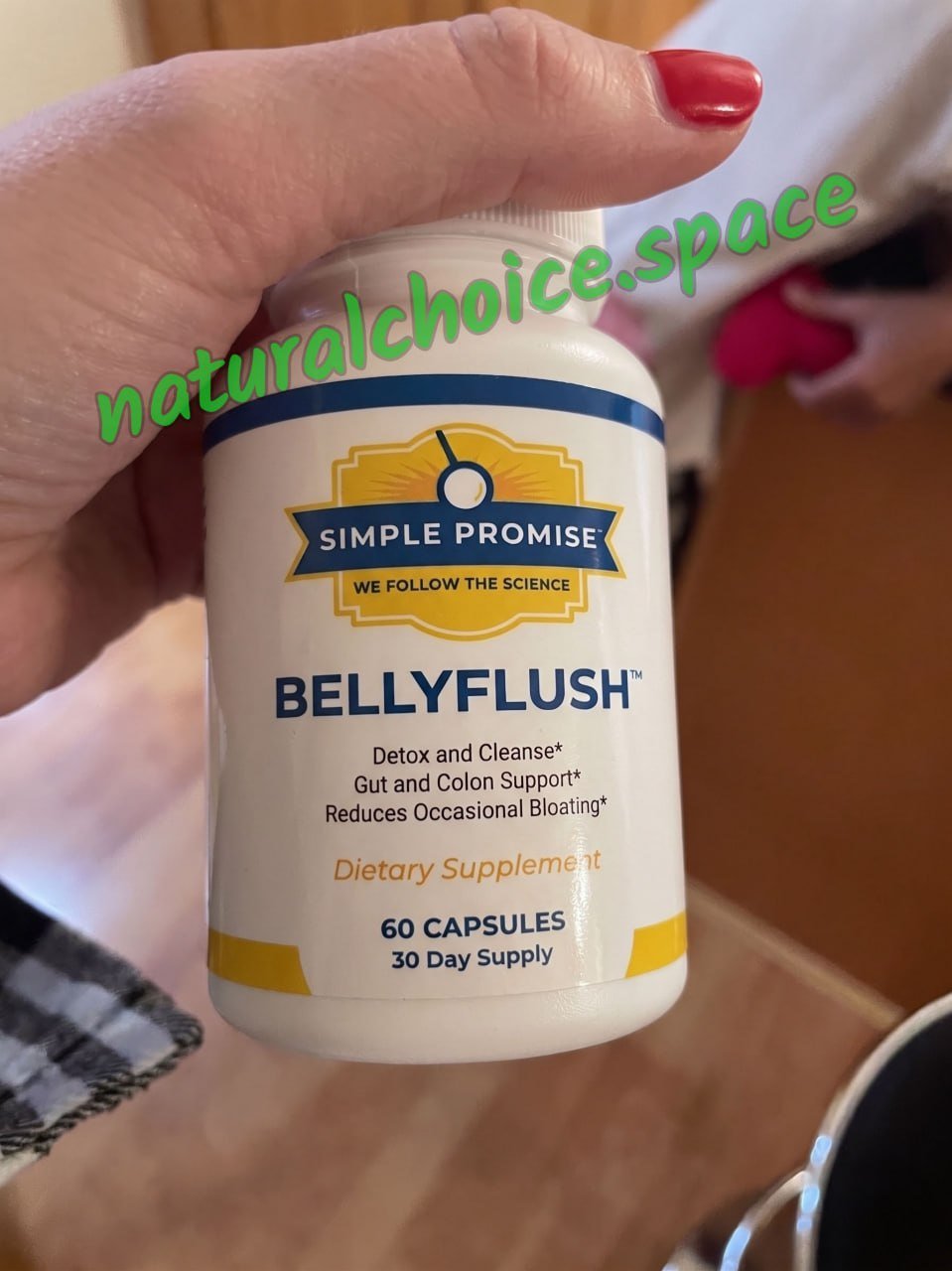
Digestive discomfort can affect everyday life in surprisingly frustrating ways. Occasional constipation, abdominal heaviness, irregular bowel movements, and bloating can make even ordinary meals uncomfortable. Herbal digestive supplements promise a convenient solution, but their effectiveness depends heavily on the ingredients, how those ingredients work, and whether the formula is appropriate for regular use.
Belly Flush caught my attention because it combines traditional digestive herbs with botanical ingredients associated with bowel regularity and gastrointestinal comfort. Unlike simple fiber supplements, this formula includes several herbs known for their stimulant-laxative properties, making its safety profile particularly important to examine.
This is my detailed review of what I discovered about Belly Flush, including available customer feedback, complaints, possible side effects, ingredients, dosage, and whether the supplement appears legitimate or a scam. My assessment focuses on its formulation, credible scientific evidence, consumer protections, and the practical limitations that buyers should understand before ordering.
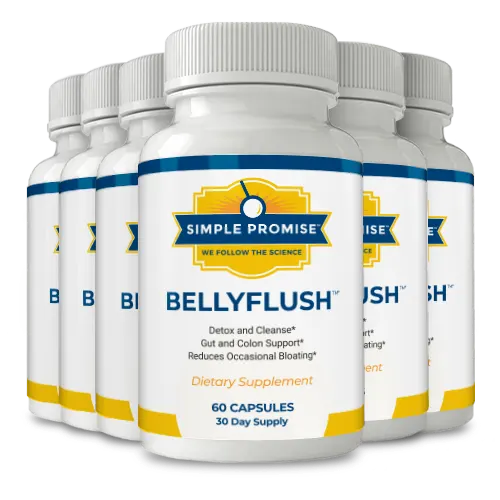
Belly Flush Product Overview
Before examining the individual ingredients, I wanted to establish exactly what consumers are purchasing and what the product claims to provide.
| Product Detail | Information |
|---|---|
| Product Name | Belly Flush |
| Product Category | Herbal digestive-support dietary supplement |
| Primary Purpose | Supports bowel regularity, digestive comfort, and occasional bloating relief |
| Product Format | Oral capsules designed for bedtime use |
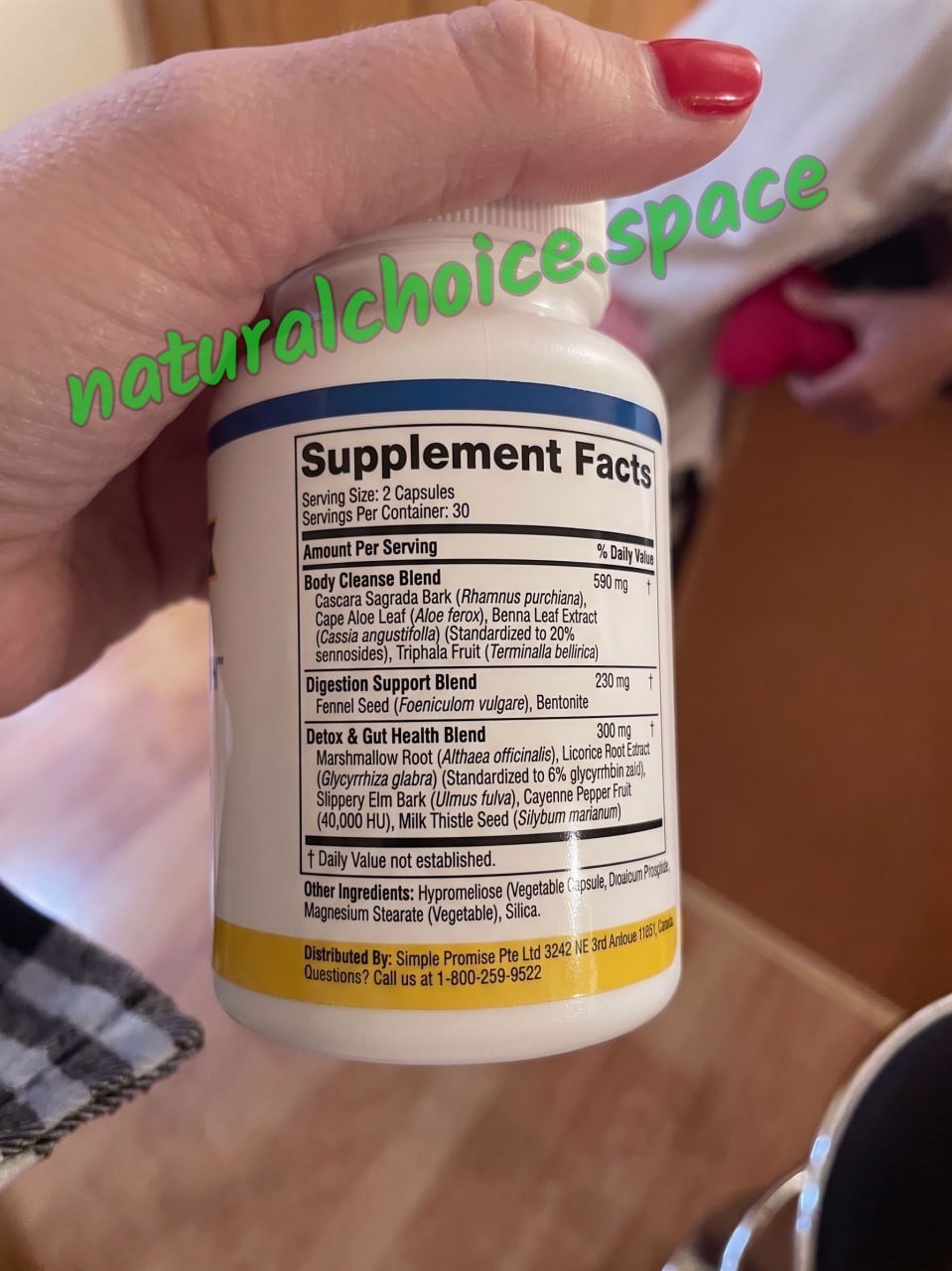
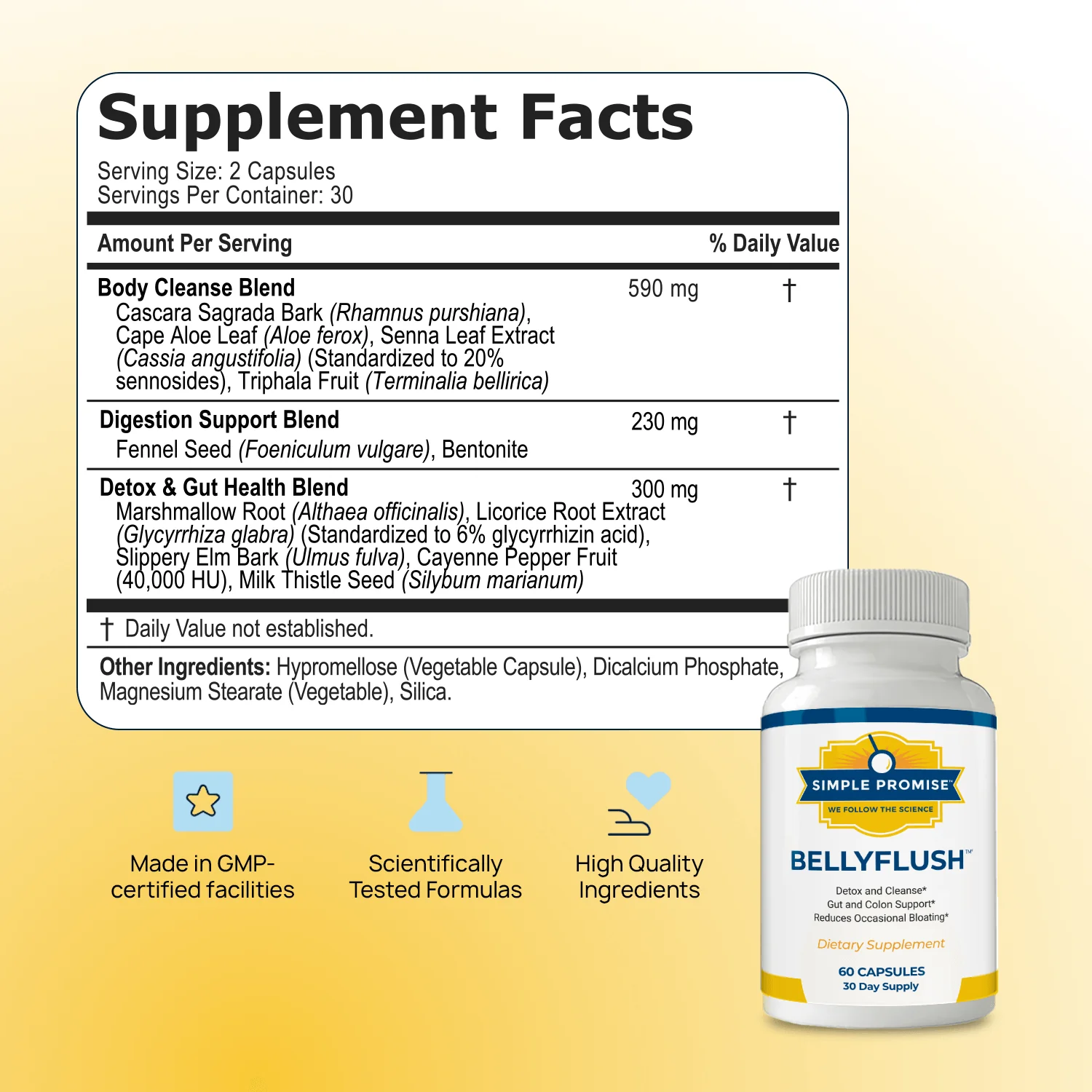
| Key Ingredients | Cascara Sagrada, Cape Aloe, Senna, Triphala, Fennel, Bentonite Clay, Marshmallow Root, Licorice Root, Slippery Elm, Cayenne Pepper, and Milk Thistle |
| Recommended Usage | Two capsules 20–30 minutes before bedtime with an 8 oz. glass of water, or as advised by a healthcare provider |
| Manufacturing | Advertised as manufactured in a cGMP-compliant facility; independent certification was not established |
| Evidence Status | Some individual ingredients have established laxative activity; clinical effectiveness of the complete formula remains unverified |
| Pricing | Visit the official website for current offers and package options |
| Money-Back Guarantee | Advertised 365-day money-back guarantee; applicable return conditions should be confirmed |
| Overall Editorial Rating | 4.6/5 — ★★★★½ |
| Official Website | ✅ Click Here |
My overall assessment recognizes the product’s clearly defined digestive-support purpose, convenient format, and extensive advertised refund period. However, this editorial score should not be interpreted as evidence that the complete supplement has demonstrated clinical effectiveness or safety in controlled human trials.
What Is Belly Flush and What Makes Its Formula Different?
Belly Flush is an herbal dietary supplement designed to promote digestive comfort and support bowel regularity. Its manufacturer positions it as a supplement that complements the body’s natural digestive processes, particularly for adults experiencing occasional sluggishness or irregular bowel movements.
What distinguishes the formulation is its combination of stimulant-laxative botanicals and traditionally soothing digestive herbs. Cascara Sagrada, Cape Aloe, and Senna are particularly relevant because their active compounds can stimulate intestinal activity. Meanwhile, ingredients such as Marshmallow Root, Slippery Elm, and Fennel provide a different approach centered on traditional gastrointestinal comfort.
The manufacturer additionally promotes improved energy and general well-being. I consider these secondary claims less convincing because improvements in digestion do not automatically establish measurable improvements in energy production, nutrient absorption, or whole-body health.
Although marketed for digestive wellness, Belly Flush should not be confused with a conventional daily fiber supplement. Its stimulant-laxative ingredients make professional guidance especially important before prolonged or repeated use.
How Belly Flush Is Designed to Work
The proposed mechanism of Belly Flush centers primarily on encouraging bowel movements through certain plant-derived compounds. Senna, Cascara Sagrada, and some Aloe preparations contain anthraquinone-related substances that influence intestinal motility and fluid movement.
This mechanism may help explain why a product containing these herbs could promote bowel evacuation. However, the intensity of the effect depends on processing methods, extract standardization, ingredient quantities, and individual sensitivity.
Other botanicals play supporting roles. Fennel has a history of use for digestive discomfort, while Marshmallow Root and Slippery Elm contain mucilage compounds that form gel-like substances when hydrated. Triphala is traditionally associated with digestive regularity, although its clinical evidence is more limited than that of established laxatives.
Importantly, increased bowel movements are not equivalent to eliminating harmful toxins or permanently restoring digestive health. The liver and kidneys already perform the body’s principal detoxification functions, and there is no reliable evidence that this finished formula enhances those processes.
My Examination of the Belly Flush Ingredients
The ingredient selection is the most interesting aspect of Belly Flush. Rather than treating every plant as equally beneficial, I examined its likely function, scientific support, and potential limitations.
The following are the eleven highlighted ingredients supplied for this review. Their names alone do not establish the complete Supplement Facts panel, individual quantities, or extract standardization.
🍃 Cascara Sagrada Bark
Cascara Sagrada contains anthraquinone compounds traditionally used to stimulate bowel movements. Its potential usefulness centers on occasional constipation rather than improved nutrient absorption or broader digestive restoration.
Long-term use raises important safety concerns, including diarrhea, dehydration, and electrolyte disturbances. The FDA previously determined that Cascara Sagrada lacked sufficient evidence to remain generally recognized as safe and effective in over-the-counter laxative drug products. That regulatory decision should not be misrepresented as product-specific testing.
🍃 Cape Aloe Leaf
Cape Aloe is associated with bitter aloe preparations containing compounds capable of producing laxative effects. Its inclusion reinforces the formulation’s emphasis on promoting intestinal evacuation.
However, aloe preparations vary considerably. Aloe gel differs from latex-containing leaf extracts, and certain oral preparations can cause significant cramping or diarrhea. Without independently verified processing details, I cannot determine the precise safety characteristics of the Aloe ingredient used here.
🍃 Senna Leaf Extract
Senna is among the better-understood ingredients in the formula. It contains sennosides that stimulate intestinal activity and are used in established short-term constipation treatments.
According to MedlinePlus, Senna commonly produces a bowel movement within approximately 6–12 hours. However, Senna should generally not be used for longer than one week without medical advice, and combining it with other stimulant botanicals warrants additional caution.
🍃 Triphala Fruit
Triphala is a traditional Ayurvedic preparation made from three fruits: Amalaki, Bibhitaki, and Haritaki. It has a long history of digestive use and contains polyphenols and other plant compounds of scientific interest.
Preliminary studies have investigated its gastrointestinal effects, but strong clinical evidence for treating constipation remains limited. The traditional preparation also differs from isolated fruit ingredients, making extract identity and formulation important.
🍃 Fennel Seed
Fennel contains aromatic compounds, including anethole, traditionally associated with digestive comfort and relief from intestinal gas. It is frequently included in herbal preparations intended for bloating and post-meal discomfort.
Although small studies involving fennel-containing preparations suggest possible gastrointestinal benefits, these findings cannot establish the effectiveness of Fennel within Belly Flush. Individuals with relevant plant allergies should also exercise caution.
🍃 Bentonite Clay
Bentonite Clay is a mineral material known for its ability to adsorb certain substances under laboratory conditions. Its inclusion fits the product’s cleansing theme, but laboratory adsorption does not demonstrate that swallowing Bentonite removes harmful toxins from the human body.
I consider ingredient purity especially important here. Clay products may contain unwanted mineral contaminants if poorly sourced or processed, and ingestion can potentially interfere with some medications. Independent quality testing would strengthen confidence in this component.
🍃 Marshmallow Root
Marshmallow Root contains mucilage, a collection of polysaccharides that become slippery when mixed with water. Traditional herbal practice uses this property for soothing irritated mucous membranes.
Its potential gastrointestinal comfort benefits are biologically plausible, although controlled human evidence is limited. Because mucilage may affect how other substances are absorbed, medication timing should be discussed with a pharmacist.
🍃 Licorice Root Extract
Licorice Root has a long history of gastrointestinal use and contains compounds investigated for their anti-inflammatory and protective properties. Some specialized licorice preparations have been studied for upper digestive symptoms.
However, ordinary licorice can contain glycyrrhizin, which may increase blood pressure, reduce potassium levels, and contribute to heart rhythm problems. The supplied information does not establish whether the extract is deglycyrrhizinated, so licorice-related safety considerations remain especially relevant.
🍃 Slippery Elm Bark
Slippery Elm is another mucilage-rich botanical traditionally used to soothe the throat and digestive tract. When hydrated, its soluble compounds form a gel-like substance.
I see its inclusion as a reasonable traditional complement to the stronger laxative ingredients, but clinical evidence supporting meaningful gastrointestinal improvements remains insufficient. Its possible influence on medication absorption also deserves consideration.
🍃 Cayenne Pepper Fruit
Cayenne Pepper contains capsaicin, a compound known for stimulating sensory receptors and producing its characteristic heat. Research has examined capsaicin’s effects on gastrointestinal sensitivity and signaling.
Nevertheless, Cayenne is not an established treatment for constipation. Some people may experience burning sensations, reflux, or abdominal discomfort, particularly when sensitive to spicy foods.
🍃 Milk Thistle Seed
Milk Thistle contains silymarin, a group of flavonolignans commonly investigated for liver-related applications. It is frequently included in supplements marketed for liver wellness and detoxification.
Scientific studies have produced mixed findings, and convincing evidence that Milk Thistle improves liver function in otherwise healthy individuals is lacking. Its inclusion does not demonstrate that Belly Flush removes toxins or treats liver disease.
Six Potential Benefits I Consider Most Relevant
The strongest potential advantages of Belly Flush relate to its bowel-focused formulation and straightforward administration. I separate plausible effects from broader marketing claims because consumers deserve realistic expectations.
⭐ 1. May Encourage Occasional Bowel Regularity
Senna and other stimulant-associated ingredients provide a plausible mechanism for encouraging intestinal movements. This could be relevant to adults experiencing occasional constipation under appropriate professional guidance.
However, the presence of multiple stimulant herbs also increases the importance of careful use. Faster or more frequent bowel movements do not automatically indicate healthier digestion.
⭐ 2. May Reduce Constipation-Related Abdominal Fullness
Constipation sometimes creates sensations of fullness, pressure, and abdominal heaviness. Successfully passing retained stool may temporarily ease these symptoms.
This potential benefit is more convincing when discomfort genuinely results from constipation. Bloating associated with food intolerance, irritable bowel syndrome, or other medical conditions may require an entirely different approach.
⭐ 3. Combines Traditional Digestive Botanicals
The formulation includes Fennel, Triphala, Marshmallow Root, and Slippery Elm alongside stronger bowel-stimulating ingredients. This gives the product a broader traditional herbal profile than single-ingredient stimulant laxatives.
Still, combining recognizable botanicals does not prove synergistic effectiveness. Each ingredient must be assessed in the context of its quantity, quality, and potential interactions.
⭐ 4. Offers Convenient Bedtime Administration
The two-capsule bedtime instructions are simple to understand and may be easier for some consumers than preparing herbal teas or powdered mixtures.
Even so, a nighttime schedule does not guarantee predictable results. People sensitive to stimulant laxatives may experience cramps or urgent bowel movements at inconvenient times.
⭐ 5. May Support Short-Term Digestive Comfort
Certain mucilage-containing herbs have traditionally been used for their soothing properties. Their presence may appeal to consumers interested in botanical digestive formulations rather than stimulant ingredients alone.
The limitation is that their effectiveness within this specific combination has not been demonstrated in finished-product clinical trials. The inclusion of soothing herbs also does not cancel the possible adverse effects of stimulant laxatives.
⭐ 6. Provides an Extended Advertised Refund Window
The advertised 365-day money-back guarantee offers a relatively lengthy period for eligible customers to request a refund. This is a meaningful consumer-protection feature when compared with products offering much shorter return windows.
However, a refund guarantee is not a medical safety guarantee. Eligibility requirements, return shipping obligations, and bottle-return conditions should always be checked before placing an order.
What Scientific Evidence Actually Supports the Formula?
I found a meaningful distinction between evidence for individual ingredients and proof that Belly Flush itself works as advertised.
Senna has an established role as a short-term stimulant laxative. Its mechanism and expected bowel effects are documented in medical references. However, this does not establish that a multi-herb supplement containing Senna is equally predictable, appropriately standardized, or suitable for prolonged use.
The National Institute of Diabetes and Digestive and Kidney Diseases recommends addressing constipation through appropriate fiber intake, hydration, physical activity, and selected treatments when needed. Stimulant laxatives are generally reserved for particular circumstances rather than treated as an automatic daily wellness requirement.
Research on Aloe preparations also highlights why plant form matters. Certain oral Aloe products have documented adverse effects, while studies of other preparations cannot be generalized across all Aloe ingredients.
I could not verify published, peer-reviewed human clinical trials evaluating the complete Belly Flush formulation. Consequently, claims involving sustained energy improvements, better nutrient absorption, detoxification, or major long-term wellness changes remain unsubstantiated at the finished-product level.
Belly Flush Compared With Typical Digestive Supplements
I compared Belly Flush against several common digestive-support categories rather than assuming that products marketed for the same purpose work identically.

| Comparison Factor | Belly Flush | Fiber-Based Supplements | Single-Ingredient Laxatives |
|---|---|---|---|
| Main Approach | Multi-botanical formula emphasizing bowel stimulation and traditional digestive comfort | Adds dietary fiber to support stool consistency and regularity | Uses a defined active ingredient to address constipation |
| Formulation | Combines stimulant herbs, mucilage botanicals, and other plant or mineral components | Usually centered on psyllium, methylcellulose, or another fiber | May contain Senna, bisacodyl, or an osmotic agent |
| Convenience | Two capsules before bedtime with water | Capsules, powders, or other formats depending on product | Tablets, liquids, powders, or suppositories |
| Ingredient Transparency | Highlighted ingredients identified; complete quantities require label verification | Frequently provides measurable fiber quantities | OTC Drug Facts labels typically identify active ingredients and directions |
| Clinical Evidence | Ingredient-level support; finished-formula trials unverified | Established evidence for certain fiber ingredients | Established evidence for appropriately used OTC options |
| Long-Term Suitability | Requires particular caution because of stimulant botanicals | Some products may be appropriate for ongoing use with adequate hydration | Depends on the active ingredient and clinical situation |
| Purchase Protection | Advertised 365-day refund policy | Varies by manufacturer and seller | Depends on retailer and product policies |
My comparison suggests that Belly Flush offers botanical variety, while simpler products may provide greater clarity about active ingredients and expected effects. For recurring constipation, I would prioritize understanding the underlying cause before choosing a stimulant-heavy formula.
My Belly Flush Rating and Editorial Assessment
My overall editorial rating for Belly Flush is 4.6 out of 5, reflecting its formulation concept, convenience, and advertised consumer protections while acknowledging important evidence and safety limitations.
Overall Rating: 4.6/5 — ★★★★½
| Evaluation Category | Editorial Score | My Assessment |
|---|---|---|
| Ingredient Selection | 4.8/5 — ★★★★★ | Includes several recognizable digestive botanicals with distinct traditional uses and some established physiological activity |
| Formula Design | 4.7/5 — ★★★★★ | Provides a coherent bowel-focused formulation, although combining multiple stimulant herbs warrants caution |
| Ease of Use | 4.8/5 — ★★★★★ | Straightforward capsule format and clearly stated bedtime directions |
| Digestive-Support Potential | 4.6/5 — ★★★★½ | Mechanistically plausible for bowel stimulation, but not clinically verified as a complete formula |
| Purchase Protection | 4.7/5 — ★★★★★ | Long advertised refund window, subject to the seller’s applicable conditions |
| Evidence and Safety Confidence | 4.0/5 — ★★★★☆ | Individual ingredient risks are well documented, while finished-product safety and efficacy data remain unavailable |
These scores represent my editorial assessment, not verified customer ratings or clinical outcome measurements. The overall score is a holistic judgment rather than a mathematical average or proof of medical benefit.
How to Take Belly Flush Correctly
The supplied instructions for Belly Flush recommend taking two capsules 20–30 minutes before bedtime with an 8 oz. glass of water, or as recommended by a healthcare provider.
I would not interpret these directions as authorization for indefinite nightly consumption. Because the formula includes Senna and other stimulant-laxative herbs, consult a healthcare professional about whether it is appropriate, particularly if constipation persists or use would extend beyond a short period.
Do not exceed the labeled serving, combine it casually with other laxatives, or ignore abdominal pain and diarrhea. The exact delivered Supplement Facts panel should also be checked before use.
Belly Flush Pros and Cons
My assessment of Belly Flush identifies several appealing characteristics alongside limitations that should influence purchasing decisions.
| Pros | Cons |
|---|---|
| Recognizable digestive herbs: Features botanicals with established traditional uses and differing gastrointestinal properties. | Stimulant-laxative exposure: Several ingredients can produce cramping, diarrhea, or excessive bowel activity. |
| Clear digestive focus: Targets regularity and related discomfort rather than presenting an entirely unrelated collection of benefits. | No verified finished-product trials: Ingredient research cannot confirm the complete formula’s effectiveness. |
| Convenient capsule delivery: Avoids preparation required by many herbal teas and powders. | Not appropriate for everyone: Certain medical conditions, medications, and pregnancy-related circumstances raise concerns. |
| Simple administration instructions: Provides an identifiable serving and bedtime routine. | Limited independently verified formulation details: Exact quantities, standardization, and quality-testing documentation require confirmation. |
| Varied botanical formulation: Includes mucilage-rich herbs and traditional digestive ingredients alongside bowel-stimulating botanicals. | |
| Extended refund period: Advertises a 365-day money-back guarantee for qualifying purchases. |
I view the main strengths as convenience, formulation relevance, and purchase protection. The biggest weakness is that a product designed around bowel stimulation needs especially strong safety transparency and realistic usage expectations.
Possible Side Effects and Digestive Drawbacks
Potential adverse reactions from Belly Flush deserve serious attention because the formula contains several laxative-associated ingredients.
The most plausible problems include abdominal cramping, diarrhea, nausea, and urgent bowel movements. Excessive diarrhea may cause dehydration and electrolyte abnormalities, particularly with repeated use. Licorice may introduce additional blood-pressure and potassium-related concerns, while Cayenne could aggravate gastrointestinal irritation in sensitive individuals.
An important practical limitation is that relief from constipation-related bloating may be temporary. If symptoms originate from an underlying gastrointestinal disorder, stimulating bowel movements may not address the cause and could delay appropriate diagnosis.
Seek prompt medical attention for severe abdominal pain, faintness, significant dehydration, rectal bleeding, or persistent diarrhea.
Is Belly Flush Safe for Adults?
I would not describe Belly Flush as universally safe simply because its ingredients originate from plants.
Its manufacturer states that the supplement is produced in a cGMP-compliant facility. That is a useful manufacturing claim, but cGMP compliance does not establish that a product is FDA-approved or clinically effective.
The combination of Senna, Cascara Sagrada, Cape Aloe, and Licorice makes professional guidance advisable before use. Individuals with bowel disease, unexplained abdominal symptoms, kidney problems, heart conditions, or electrolyte abnormalities deserve particular caution.
Short-term tolerability cannot be assumed to predict long-term safety. I would therefore evaluate this supplement as a potentially active herbal laxative preparation rather than a harmless everyday digestive vitamin.
Medication Interactions and Important Precautions
The ingredients in Belly Flush create several potential medication concerns that should be discussed with a pharmacist.
Laxative-related fluid and potassium losses can be particularly problematic for people taking digoxin, certain diuretics, or medicines affected by electrolyte balance. Licorice can interact with corticosteroids and may complicate blood-pressure management.
Mucilage-containing herbs and Bentonite Clay may also interfere with the absorption of some oral medications. Rather than recommending an unverified universal separation interval, I would ask a healthcare professional to assess the complete medication list and product label.
Who Might Consider Belly Flush and Who Should Avoid It?
I see Belly Flush as a specialized digestive-support supplement rather than a universal wellness product.
Potentially suitable consumers include:
- Adults seeking advice about occasional constipation: Individuals interested in botanical approaches may discuss this formulation with a clinician, particularly when simpler measures have not provided sufficient relief.
- Consumers who prefer capsules: The format may appeal to people who dislike preparing herbal beverages, provided the ingredients are medically appropriate.
- Buyers comfortable evaluating supplement labels: People willing to verify ingredient quantities, warnings, and refund conditions are better positioned to make an informed decision.
People who should avoid it or obtain medical clearance include:
- Pregnant or breastfeeding individuals: Certain laxative herbs and oral Aloe preparations present safety concerns.
- People with gastrointestinal disease or unexplained symptoms: Persistent constipation, severe abdominal pain, suspected obstruction, or inflammatory bowel problems require medical evaluation.
- People taking interacting medications: Diuretics, digoxin, corticosteroids, and other medications may create additional risks.
- People with heart, kidney, or electrolyte disorders: Diarrhea and Licorice-related effects may complicate these conditions.
What I Didn’t Like About Belly Flush
Although I recognize several strengths in Belly Flush, three concerns prevent me from treating it as an unquestionable choice for routine digestive wellness.
- The stimulant ingredients require more prominent attention. The formula’s strongest plausible action comes from botanicals capable of producing laxative effects. I would prefer consumer-facing descriptions to explain this clearly rather than relying primarily on gentle-sounding cleansing language.
- Finished-product clinical evidence is unavailable. I could verify scientific information about certain ingredients, but not controlled human research demonstrating the complete supplement’s advertised outcomes. That difference limits confidence in specific effectiveness claims.
- Long-term use deserves stronger qualification. A product sold with multi-month package options should not automatically be interpreted as suitable for prolonged daily use. Professional guidance and the actual product label are essential.
Is Belly Flush Legit or a Scam?
From my investigation, Belly Flush is marketed as an identifiable herbal digestive supplement with stated ingredients, administration instructions, and an advertised refund policy. Its reliance on recognizable botanical ingredients gives its bowel-support concept a plausible basis. However, I could not independently establish every manufacturing, quality-control, or clinical-performance claim.
I found no sound basis to label the product fraudulent solely because its evidence is incomplete. Equally, I would not describe it as scientifically proven or risk-free. Consumers should distinguish a commercially available supplement from a clinically validated treatment and verify the seller’s identity, checkout terms, and customer-service procedures before purchasing.
Amazon Alternatives Worth Comparing
Consumers considering Belly Flush may also want to compare simpler digestive-support options commonly listed through Amazon or other major retailers. Availability varies by marketplace and seller, so current listings should be checked before purchasing.
Metamucil Psyllium Fiber Capsules
Metamucil products use psyllium fiber to support stool consistency and regularity. This approach differs fundamentally from stimulant-laxative formulas because fiber supports stool bulk and water retention rather than directly stimulating intestinal contractions.
It may be more relevant to people seeking fiber supplementation, although adequate fluid intake is essential and psyllium is not appropriate in every medical situation.
Organic India Triphala Capsules
Organic India offers Triphala-based supplements that concentrate on the traditional Ayurvedic botanical blend rather than combining multiple stimulant herbs.
This may appeal to consumers interested in Triphala specifically. However, clinical evidence is limited, and traditional use should not be confused with established treatment effectiveness.
Traditional Medicinals Smooth Move Tea
Smooth Move is a Senna-containing herbal tea intended for occasional constipation relief. It provides a more explicitly laxative-focused alternative in beverage form.
I would consider it a different delivery option, not necessarily a safer everyday product. The same general cautions about stimulant-laxative duration, interactions, and adverse effects remain relevant.
Understanding the 365-Day Money-Back Guarantee
One appealing commercial feature of Belly Flush is its advertised 365-day money-back guarantee.
The stated duration is unusually generous compared with many short-term supplement return policies. However, a lengthy refund window does not mean every purchase automatically qualifies for reimbursement without conditions.
Retailer information indicates that returns may require contacting support and sending back bottles, potentially at the buyer’s expense. I could not independently verify that identical conditions apply to every checkout or seller, so consumers should read the written policy before ordering.
The official website should be used to confirm the applicable guarantee, eligible purchases, return address, required documentation, and refund-processing rules. Retaining order confirmations and checking the policy before opening multiple bottles are sensible precautions.
Belly Flush Bonuses



Frequently Asked Questions About Belly Flush
Q: What is Belly Flush primarily designed to do?
A: Belly Flush is marketed to support digestive comfort and bowel regularity. Its strongest plausible mechanism involves stimulant-laxative botanicals, making it more relevant to occasional bowel sluggishness than to general claims about detoxification or increased energy.
Q: How quickly might bowel changes occur?
A: Senna-based laxatives often produce bowel movements within approximately 6–12 hours, but this does not establish a predictable timeframe for the complete supplement. Results depend on the formula’s actual quantities, individual sensitivity, and the underlying cause of constipation.
Q: Can Belly Flush reduce belly fat?
A: There is no convincing clinical evidence that this supplement causes meaningful body-fat loss. Laxative-induced bowel movements may temporarily change body weight through stool and fluid loss, but this should not be mistaken for fat reduction.
Q: Can I take Belly Flush every night?
A: The supplied instructions describe bedtime administration, but they do not establish that indefinite nightly use is safe. Because Senna and other stimulant-associated herbs are present, prolonged or repeated use should be discussed with a healthcare professional.
Q: Does Belly Flush contain probiotics?
A: Probiotics are not among the eleven highlighted ingredients supplied for this review. The formula is primarily botanical, with Bentonite Clay also included. Consumers specifically seeking probiotic microorganisms should examine products that clearly identify strains and viable counts.
Q: Is Belly Flush FDA-approved?
A: No FDA approval of the finished supplement was established. Dietary supplements generally do not undergo FDA premarket approval for effectiveness, and claims about cGMP manufacturing should not be confused with drug approval or clinical validation.
Q: Can Belly Flush interact with prescription medications?
A: Yes, potential interactions deserve attention, particularly with medications sensitive to changes in potassium or hydration. Licorice and certain other ingredients introduce additional concerns, so a pharmacist should review the actual label and medication list before use.
Q: Where should I purchase Belly Flush?
A: Buyers can review product information and purchasing terms through the official website. Before completing an order, I recommend confirming the seller, complete label, refund eligibility, and applicable shipping conditions rather than relying entirely on promotional claims.
My Final Verdict on Belly Flush
After examining the formulation, I understand the appeal of Belly Flush for consumers interested in herbal digestive support. The formula combines recognizable botanical ingredients, straightforward administration, and an extended advertised money-back guarantee. Its bowel-stimulating herbs also provide a more concrete proposed mechanism than vague detoxification claims alone.
Nevertheless, the product’s limitations deserve equal attention. The complete formula lacks independently verified clinical evidence, and several ingredients have meaningful safety considerations, especially with prolonged use. I would not recommend treating it as a substitute for adequate fiber intake, hydration, medical evaluation, or evidence-based management of persistent digestive symptoms. My 4.6/5 editorial rating reflects its product concept and consumer-facing features, not a conclusion that it is clinically superior or safe for everyone.
Ultimately, I see this supplement as an option that requires informed selection rather than an automatic recommendation for daily wellness. Consumers should verify the full label, discuss relevant health concerns with a qualified professional, and examine the purchase protections carefully. Anyone who determines that this formulation is appropriate can explore the current product information and offers for Belly Flush.
Medical Disclaimer and Affiliate Disclosure
This article is intended for educational purposes and does not replace professional medical advice, diagnosis, or treatment. Consult a qualified healthcare professional before using digestive supplements, particularly if you take medications, have an existing medical condition, or are pregnant or breastfeeding. Individual responses vary.
Affiliate Disclosure: This article contains affiliate links. I may receive a commission from qualifying purchases at no additional cost to you. This does not constitute independent clinical verification or a guarantee of product results.
References
- MedlinePlus, U.S. National Library of Medicine. Senna. Explains Senna’s stimulant-laxative mechanism, expected bowel effects, recommended short-term use, precautions, and possible adverse reactions.
https://medlineplus.gov/druginfo/meds/a601112.html - National Center for Complementary and Integrative Health (NCCIH). Aloe Vera: Usefulness and Safety. Discusses differences between Aloe preparations, oral-use safety concerns, gastrointestinal side effects, and relevant regulatory findings.
https://www.nccih.nih.gov/health/aloe-vera - National Center for Complementary and Integrative Health (NCCIH). Licorice Root: Usefulness and Safety. Reviews glycyrrhizin-related risks, possible medication interactions, blood-pressure concerns, and limitations of Licorice research.
https://www.nccih.nih.gov/health/licorice-root - National Institute of Diabetes and Digestive and Kidney Diseases (NIDDK). Treatment for Constipation. Provides evidence-based guidance on dietary fiber, hydration, physical activity, laxative categories, and appropriate constipation management.
https://www.niddk.nih.gov/health-information/digestive-diseases/constipation/treatment - National Institute of Diabetes and Digestive and Kidney Diseases (NIDDK). Constipation. Explains symptoms, possible causes, warning signs, diagnosis, and treatment considerations, providing important context for evaluating digestive-support supplements.
https://www.niddk.nih.gov/health-information/digestive-diseases/constipation