

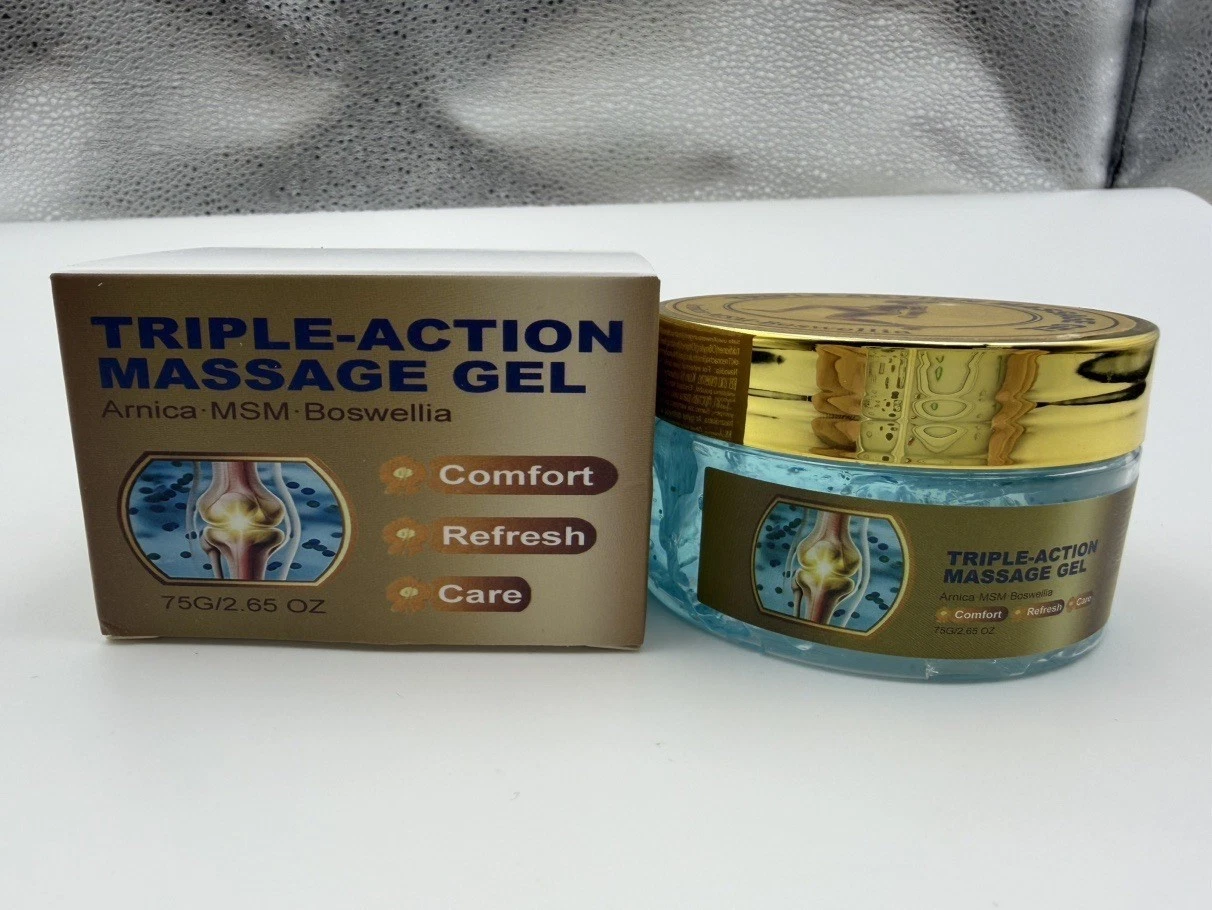
Persistent knee stiffness, tight shoulders, and aching muscles can turn ordinary movements into uncomfortable tasks. Topical massage gels offer an appealing alternative to swallowing another supplement or relying entirely on heating pads. However, products promising fast comfort deserve closer examination, particularly when their advertising suggests that botanical ingredients can address the underlying source of pain.
This is my detailed review of what I discovered about Kinzeno Triple Action Massage Gel, including its advertised benefits, customer feedback, complaints, possible side effects, ingredients, application instructions, and whether the product appears legitimate or scam. I also investigated its micro-bubble technology, the research behind selected ingredients, and how it compares with established topical massage products.
My assessment is based on available product information, published research, and an independent evaluation of its claims. I have not personally tested the gel, so I will distinguish plausible benefits from effects that have not been demonstrated in finished-product clinical trials.
Kinzeno Triple Action Massage Gel at a Glance
Before examining individual ingredients, I wanted to establish what buyers are actually getting. The following overview separates advertised features from the practical considerations I believe consumers should understand.
| Product Detail | My Research Findings |
|---|---|
| Product Name | Kinzeno Triple Action Massage Gel |
| Category | Botanical topical massage and body-comfort gel |
| Primary Purpose | Designed to provide a cooling massage experience for areas affected by everyday muscular tension and stiffness. |
| Product Format | Non-greasy topical gel featuring an advertised micro-bubble formulation. |
| Highlighted Ingredients | Arnica, turmeric, ginger, boswellia, magnesium, MSM, ginseng, moringa, vitamins, and skin-conditioning ingredients. |
| Application Areas | Knees, shoulders, lower back, hands, wrists, legs, and other appropriate external body areas. |
| Recommended Application | Massage a coin-sized amount into the desired area using circular movements. |
| Suggested Frequency | Manufacturer-provided instructions indicate repeat applications 2–4 times daily. |
| Expected Experience | Cooling sensation and a refreshing massage; the intensity and duration of comfort may vary. |
| Clinical Evidence | Research exists for selected ingredients, but finished-product effectiveness has not been independently established. |
| Current Offers | Consult the official purchase page for current offers and available packages. |
| Money-Back Guarantee | Advertised 60-day satisfaction guarantee, subject to applicable return conditions. |
| My Overall Rating | ★★★★☆ 4.5/5 — Editorial Assessment |
| Official Website | ✅ Click Here |
What Exactly Is Kinzeno Triple Action Massage Gel?
Kinzeno Triple Action Massage Gel is a topical massage product developed around a combination of plant extracts, minerals, and skin-conditioning substances. Its marketing emphasizes three interconnected experiences: immediate cooling comfort, massage-assisted relaxation, and ongoing body care.
Unlike an oral supplement, the formula is applied directly to the skin surrounding an uncomfortable area. The intended customers include adults experiencing occasional muscular tightness, everyday stiffness, or discomfort associated with physically demanding routines.
Its most distinctive advertised feature is micro-bubble technology, which supposedly releases ingredients through circular massage. The manufacturer also describes a relatively quick-absorbing texture without the heavy residue associated with some traditional massage creams.
I find the product’s practical positioning more convincing than its strongest therapeutic claims. A pleasant gel can make self-massage easier and more appealing, but describing it as capable of repairing damaged joints or resolving nerve pain requires clinical evidence that is not currently established.
Examining the Triple-Action Micro-Bubble Technology
The manufacturer divides the massage experience into three phases: Relieve, Repair, and Reinvigorate. In more restrained terms, these correspond to cooling comfort, massage-assisted relaxation, and skin conditioning.
The proposed micro-bubble system is presented as a way to distribute ingredients during massage. From a formulation perspective, small encapsulated droplets or beads can influence texture and ingredient release.
However, visible bubbles alone do not demonstrate penetration into deep muscles, joints, cartilage, or nerves.
Skin forms an effective biological barrier. Whether a substance passes through it depends on its molecular properties, concentration, formulation, and other factors. I could not verify independent penetration studies showing that Kinzeno’s advertised bubbles deliver therapeutically meaningful amounts of its botanicals into deep tissues.
Consequently, I consider temporary surface comfort and a pleasant massage experience more realistic expectations than permanent joint repair or guaranteed relief within 15 minutes.
Kinzeno Ingredients: My Detailed Formula Assessment
The ingredient selection is one of the most interesting aspects of this product. It combines traditional botanicals with familiar cosmetic ingredients, creating a formula designed around both the massage experience and skin feel.
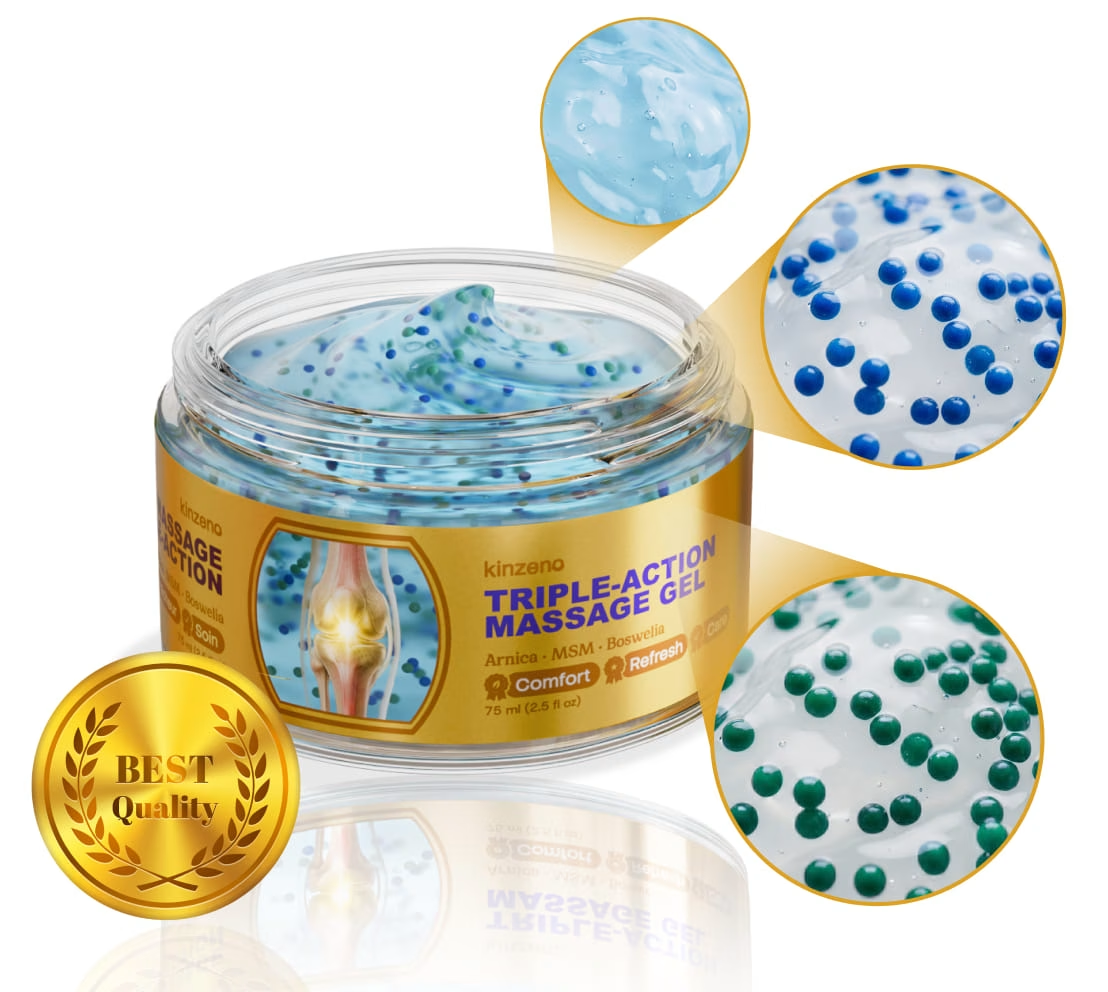
The following are the highlighted ingredients supplied for this review, rather than a verified exhaustive INCI ingredient declaration. Their functions can also vary according to formulation and concentration.
🍃 1. White Turmeric
White turmeric, commonly associated with Curcuma zedoaria, contains aromatic compounds and other plant constituents investigated for biological activity. It has a history of traditional use, although this does not establish effectiveness for topical muscular discomfort.
I regard white turmeric as an interesting botanical addition, but convincing human clinical evidence for its ability to relieve joint pain through this particular gel is unavailable.
🍃 2. Turmeric
Turmeric contains curcuminoids, including curcumin, studied for their potential effects on inflammatory pathways. Some clinical investigations involving oral turmeric preparations have reported improvements in osteoarthritis symptoms.
Those results cannot automatically be applied to topical gels. Curcumin’s skin penetration depends heavily on formulation, making claims of deep tissue repair premature without product-specific testing.
🍃 3. Ginger
Ginger contains compounds such as gingerols and shogaols, which have attracted research interest for their biological properties. Its traditional association with warming preparations makes it a recognizable component of body-care formulations.
However, evidence involving dietary ginger or concentrated extracts does not establish that ginger in Kinzeno produces meaningful pain relief. Its contribution may depend on the extract and concentration used.
🍃 4. Ginseng
Ginseng contains ginsenosides studied for antioxidant and other biological activities. It is best known from oral wellness products, although ginseng-derived ingredients also appear in cosmetic formulations.
I view its inclusion primarily as supportive botanical positioning. Evidence that topical ginseng improves joint mobility or reduces muscular pain in this finished formula remains insufficient.
🍃 5. Moringa
Moringa leaves contain plant polyphenols and other compounds associated with antioxidant activity in laboratory studies. Extracts are sometimes incorporated into skin-care products for their conditioning potential.
That makes moringa a plausible complementary ingredient, but its presence should not be interpreted as proof of reduced inflammation inside joints or muscles.
🍃 6. Arnica
Arnica is among the more relevant ingredients because topical arnica preparations have been studied for musculoskeletal symptoms. A Cochrane review found that arnica gel may provide symptom improvements in certain osteoarthritis settings, although the evidence remains limited.
Those findings are formulation-specific. Arnica can also trigger allergic skin reactions, particularly in people sensitive to plants belonging to the daisy family.
🍃 7. Boswellia
Boswellia, commonly associated with frankincense, contains resin-derived constituents investigated for anti-inflammatory activity. Clinical studies involving certain oral boswellia extracts have reported encouraging results for knee osteoarthritis.
Nevertheless, topical delivery introduces different challenges. I consider boswellia a scientifically interesting component, without assuming that rubbing it onto the skin reproduces results from oral studies.
🍃 8. MSM
Methylsulfonylmethane, commonly abbreviated MSM, is an organic sulfur-containing compound used in joint-support supplements and topical preparations.
Some small studies have investigated MSM for exercise recovery and joint discomfort, but robust evidence for topical MSM remains limited. Claims that it repairs cartilage or reliably reaches deep tissues should therefore be treated cautiously.
🍃 9. Magnesium
Magnesium plays important physiological roles in muscle contraction and nerve signaling. These established functions explain its association with muscle-support products.
However, the benefits of adequate dietary magnesium should not be confused with proven benefits from topical magnesium. Evidence that magnesium gels meaningfully increase tissue magnesium or resolve muscle cramps remains inconclusive.
🍃 10. Allantoin
Allantoin is a familiar cosmetic ingredient valued for skin-conditioning and soothing properties. It is commonly included in formulas designed to improve the comfort of dry or irritated skin.
Its presence makes sense in a massage product that may be applied repeatedly. Nevertheless, allantoin should not be confused with an analgesic capable of correcting underlying joint disease.
🍃 11. Vitamin E
Vitamin E is a fat-soluble antioxidant frequently incorporated into skin-care products. Depending on its form, it may contribute to skin conditioning or support formulation stability.
For Kinzeno, I consider vitamin E a supplementary skin-care ingredient rather than a demonstrated treatment for muscular or neurological discomfort.
🍃 12. Glycols
Glycols are commonly used in topical formulations as solvents, humectants, or ingredients that help maintain a consistent texture. Certain glycols can also influence how other substances move through the skin.
Their actual effects depend on which glycols are present and their concentrations. Some individuals may experience irritation, making the complete ingredient label important for sensitive users.
🍃 13. Vitaluxe Complex
Vitaluxe complex is presented as a specialized component of the product’s formulation. However, the name alone does not identify a standardized chemical composition or independently established therapeutic mechanism.
Before assigning it particular benefits, I would want the precise constituents and supporting formulation data. A proprietary-sounding name is not itself scientific evidence.
🍃 14. Inositol
Inositol is involved in cellular signaling and is sometimes used in cosmetic formulations for skin-conditioning purposes. Most of its widely discussed research concerns oral administration and metabolic or neurological contexts.
There is insufficient evidence to conclude that topical inositol in this gel reduces nerve pain or restores joint mobility.
🍃 15. Vitamin B5
Vitamin B5 is associated with skin-conditioning formulations, particularly through derivatives such as panthenol. These ingredients may help support hydration and improve the sensation of skin comfort.
I appreciate the inclusion of skin-supportive components because repeated massage benefits from a comfortable application base. Still, topical vitamin B5 does not establish muscle or nerve regeneration.
Six Potential Benefits That Make Kinzeno Interesting
The most credible advantages of Kinzeno Triple Action Massage Gel relate to convenience, cooling sensation, botanical formulation, and compatibility with a gentle self-massage routine.
⭐ 1. Refreshing Cooling Comfort
The gel is advertised to produce a noticeable cooling sensation when applied. This can make massage feel refreshing, particularly after extended sitting, physical activity, or a demanding day.
Cooling should not automatically be equated with reduced internal inflammation. I would regard it primarily as a sensory comfort feature unless additional therapeutic evidence becomes available.
⭐ 2. Encourages Targeted Self-Massage
The product’s application technique requires circular massage rather than passive spreading. Gentle massage may temporarily ease perceived muscle tightness and encourage relaxation.
An important limitation is that some benefits may come from the massage itself. Without a controlled study, it is impossible to determine how much additional benefit the gel provides.
⭐ 3. Suitable for Several Body Areas
The manufacturer’s suggested application areas include knees, shoulders, hands, wrists, back, legs, and feet. This versatility may appeal to households looking for one massage product rather than multiple specialized creams.
Application should remain external and limited to appropriate intact skin. Pain radiating down a limb, persistent numbness, or worsening weakness warrants medical evaluation rather than repeated topical treatment.
⭐ 4. Convenient Non-Greasy Texture
A gel that absorbs comfortably can be easier to incorporate into a daily routine than a thick ointment. Kinzeno advertises minimal residue, a pleasant scent, and limited interference with clothing.
These are meaningful practical advantages if the product performs as described. However, I have not independently verified its drying time, scent strength, or staining characteristics.
⭐ 5. Botanical and Mineral-Based Formula
Arnica, boswellia, turmeric, magnesium, and MSM create an ingredient profile that may interest consumers seeking a botanical-centered massage experience.
The benefit is product preference and formulation diversity, not a guarantee of medical effectiveness. Natural ingredients can still irritate skin, and multiple botanicals do not necessarily produce stronger results.
⭐ 6. Flexible Routine With Purchase Protection
The suggested application frequency allows users to incorporate massage into morning or evening routines. The advertised 60-day guarantee also provides a potential opportunity to assess personal satisfaction.
I see these as useful consumer features, provided buyers follow the label and understand the return restrictions before ordering.
What Scientific Research Actually Supports
The evidence behind topical herbal products is mixed, but not entirely absent. A Cochrane review of herbal osteoarthritis treatments identified some encouraging findings for topical arnica while emphasizing that the available research was too limited for broad conclusions.
More recent systematic reviews involving turmeric and boswellia have examined improvements in knee pain and function. Importantly, much of this evidence concerns orally administered or specially formulated extracts rather than ordinary topical massage gels.
There is also a broader scientific distinction between an ingredient possessing biological activity in laboratory experiments and a finished product producing clinically meaningful relief in humans. The latter requires appropriate trials examining effectiveness, safety, dosage, and formulation.
I could not establish published, independent human clinical trials specifically validating Kinzeno’s complete formula, three-phase mechanism, or claimed 15-minute therapeutic effect. Its ingredient research provides context, not proof that the finished product reverses cartilage damage or treats neuropathy.
How Kinzeno Compares With Typical Massage Gels
Many products in this category focus on cooling sensations, herbal ingredients, or conventional topical analgesics. Kinzeno attempts to combine several characteristics in one formula.
| Comparison Factor | Kinzeno | Typical Botanical Massage Gel | Conventional OTC Pain-Relief Gel |
|---|---|---|---|
| Formulation | Multiple highlighted botanicals, minerals, and skin conditioners | Often emphasizes selected plant extracts | Usually features specific recognized analgesic ingredients |
| Primary Experience | Cooling sensation combined with circular massage | Massage comfort varies by formulation | Symptom relief associated with its labeled active ingredient |
| Texture | Advertised quick-absorbing, non-greasy gel | Can range from lightweight to oily | Varies across gels, creams, and roll-ons |
| Scientific Support | Ingredient-level evidence; finished-product trials unverified | Frequently limited formulation-specific evidence | Certain approved OTC formulations have more established regulatory evidence |
| Distinctive Feature | Advertised micro-bubble delivery system | Botanical extracts or aromatic formulation | Clearly identified active drug ingredients |
| Transparency | Full current label and exact composition should be checked | Varies considerably | Drug Facts labeling generally identifies active ingredients and strengths |
| Best Fit | Botanical-focused massage routine | General relaxation and skin comfort | Consumers seeking an appropriately labeled topical medicine |
| Purchase Protection | Advertised 60-day guarantee with conditions | Seller-dependent | Retailer or manufacturer policy varies |
My main observation is that Kinzeno offers an appealing combination of massage-friendly attributes, but conventional medicines may provide a stronger evidence base for specific pain conditions.
Neither botanical complexity nor innovative packaging establishes superiority. Buyers should match the product category to their actual needs.
My Kinzeno Triple Action Massage Gel Rating
After reviewing Kinzeno Triple Action Massage Gel, I assign it the requested overall editorial score of 4.5 out of 5, reflecting its formulation concept, convenience, and potential appeal as a complementary massage product.
Overall Rating: 4.5/5 — ★★★★☆
| Assessment Category | Editorial Score | My Evaluation |
|---|---|---|
| Ingredient Selection | ★★★★★ 4.7/5 | A diverse mixture of recognizable botanicals and skin-conditioning compounds. |
| Ease of Application | ★★★★★ 4.6/5 | Simple massage instructions and suitability for several external body areas. |
| Practical Convenience | ★★★★★ 4.6/5 | Advertised cooling texture and non-greasy finish support everyday usability. |
| Formula Concept | ★★★★☆ 4.4/5 | Interesting combination, although the proprietary delivery mechanism needs independent validation. |
| Consumer Protection | ★★★★☆ 4.3/5 | The 60-day guarantee is attractive, but return eligibility and expenses matter. |
| Evidence Transparency | ★★★★☆ 4.2/5 | Ingredient research offers context, while finished-product clinical substantiation remains limited. |
These figures are my subjective editorial ratings, not verified customer-review averages or experimentally measured performance scores. The overall rating rewards its positioning as a convenient massage aid; it must not be interpreted as proof of medical efficacy.
How to Apply Kinzeno Properly
The manufacturer’s supplied instructions describe a straightforward three-step process.
- Apply a small amount. Squeeze approximately a coin-sized quantity onto the desired area, such as the knees, shoulders, hands, or lower back. Begin with clean, intact skin and avoid sensitive areas.
- Massage using circular movements. Gently distribute the gel with controlled pressure. The manufacturer describes this action as activating its micro-bubble system, although deep-tissue delivery has not been independently established.
- Allow the gel to settle. The formula is advertised to leave little residue, allowing users to return to daily activities. Repeat application is described as 2–4 times daily, subject to the actual package instructions and individual skin tolerance.
I recommend avoiding aggressive pressure over painful, swollen, or injured areas. Wash your hands afterward, keep the formula away from the eyes and mucous membranes, and discontinue application if irritation develops.
Kinzeno Pros and Cons: My Balanced Assessment
| What I Like | What Concerns Me |
|---|---|
| Multi-ingredient botanical approach: Incorporates arnica, boswellia, turmeric, and other ingredients associated with topical wellness formulations. | No confirmed finished-product trial: Research on individual ingredients cannot establish the gel’s overall clinical effectiveness. |
| Massage-centered application: Encourages gentle, targeted massage instead of relying entirely on passive topical application. | Ambitious therapeutic advertising: Claims involving tissue repair and underlying pain sources exceed the available product-specific evidence. |
| Convenient topical format: Avoids swallowing a supplement and allows localized application. | Potential sensitivity: Botanical extracts, fragrances, and formulation ingredients may trigger irritation in susceptible users. |
| Advertised cooling sensation: May make the massage experience more comfortable and refreshing. | Delivery uncertainty: Micro-bubble claims require independent penetration and performance testing. |
| Versatile application areas: Designed for multiple external body regions within an ordinary self-care routine. | |
| 60-day satisfaction guarantee: Offers potential purchase protection when its conditions are satisfied. |
My assessment favors the product’s usability and formulation concept while remaining cautious about claims that extend into disease treatment.
Possible Side Effects and Skin Reactions
The most plausible adverse effects include localized redness, itching, burning, or allergic contact dermatitis. Arnica and fragrant botanical extracts can cause reactions in sensitive individuals, while certain solvents and other cosmetic ingredients may irritate compromised skin.
These are recognized possibilities for topical preparations rather than verified incidence rates for Kinzeno specifically. I could not establish reliable product-specific adverse-event statistics.
Consumers with sensitive skin may prefer a small-area tolerance test before routine application. Stop using the product if discomfort, rash, or unusual swelling occurs, and seek medical assistance for severe reactions.
Is Kinzeno Safe for Regular Use?
For adults without relevant sensitivities, a properly formulated massage gel may be a reasonable addition to everyday skin care. However, drug-free does not mean risk-free, and safety cannot be established solely from botanical ingredient names.
I would avoid application to broken skin, open wounds, infected areas, or severely inflamed tissue. Children, pregnant or breastfeeding individuals, and those with significant dermatological conditions should obtain individualized professional guidance.
Medication Interactions and Important Precautions
The manufacturer’s promotional information suggests that the gel has no known drug interactions because it is applied topically. I would interpret that statement carefully: topical application does not automatically eliminate systemic absorption or interaction risks.
Individuals taking anticoagulants, antiplatelet medicines, or other complex medication regimens should consult a pharmacist or healthcare professional, particularly if they intend to apply the product frequently or over extensive areas.
People using prescription topical treatments should also avoid layering products without guidance. The absence of documented Kinzeno interactions is not equivalent to clinical confirmation that every possible combination is safe.
Who May Benefit From Kinzeno, and Who Should Avoid It?
I consider Kinzeno most appropriate for people seeking a convenient massage aid rather than a replacement for established medical treatment.
Potentially suitable users:
- Adults with occasional muscle tightness: Those seeking a cooling topical product to accompany gentle massage after routine activity may appreciate its format.
- People who prefer botanical body-care products: Consumers interested in arnica, turmeric, and boswellia may find the ingredient selection appealing, provided they understand the evidence limitations.
- Individuals seeking a convenient self-care routine: A quickly applied gel may suit people who dislike heavy ointments or complicated application procedures.
Users who should exercise caution:
- People with plant allergies or reactive skin: Multiple botanical components increase the importance of checking the complete ingredient list.
- Individuals with persistent neurological symptoms: Numbness, progressive weakness, or severe shooting pain requires medical evaluation rather than reliance on massage products.
- People with unexplained swelling or significant joint injuries: These symptoms may indicate conditions that should be assessed before massage.
- Those managing complex medical conditions: Professional advice is appropriate when medications, skin disorders, or other health concerns complicate topical product use.
What I Didn’t Like About Kinzeno
Although the overall formulation interests me, several limitations deserve attention before purchase.
- The advertising occasionally exceeds the evidence. Claims about repairing tissues or eliminating the underlying source of pain are much stronger than what ingredient-level research can establish.
- Micro-bubble technology needs greater substantiation. I would like to see independent studies measuring delivery, absorption, and clinical outcomes rather than relying on descriptions of bubble activation.
- The complete formulation deserves careful inspection. The highlighted ingredient list is informative, but buyers should consult the actual label to identify allergens, botanical forms, and formulation components.
- Refund eligibility may be narrower than the headline suggests. Promotional language emphasizes satisfaction, while published return information refers to unused product and purchaser-paid return shipping.
These concerns do not make the gel inherently unsuitable. They simply prevent me from recommending it as a proven treatment for chronic joint or nerve disorders.
Is Kinzeno Triple Action Massage Gel Legit or a Scam?
Based on the available information, Kinzeno is presented as a real, purchasable botanical massage product with published usage guidance and a stated satisfaction guarantee. I did not find sufficient evidence to classify it as a scam. However, the existence of a sales website and promotional testimonials does not independently establish manufacturing quality, consistent fulfillment, or therapeutic effectiveness.
My conclusion is that Kinzeno appears to be a legitimate marketed massage product, but its strongest medical-sounding claims remain unverified. Consumers should examine the actual seller, complete ingredients, checkout conditions, refund procedures, and customer-service information. I would judge it as a complementary comfort product, not an established medical intervention.
Kinzeno Customer Reviews and Common Complaints
The product’s promotional websites feature favorable testimonials emphasizing cooling comfort, botanical ingredients, and a non-greasy application experience. These comments indicate how the seller positions customer satisfaction, but I could not independently authenticate the individual purchases or reported outcomes.
I also found third-party review pages examining the formula and advertising claims. Such articles should not automatically be treated as independent consumer testing, particularly when affiliate incentives may be involved.
Reliable, independently verified complaint patterns were insufficient to establish recurring problems with delivery, adverse reactions, or refund fulfillment. The main concerns I could substantiate relate instead to limited clinical evidence, ambitious claims, and the importance of reading return conditions carefully.
Amazon Alternatives Worth Considering
Consumers comparing Kinzeno with other topical products may wish to investigate several established options commonly marketed through Amazon. Marketplace availability, authorized sellers, and exact formulations can change.
Boiron Arnicare Gel
Arnicare is a topical arnica-based product marketed for temporary discomfort associated with minor muscle and joint complaints. Its comparatively focused ingredient positioning may appeal to buyers seeking an arnica-centered product.
I would compare the current label, regulatory information, and seller authenticity before purchasing, rather than assuming that an arnica-only approach is superior.
Penetrex Joint & Muscle Therapy Cream
Penetrex is marketed as a massage-friendly topical cream featuring a combination of ingredients associated with muscle and joint comfort. It may appeal to buyers who prefer a cream rather than Kinzeno’s advertised cooling gel texture.
Its effectiveness should likewise be evaluated according to its specific formulation and available evidence, not simply its ingredient count.
Biofreeze Pain Relief Gel
Biofreeze offers topical pain-relief products commonly formulated around menthol. This makes it a different category of option for buyers prioritizing a labeled cooling analgesic rather than a broader botanical massage blend.
I would examine the Drug Facts label, intended indications, and application restrictions before comparing it directly with Kinzeno.
Kinzeno 60-Day Money-Back Guarantee Explained

Kinzeno Triple Action Massage Gel is advertised with a 60-day satisfaction guarantee. This is an appealing protection feature because individual comfort experiences can vary considerably, especially with products involving personal preferences for texture, scent, and massage sensation.
The published return information I located indicates that unused product may be returned within the applicable period, that return authorization should be requested, and that purchasers may be responsible for return shipping. This creates an important distinction between a broad satisfaction promise and the practical conditions for obtaining a refund.
Before ordering, I recommend confirming whether opened containers qualify, when the guarantee period begins, which purchases are eligible, and whether any shipping charges are excluded. Do not assume that a guarantee displayed on one seller’s website automatically applies to another retailer or checkout provider.
Frequently Asked Questions About Kinzeno
Q: 1. Does Kinzeno Triple Action Massage Gel really work?
A: It may provide a refreshing cooling sensation and make gentle massage more comfortable. However, I could not establish independent clinical trials proving the complete formulation treats arthritis, nerve pain, or damaged joint tissue. Individual satisfaction may depend on the type of discomfort and expectations.
Q: 2. How quickly should I expect to feel anything?
A: The manufacturer advertises cooling comfort beginning during application and suggests rapid effects. A surface cooling sensation may occur quickly, but this should not be confused with proven deep-tissue healing. The timing and intensity of perceived comfort may differ between users.
Q: 3. Can I use Kinzeno for knee stiffness?
A: The knees are among the advertised application areas. Gentle massage around an uncomfortable knee may provide temporary comfort, but persistent swelling, instability, or significant pain deserves medical assessment. The gel has not been demonstrated to regenerate cartilage or reverse osteoarthritis.
Q: 4. Is Kinzeno suitable for back and shoulder tension?
A: The product is marketed for massage around the back, shoulders, and other muscular areas. It may suit ordinary tension-related self-care, provided the skin is intact and massage does not worsen symptoms. Severe pain or discomfort accompanied by neurological symptoms requires professional attention.
Q: 5. How often can I apply the gel?
A: The supplied instructions indicate applications may be repeated 2–4 times daily. Follow the directions printed on the actual product packaging and reduce or discontinue use if irritation occurs. Applying larger quantities or using the gel more frequently does not establish better results.
Q: 6. Can Kinzeno replace prescription pain medication?
A: No. I found insufficient evidence to support replacing prescribed treatment with this massage gel. Anyone managing a diagnosed pain condition should discuss changes to medication or treatment plans with their healthcare professional.
Q: 7. Does the gel contain ingredients that could irritate sensitive skin?
A: Yes, irritation is possible with botanical extracts, fragrances, and other topical formulation ingredients. Arnica is particularly relevant for people with certain plant sensitivities. Review the complete ingredient declaration and test a small area before widespread use.
Q: 8. Where should I buy Kinzeno, and how does the refund policy work?
A: The product is promoted through official sales channels offering a stated 60-day guarantee. I recommend checking the seller’s identity, current package options, and written refund terms before paying. Eligibility restrictions, unused-product requirements, and return shipping responsibilities can affect the practical value of the guarantee.
My Final Verdict on Kinzeno Triple Action Massage Gel
After investigating its ingredients, formulation concept, manufacturer claims, and supporting scientific literature, I consider Kinzeno an interesting option for consumers who enjoy topical self-massage and botanical body-care products. Its combination of arnica, boswellia, turmeric, MSM, magnesium, and skin-conditioning ingredients gives it a distinctive identity, while the advertised cooling sensation and non-greasy consistency add practical appeal. My overall editorial assessment remains 4.5/5, reflecting these product characteristics rather than clinically verified pain-treatment effectiveness.
The most important reservation is the difference between temporary comfort and correcting the underlying cause of physical pain. Existing scientific research offers some encouragement for certain botanical preparations, but that evidence cannot automatically validate Kinzeno’s micro-bubble technology or promises involving tissue repair, nerve discomfort, and rapid results. I would therefore approach it as a complementary massage aid, maintain realistic expectations, and seek appropriate healthcare guidance for persistent or unexplained symptoms.
For readers who prioritize convenience, a varied botanical formula, and a massage-oriented application process, I believe this product is reasonable to investigate further. Before purchasing, verify the ingredient label, seller details, and precise refund conditions so your decision is informed rather than driven by promotional promises. If those considerations align with your preferences, you can visit the official offer page for Kinzeno Triple Action Massage Gel to review the current purchase options.
Disclaimer
This article is for educational and informational purposes only and does not constitute medical advice, diagnosis, or treatment. Topical products can cause irritation, and persistent pain or neurological symptoms require appropriate medical evaluation. Affiliate disclosure: This article contains affiliate links, and I may earn a commission from qualifying purchases at no additional cost to you. Editorial ratings represent independent assessments, not verified clinical outcomes.
References
- Cameron M, Chrubasik S. Cochrane Database of Systematic Reviews. Topical Herbal Therapies for Treating Osteoarthritis. This systematic review evaluates evidence for topical botanical preparations, including arnica, and discusses limitations in effectiveness and adverse-event research.
https://pmc.ncbi.nlm.nih.gov/articles/PMC4105203/ - Inprasit C, et al. Complementary Therapies in Medicine. Evaluating the Efficacy and Safety of Curcuma longa, Boswellia serrata, and Their Mixed Formulation in Treating Knee Osteoarthritis. This 2026 systematic review and network meta-analysis examines clinical findings involving turmeric and boswellia formulations, while highlighting the need for further research.
https://pubmed.ncbi.nlm.nih.gov/41082950/ - U.S. Food and Drug Administration. NASEM Assessment on the Safety and Effectiveness of Ingredients Used in Compounded Topical Pain Creams. This resource explains important evidence and safety limitations surrounding certain topical pain formulations and their ingredients. It is broader regulatory context rather than a Kinzeno-specific evaluation.
https://www.fda.gov/drugs/human-drug-compounding/nasem-assessment-safety-and-effectiveness-ingredients-used-compounded-topical-pain-creams - American Academy of Dermatology Association. How to Test Skin Care Products. Dermatology guidance covering small-area testing, recognition of irritation, and precautions for products containing potentially sensitizing ingredients.
https://www.aad.org/public/everyday-care/skin-care-secrets/prevent-skin-problems/test-skin-care-products/ - U.S. Food and Drug Administration. ARG Laboratories, Inc. Warning Letter, June 11, 2024. This regulatory document illustrates how therapeutic claims involving botanical ingredients and MSM in topical products may raise important drug-labeling and evidence questions. It does not concern Kinzeno specifically.
https://www.fda.gov/inspections-compliance-enforcement-and-criminal-investigations/warning-letters/arg-laboratories-inc-670899-06112024