

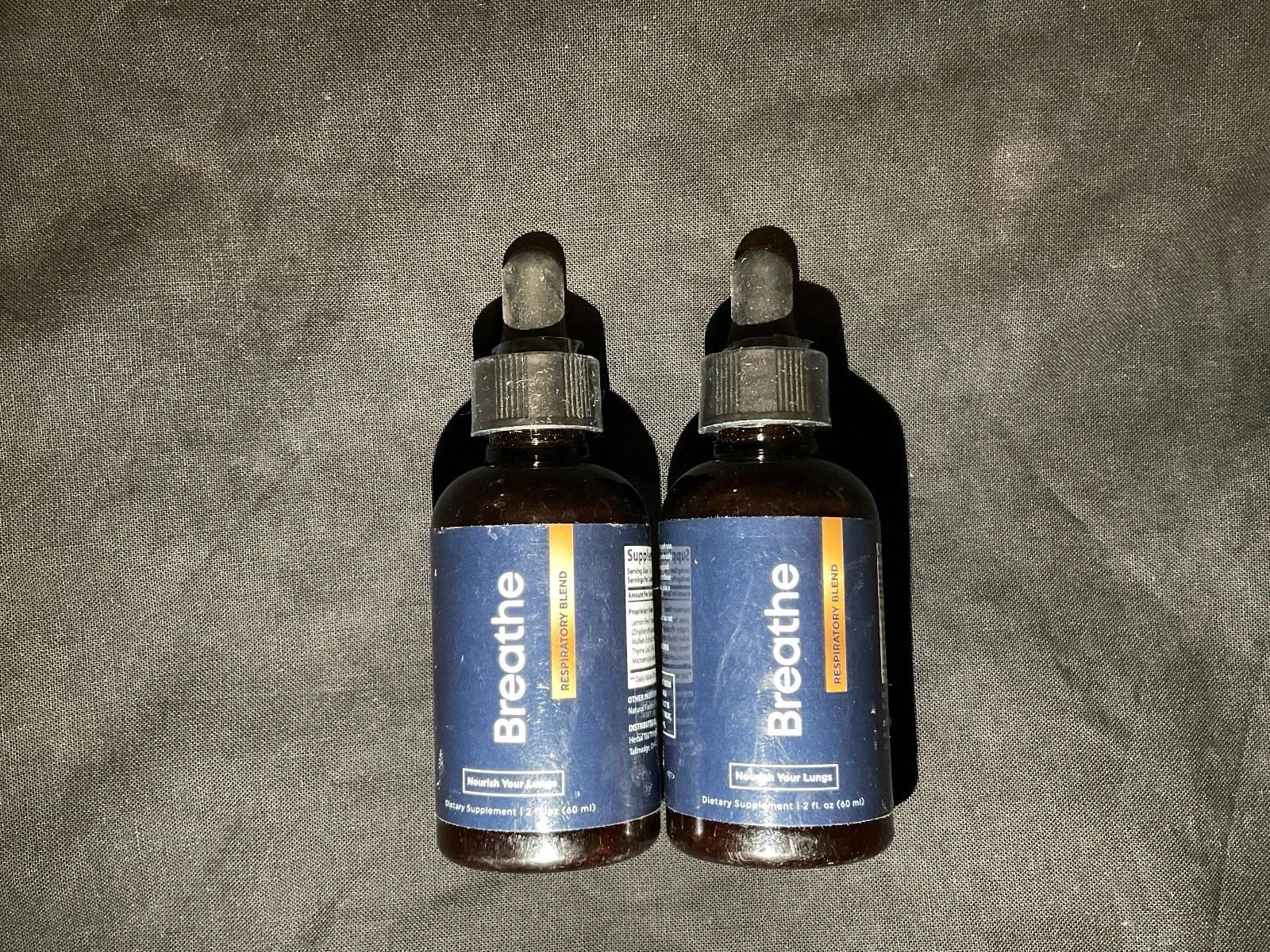
Breathing problems are easy to underestimate until congestion, throat irritation, environmental pollution, seasonal allergens, or persistent mucus begin making every breath feel like work. Respiratory symptoms can have many causes, ranging from temporary irritation to conditions that require medical treatment, which is why unexplained shortness of breath, wheezing, chest pain, or persistent coughing should never be treated as something a supplement alone can diagnose or fix.
This in-depth review examines Breathe, a plant-based liquid respiratory-support formula sold by Herbal Tea Therapy. The goal is to look beyond the promotional language and examine its ingredients, proposed benefits, safety concerns, limitations, practical use, value, and scientific rationale. Particular attention will be given to whether the formula makes sense as an everyday respiratory wellness supplement and where expectations need to remain realistic.
Breathe at a Glance: Product Overview
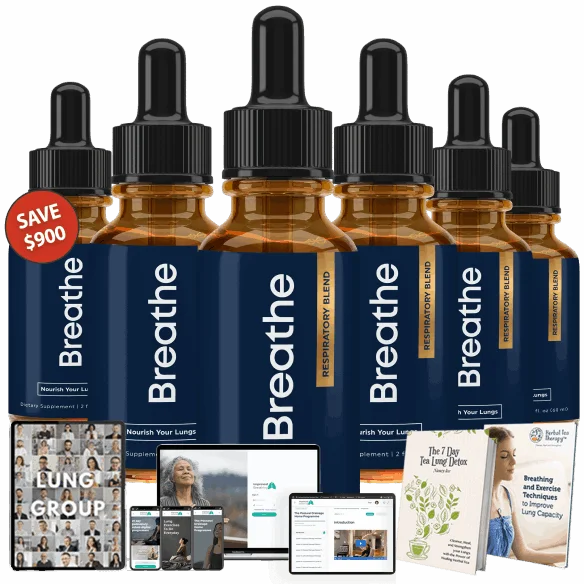
For readers who want the essential details before going deeper, Breathe is positioned as a liquid botanical formula for adults interested in supporting comfortable breathing, airway wellness, mucus management, and general respiratory health. Its biggest point of differentiation is the combination of several traditional herbs in an easy-to-use dropper format rather than relying on tablets or large capsules.
| Product Detail | Information |
|---|---|
| Product Name | Breathe |
| Brand | Herbal Tea Therapy |
| Product Type | Plant-based liquid dietary supplement |
| Primary Purpose | Respiratory wellness, airway comfort, mucus support, and general lung-health support |
| Formula Format | Liquid drops/tincture-style formula |
| Key Ingredients | Lemon Peel, Mullein Leaf, Manuka Honey, Ginger Root, and Peppermint |
| Intended Users | Adults interested in botanical support for everyday respiratory comfort |
| Ease of Use | Can be taken orally with the dropper or mixed into a beverage, depending on label directions |
| Major Advantage | Combines several traditional respiratory botanicals in one convenient liquid |
| Important Limitation | Published research on individual ingredients should not be confused with clinical proof of the finished Breathe formula |
| Editorial Rating | ★★★★★ 4.8/5 |
| Refund Protection | 90-day money-back guarantee on qualifying purchases made through the official sales channel |
| Official Website | ✅ Click Here |
What Exactly Is Breathe?
Breathe is marketed as an all-natural, plant-focused respiratory support supplement created around herbs traditionally associated with the throat, lungs, mucus membranes, and airway comfort. Rather than being supplied as a capsule, its liquid form makes it particularly convenient for people who dislike swallowing pills or prefer adding supplements to water, tea, or another beverage.
The formula centers on mullein, lemon peel, Manuka honey, ginger, and peppermint. Each has a somewhat different role in the overall concept. Mullein has a long history in traditional herbal preparations for respiratory and throat complaints, ginger contains well-studied bioactive compounds with anti-inflammatory properties, peppermint contributes menthol and aromatic compounds, and honey is widely recognized for its soothing qualities.
The important distinction is that Breathe is a dietary supplement, not an inhaler, bronchodilator, antibiotic, expectorant drug, or treatment for asthma, COPD, pneumonia, or another respiratory disease. Anyone experiencing significant or worsening breathing difficulty needs appropriate medical evaluation rather than attempting to manage the problem solely with herbal drops.
Its strongest practical appeal is therefore as a supportive wellness product for people looking for a convenient botanical formula, rather than as a substitute for evidence-based respiratory treatment.
Who Created Breathe?

Promotional material for Breathe associates the formula with Dr. Elizabeth Moffett, who is presented as a respiratory therapist involved in the development and positioning of the product. The concept behind the formula is built around supporting respiratory comfort through traditional plant compounds rather than relying solely on a single botanical ingredient.
That background is relevant because the formula clearly reflects a respiratory-focused theme. Mullein, peppermint, ginger, honey, and citrus-derived compounds all have histories of use in wellness or traditional herbal preparations, although the quality and strength of scientific evidence differ substantially from ingredient to ingredient.
Consumers should nevertheless separate the credentials used in product marketing from clinical validation. A supplement being developed or promoted by a healthcare professional does not automatically mean that the finished formula has undergone randomized, placebo-controlled clinical testing.
That distinction matters with Breathe because much of the scientific rationale currently comes from research involving individual ingredients or their natural compounds rather than trials testing this precise combination at its commercial dosage.
What Does the Science Say About Breathe?
The scientific case for Breathe is better described as ingredient-based support rather than finished-product clinical proof. Research literature provides some interesting evidence around mullein phytochemicals, ginger, peppermint, honey, and plant antioxidants, but this should not be stretched into a claim that Breathe itself has been clinically proven to improve lung function.
Mullein is especially relevant. A published review in Phytotherapy Research describes Verbascum thapsus as a plant with a long history of traditional use for throat and lung complaints. Researchers have identified flavonoids, saponins, iridoids, phenylethanoid glycosides, and several other constituents within the plant. Experimental studies have also investigated antioxidant, anti-inflammatory, antimicrobial, and other biological properties.
The limitation is equally important. Much of the mullein literature consists of laboratory, traditional-use, phytochemical, and preclinical evidence. There is still a shortage of large, rigorous human trials demonstrating that oral mullein supplements produce major improvements in chronic respiratory diseases.
Ginger has a substantially larger research base, although most human studies have focused on areas such as nausea, digestive health, menstrual discomfort, and inflammatory processes rather than lung function specifically. Peppermint has also been studied clinically, but much of its strongest evidence concerns gastrointestinal use. Menthol can produce a cooling sensation that may subjectively make airflow feel fresher without necessarily increasing objective lung capacity.
Taken together, the ingredients provide a reasonable botanical rationale for respiratory comfort, but there is not enough evidence to describe Breathe as clinically proven to clear lungs, repair damaged respiratory tissue, or treat chronic respiratory disease.
How Breathe Is Intended to Support Respiratory Wellness
The idea behind Breathe is broader than simply providing a temporary cooling sensation. Its ingredients have been selected to address several areas associated with everyday respiratory comfort, including irritated throat tissues, mucus consistency, oxidative stress, and the subjective sensation of clear breathing.
The formula may support mucus management indirectly through hydration, soothing botanicals, aromatic compounds, and traditional expectorant herbs such as mullein. Rather than thinking of the supplement as physically stripping mucus from the lungs, a more scientifically responsible interpretation is that certain ingredients may support the body’s normal mechanisms for maintaining comfortable respiratory secretions and mucus membranes.
Ginger, citrus compounds, mullein phytochemicals, and honey also contain antioxidant or anti-inflammatory constituents. These properties have been observed in different experimental contexts, although their clinical relevance depends heavily on dose, absorption, preparation, and the individual.
Peppermint brings another dimension through menthol. Menthol stimulates cold-sensitive receptors and can create a distinct sensation of openness or cool airflow. This explains why peppermint appears in so many throat, nasal, and respiratory wellness products even though that cooling perception should not be confused with measurable bronchodilation.
Overall, Breathe makes the most sense as a multi-angle respiratory wellness formula, not as an emergency breathing treatment.
Ingredients Inside Breathe: Formula Analysis
Ingredient safety deserves attention before discussing benefits. Natural ingredients can still produce allergic reactions, gastrointestinal discomfort, medication interactions, or problems for certain individuals. Breathe should therefore be treated with the same practical caution used with any botanical supplement, especially by people taking prescription medication or managing chronic illness.
Another limitation is dosage transparency. The value of an ingredient depends not only on its name but also on its concentration and preparation. Without knowing how much of every botanical reaches the user in an individual serving, it is difficult to compare the formula directly with amounts used in published research.
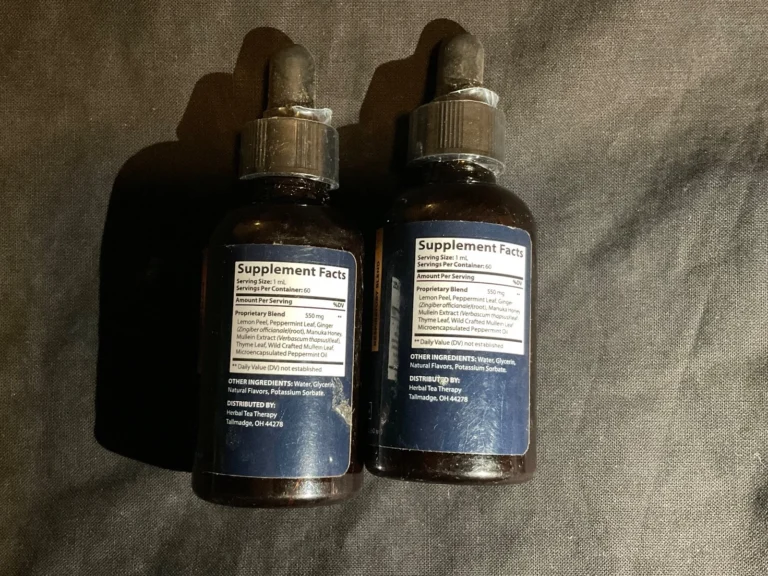
🍃 Lemon Peel
Lemon peel contributes considerably more than flavor. Citrus peel naturally contains flavonoids such as hesperidin and other plant polyphenols, along with aromatic compounds concentrated within the outer portion of the fruit. These phytochemicals have attracted research interest for their antioxidant and inflammatory-response properties.
Within Breathe, lemon peel is best viewed as a complementary ingredient rather than the primary respiratory herb. Antioxidants can help protect cells from oxidative stress, which is relevant throughout the body, including respiratory tissues frequently exposed to environmental particles.
It also helps create a fresher flavor profile that can make a liquid herbal formula easier to take consistently. However, there is insufficient evidence to claim that lemon peel supplementation alone can clear mucus from the lungs or meaningfully improve chronic breathing disorders.
🍃 Mullein Leaf
Mullein is arguably the most recognizable respiratory herb in the formula. Verbascum thapsus has a long history of traditional use in preparations intended for throat, mucus-membrane, cough, and respiratory comfort. Modern phytochemical research has identified numerous plant constituents, including saponins, flavonoids, phenylethanoid glycosides, and iridoids.
That background makes mullein a logical centerpiece for Breathe. Herbalists have historically valued the plant because of its soothing characteristics, while laboratory research suggests several potentially interesting biological properties.
Human evidence remains considerably less developed than its traditional reputation, however. Mullein should therefore be regarded as a promising traditional respiratory-support botanical rather than a clinically established treatment for asthma, COPD, bronchitis, or lung disease.
🍃 Manuka Honey
Honey has long been used as a soothing ingredient when the throat feels irritated, dry, or uncomfortable. Manuka honey receives additional attention because it contains compounds associated with its characteristic antimicrobial activity, although the strength of genuine Manuka products can vary considerably depending on grading and preparation.
Inside Breathe, Manuka honey may contribute primarily to throat comfort, palatability, and soothing support. Honey has been researched for cough relief, particularly in children with acute upper-respiratory infections, although that evidence should not be interpreted as proof that a honey-containing supplement treats lower respiratory disease.
Consumers with honey or bee-product allergies should exercise caution. Those who closely monitor sugar intake should also check the complete nutrition and serving information on the bottle.
🍃 Ginger Root
Ginger contains numerous biologically active compounds, with gingerols and shogaols among the best known. These compounds have been researched extensively for antioxidant and inflammatory pathways, although many clinical studies involving ginger concern nausea, digestion, pain, or other areas rather than respiratory illness.
Its inclusion in Breathe adds useful breadth to the formula. Ginger’s warming quality also complements mullein, peppermint, citrus, and honey from a sensory standpoint, creating a botanical mixture that feels deliberately designed rather than randomly assembled.
Ginger can nevertheless cause heartburn, abdominal discomfort, diarrhea, or mouth and throat irritation in some people. Anyone taking medications, particularly therapies where herb-drug interactions could matter, should discuss regular concentrated ginger supplementation with a healthcare professional.
🍃 Peppermint
Peppermint brings one of the most immediately noticeable characteristics to respiratory formulas: menthol’s familiar cooling sensation. Menthol interacts with cold-sensitive receptors, which can create a perception of fresher, easier airflow even when objective airway resistance has not changed dramatically.
That makes peppermint an intelligent supporting ingredient in Breathe. It may help the formula feel refreshing while complementing honey and mullein’s more soothing characteristics.
Peppermint is generally well tolerated in ordinary amounts, but concentrated peppermint products can sometimes trigger heartburn, indigestion, nausea, abdominal discomfort, or allergic reactions. People with significant reflux may therefore need additional caution.
Potential Benefits of Breathe
The potential advantages of this type of botanical formula are best understood as supportive benefits rather than guaranteed medical outcomes. Breathe combines several ingredients that approach respiratory wellness from slightly different directions, which gives it more versatility than a basic single-herb mullein extract.
★ 1. May Support a More Comfortable Breathing Experience
One of the main reasons people consider respiratory supplements is the uncomfortable feeling that breathing is less clear or refreshing than usual. Peppermint’s menthol content can contribute an immediate cooling sensation, while mullein and honey provide more traditional soothing support.
The combination may make Breathe appealing when occasional irritation, dryness, environmental exposure, or seasonal conditions make the respiratory tract feel less comfortable. This should never be interpreted as treatment for genuine shortness of breath, which deserves medical evaluation.
★ 2. Supports Normal Mucus and Airway Comfort
Mucus is not inherently harmful. It protects respiratory surfaces by trapping dust, microorganisms, and environmental particles. Problems arise when secretions become excessively thick, persistent, or difficult to clear.
Mullein’s traditional respiratory use is especially relevant here. Breathe may complement hydration and normal mucus-clearance mechanisms, particularly for users seeking botanical support rather than an aggressive stimulant-like formula.
It should not, however, be marketed as literally removing pounds of mucus from the lungs. Significant or persistent phlegm, especially when accompanied by blood, fever, chest pain, or breathlessness, requires medical attention.
★ 3. May Soothe Throat and Upper-Airway Irritation
Repeated throat clearing, dry indoor air, pollution, seasonal allergens, and ordinary environmental irritants can leave the throat feeling rough or uncomfortable. Honey has a particularly long history as a soothing food, while mullein has traditionally been used for throat and mucus-membrane comfort.
That combination gives Breathe practical appeal for people whose respiratory discomfort includes an irritated throat rather than exclusively chest congestion. The liquid delivery format may also feel more appropriate for this purpose than a capsule that is swallowed immediately.
★ 4. Provides Botanical Antioxidant Support
Respiratory tissues are constantly exposed to oxygen, environmental pollutants, smoke particles, and other potential sources of oxidative stress. Lemon peel, ginger, mullein, peppermint, and honey all contain naturally occurring phytochemicals with antioxidant properties documented in different experimental settings.
For Breathe, this gives the formula a broader wellness rationale than simply producing a minty sensation. Antioxidant compounds support normal cellular defense processes, although taking a supplement should never be presented as undoing lung damage caused by smoking or pollution.
★ 5. Offers a Convenient Alternative to Capsules
Consistency matters with any wellness routine, and convenience can determine whether someone actually uses a product. Liquid supplements can be easier for people who dislike swallowing tablets and allow the formula to be mixed with a preferred beverage.
That makes Breathe particularly practical for users already comfortable with tinctures or liquid supplements. The peppermint, honey, citrus, and ginger profile may also make the experience more pleasant than swallowing an earthy herbal capsule several times per day.
★ 6. Combines Several Complementary Botanicals in One Formula
Buying mullein, ginger, peppermint, honey, and citrus-based supplements separately would create a much more complicated routine. A major strength of this formulation is simply the convenience of putting multiple traditional respiratory ingredients into one bottle.
Breathe therefore offers a more complete formula than basic products containing mullein alone. Whether that combination produces better clinical outcomes has not been established, but from a formulation perspective, the ingredients complement one another logically.
Editorial Rating: How Breathe Earned 4.8/5
The 4.8 out of 5 editorial score for Breathe reflects its formulation, convenience, ingredient rationale, refund protection, and overall positioning as a respiratory wellness supplement. It does not mean that clinical trials have shown a 96% success rate, and the score should not be interpreted as a medical-effectiveness rating.
Overall Rating: ★★★★★ 4.8/5
Formula Quality: ★★★★★ 4.9/5
The formula brings together several botanicals with sensible complementary roles. Mullein provides the traditional respiratory foundation, while ginger, peppermint, honey, and lemon broaden the formula toward antioxidant and soothing support.
Ingredient Rationale: ★★★★★ 4.8/5
Each major ingredient has a recognizable purpose rather than appearing to be added simply to lengthen the label. The rating stops short of a perfect score because ingredient-specific research does not establish clinical effectiveness of the finished product.
Ease of Use: ★★★★★ 4.9/5
The liquid format is flexible, particularly for people who dislike capsules. It can generally be incorporated into a daily routine without requiring multiple separate supplements.
Scientific Support: ★★★★☆ 4.4/5
There is useful scientific literature involving individual ingredients, especially ginger, peppermint, honey, and mullein phytochemistry. The main deduction comes from the absence of strong published clinical trials specifically evaluating the complete Breathe formula.
Value and Purchase Protection: ★★★★★ 4.8/5
A multi-ingredient liquid formula can offer better convenience than purchasing several tinctures separately. The 90-day refund period for eligible official-site purchases also reduces some of the financial risk of trying the product.
Overall, 4.8/5 is a strong editorial rating for formulation and usability, while clinical expectations should remain appropriately conservative.
Breathe Compared With Typical Popular Respiratory Supplements
Many respiratory supplements use either a single mullein extract or very large ingredient panels where individual doses are difficult to evaluate. Breathe takes a middle-ground approach by focusing on a smaller selection of botanicals with complementary roles.
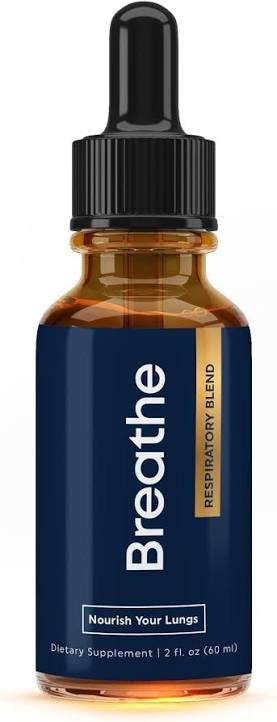

| Comparison Area | Breathe | Typical Popular Respiratory Brand |
|---|---|---|
| Formula Strategy | Uses several complementary botanicals centered around respiratory and throat wellness rather than relying exclusively on one extract. | Often based primarily on mullein or an extensive blend where some ingredients may contribute only small amounts. |
| Key Botanical Focus | Combines mullein with ginger, peppermint, lemon peel, and Manuka honey. | Common formulas may focus mainly on mullein, elderberry, marshmallow root, thyme, or generic herbal complexes. |
| Respiratory Comfort | Designed around several aspects of comfort, including throat soothing, botanical antioxidant support, mucus-membrane wellness, and a refreshing peppermint sensation. | Benefits vary widely depending on whether the competing formula focuses on mucus, immune support, or simple mullein supplementation. |
| Delivery Method | Liquid format can be taken directly or incorporated into a beverage according to label instructions. | Available as capsules, gummies, teas, syrups, or liquid extracts, depending on the brand. |
| Ease for People Who Dislike Pills | Particularly convenient because no capsule swallowing is required. | Capsule-centered competitors may be less suitable for consumers who dislike tablets. |
| Formula Complexity | Provides several targeted ingredients without creating an unnecessarily enormous ingredient panel. | Some competing products contain 10 to 20 ingredients, which can make meaningful dosing difficult to judge. |
| Traditional Herbal Foundation | Mullein forms part of a formula that also incorporates honey, ginger, peppermint, and citrus. | Many competing formulas rely mainly on mullein’s traditional reputation. |
| Taste and Experience | Peppermint, lemon, ginger, and honey may create a more approachable sensory profile than plain herbal extracts. | Straight mullein tinctures can taste considerably more earthy or bitter. |
| Evidence Limitations | Research supports the biological plausibility of several ingredients, although the finished formula lacks robust clinical confirmation. | The same limitation affects many competitors because respiratory supplements frequently rely on ingredient-level rather than finished-product trials. |
| Best Fit | Better suited to someone wanting a multi-ingredient daily botanical formula rather than isolated mullein alone. | A simpler product may suit consumers who specifically want a single-herb extract. |
| Purchase Protection | Eligible official-site purchases are promoted with a 90-day refund policy. | Refund policies vary substantially between brands, Amazon sellers, and independent retailers. |
The biggest advantage is therefore formula balance rather than proof that Breathe medically outperforms every competing supplement. It offers more variety than a plain mullein tincture while avoiding the excessive complexity of some enormous proprietary blends.
How to Use Breathe Correctly
Usage instructions deserve particular care because the promotional dosage information provided for Breathe is not entirely consistent across available descriptions.
The supplied recommendation states 2–3 mL or 1–3 drops taken orally 2–3 times per day. However, milliliters and individual drops are not equivalent units: a full milliliter generally contains far more than three drops. For that reason, the current bottle label should take priority over any dosage wording quoted in advertisements or third-party reviews.
Shake the bottle before use and measure the serving with the supplied dropper. It may be taken directly or mixed into a preferred beverage when permitted by the label.
People who tolerate the initial serving well may follow the manufacturer’s directions regarding additional daily servings. Do not exceed the current label dose simply because the ingredients are natural.
Consistency is generally more sensible than taking unusually large servings. Respiratory wellness should also be supported through adequate hydration, avoidance of smoking and vaping, nutritious food, physical activity appropriate to health status, adequate sleep, and medical care when symptoms require it.
Anyone with asthma, COPD, cardiovascular disease, significant allergies, persistent breathing problems, or prescription medications should discuss supplementation with a qualified healthcare professional.
Pros and Cons of Breathe
Like every supplement, Breathe has genuine advantages alongside limitations that should be understood before ordering.
| Pros | Cons |
|---|---|
| Well-rounded botanical formula: Instead of relying only on mullein, Breathe combines several complementary ingredients associated with throat comfort, antioxidant support, traditional respiratory use, and a refreshing sensory effect. | No robust finished-product clinical trial identified: Ingredient research is useful, but it does not establish that the exact commercial formula produces a specific improvement in lung function. |
| Convenient liquid delivery: The dropper format is useful for people who dislike swallowing capsules and allows the supplement to be incorporated into beverages when desired. | Effects will vary significantly between users: Respiratory symptoms have many different causes, so one botanical supplement cannot reasonably be expected to produce the same experience for everyone. |
| Mullein-centered respiratory approach: Mullein has a long traditional history in respiratory herbalism and contains several classes of interesting phytochemicals. | Medication interactions require consideration: Ginger and concentrated botanical ingredients may not be appropriate alongside every medication or medical condition without professional guidance. |
| Includes soothing ingredients: Manuka honey and mullein make the formula relevant to users whose respiratory discomfort also involves occasional throat dryness or irritation. | Not a replacement for respiratory medication: Anyone prescribed inhalers, steroids, antibiotics, oxygen therapy, or other respiratory treatments should never discontinue them in favor of Breathe without medical supervision. |
| Peppermint improves the user experience: Menthol provides a cooling, refreshing sensation that can make the formula feel more pleasant and may contribute to the subjective perception of clearer airflow. | |
| 90-day refund protection for eligible official purchases: A relatively long guarantee period reduces the financial commitment for customers who purchase through the authorized channel and decide the formula is unsuitable. |
Overall, the positives are most convincing for users seeking convenient botanical respiratory support, while the primary drawbacks relate to the limited finished-product research and the need to maintain realistic expectations.
Possible Side Effects of Breathe
Most of the major ingredients used in Breathe are familiar foods or herbs, but concentrated supplements can still cause unwanted effects.
Potential reactions may include heartburn, stomach discomfort, nausea, diarrhea, mouth or throat irritation, reflux, or allergic reactions. Ginger and peppermint are particularly relevant for people prone to acid reflux because either can cause digestive discomfort in susceptible individuals.
Honey or plant allergies also deserve consideration. Stop using the supplement and seek appropriate medical assistance if a severe allergic reaction occurs.
Any new or worsening shortness of breath, chest pain, blue lips, severe wheezing, confusion, coughing up blood, or rapidly worsening respiratory symptoms should be treated as a medical concern rather than attributed to a normal supplement adjustment period.
Is Breathe Safe for Regular Use?
For generally healthy adults who can tolerate its ingredients, Breathe appears to use botanicals commonly encountered in food and herbal supplementation. That makes the formula reasonably approachable when it is used according to the current product label.
However, natural does not automatically mean risk-free. People who are pregnant, breastfeeding, managing chronic illness, dealing with significant reflux, or taking prescription medication should obtain professional guidance before regular use.
Most importantly, Breathe should support a respiratory wellness routine rather than replace prescribed medical care.
Can Breathe Be Taken With Medications?
Potential interactions need to be considered before combining Breathe with prescription or over-the-counter medication. Herbal ingredients can influence digestion, absorption, blood clotting, or other physiological pathways depending on dose and individual circumstances.
Ginger deserves particular attention because concentrated ginger supplements may interact with certain medications. People using anticoagulants, antiplatelet drugs, diabetes medication, blood-pressure treatments, or multiple prescription medicines should discuss the formula with their pharmacist or physician.
The same caution applies to people using inhalers, corticosteroids, antihistamines, or other respiratory medications. The objective is not necessarily to avoid all supplements, but to ensure that the combination is appropriate for the individual’s medical situation.
Who May Consider Breathe, and Who Should Avoid It?
Breathe is most appropriate when expectations are centered on supplemental respiratory wellness rather than disease treatment.
People Who May Find It Suitable
- Adults interested in everyday respiratory wellness: People looking for botanical support for general airway and throat comfort may appreciate the combination of mullein, peppermint, ginger, honey, and citrus.
- People who dislike capsules: The liquid format makes the supplement easier to incorporate into an existing routine without swallowing tablets.
- Individuals exposed to ordinary environmental irritants: Those dealing with dry air, dust, seasonal environmental conditions, or pollution may be interested in additional throat and respiratory comfort support.
- Consumers already interested in mullein: Breathe provides mullein within a broader multi-botanical formula instead of requiring several individual supplements.
People Who Should Avoid It or Seek Medical Advice First
- Anyone with unexplained or serious breathing difficulty: New, worsening, or significant shortness of breath needs medical assessment rather than self-treatment with supplements.
- People with asthma, COPD, or other diagnosed lung diseases: The formula should never replace prescribed inhalers, oxygen, corticosteroids, or other medical therapies.
- Pregnant or breastfeeding individuals: Concentrated herbal combinations should be reviewed with a healthcare professional because safety information is not equally strong for every ingredient.
- People with allergies to formula ingredients: Anyone sensitive to honey, peppermint, ginger, citrus, mullein, or related botanicals should avoid exposure unless cleared by a clinician.
- People taking medications with possible herbal interactions: A pharmacist or physician can evaluate whether the formula fits safely alongside existing treatment.
What Could Be Better About Breathe?
Despite its strengths, several aspects of Breathe keep the formula from receiving an unquestioned perfect score.
- More finished-product clinical research would strengthen the formula considerably. Research on mullein, ginger, peppermint, and honey is useful, but a randomized study using Breathe itself would provide much stronger evidence than extrapolating from separate ingredients.
- Greater dose transparency would make evaluation easier. Consumers benefit when the quantity of every active ingredient is clearly disclosed because that allows meaningful comparison with research and competing formulations.
- Respiratory marketing requires careful language. Claims implying that an oral supplement can rapidly remove large quantities of mucus, repair damaged lungs, or replace respiratory therapy would go substantially beyond what current evidence can establish.
- The dosage instructions should remain completely consistent. Milliliters and individual drops represent very different quantities. Clear, standardized bottle instructions are essential so users are not left trying to reconcile conflicting serving recommendations.
These concerns do not make the supplement inherently poor. They simply explain why buyers should evaluate it as a well-designed wellness formula rather than a clinically proven respiratory treatment.
Is Breathe a Scam?
There is not enough evidence to reasonably label Breathe a scam simply because its respiratory claims require careful interpretation. The product uses recognizable botanical ingredients, is sold as a tangible liquid supplement, and is promoted with a stated refund policy.
The more appropriate concern is expectation management. Ingredient research does not prove that Breathe can treat respiratory disease or dramatically transform lung function. Buyers should judge it as a botanical wellness supplement and avoid interpreting aggressive promotional language as equivalent to clinical evidence.
Alternatives to Breathe Available Through Amazon
Consumers who want to compare Breathe with other options can find several respiratory-oriented botanical products on Amazon. Availability, formulas, prices, and seller quality can change, so the current ingredient panel and seller information should always be checked before ordering.
Nature’s Answer Mullein Leaf Extract
Nature’s Answer offers mullein in a concentrated liquid form and is a sensible alternative for consumers who specifically want mullein without the broader Breathe blend. Its simpler formula can also make it easier to understand exactly which botanical is being used.
The tradeoff is that a single-herb extract does not provide Breathe’s ginger, peppermint, honey, and citrus combination. It is therefore more appropriate for someone deliberately seeking straightforward mullein supplementation.
MaryRuth’s Organic Respiratory Health Herbal Blend
MaryRuth’s sells an organic respiratory liquid formula featuring herbs such as mullein, marshmallow root, and elderberry. It has a different ingredient philosophy from Breathe but serves a similar audience interested in liquid botanical respiratory support.
This option may appeal to consumers who prioritize organic certification or prefer marshmallow root and elderberry. It should not automatically be assumed to work better simply because the ingredient panel is different.
Organic Mullein and Marshmallow Root Liquid Blends
Amazon also carries several formulas combining mullein, marshmallow root, plantain leaf, thyme, elderberry, or related herbs. These can be economical options for buyers comparing multiple respiratory-support approaches.
The main caution is quality control. Marketplace supplements can differ dramatically in manufacturing standards, labeling clarity, seller reliability, and testing. A lower price should therefore not be the only selection criterion.
The 90-Day Money-Back Guarantee
One of the more useful buyer protections surrounding Breathe is its advertised 90-day money-back guarantee. A three-month window provides more breathing room than the short 30-day guarantees attached to many supplements.
The critical detail is that the guarantee applies to qualifying orders placed through the official purchasing channel. Customers buying from an unauthorized marketplace seller or unrelated third-party website should not assume that the same refund policy will follow the product.
Purchasing directly also reduces confusion about which company handles the transaction and where a refund request needs to be submitted. Customers should keep their order confirmation, purchase email, bottle, and transaction details until they are satisfied with the purchase.
No refund policy turns a supplement into a clinically proven product, but a clearly stated guarantee does reduce the financial risk involved in trying a formula whose effects can vary from person to person.
Frequently Asked Questions About Breathe
Q: What is Breathe designed to do?
A: Breathe is a botanical dietary supplement intended to support respiratory wellness, airway and throat comfort, and normal mucus-membrane function. Its formula combines traditional respiratory herbs with ingredients such as ginger, peppermint, honey, and lemon peel. It should be viewed as supportive supplementation rather than a treatment for lung disease.
Q: How quickly should someone expect results?
A: There is no scientifically established timetable that applies to every user. Some sensory effects from peppermint may be noticeable relatively quickly, while broader wellness experiences can take longer and may never be dramatic. Results depend on the reason for respiratory discomfort, general health, lifestyle, medication use, and individual response.
Q: Can Breathe cure asthma or COPD?
A: Breathe is not approved as a treatment or cure for asthma, COPD, bronchitis, pneumonia, or another respiratory disease. People diagnosed with respiratory illnesses should continue treatment prescribed by their healthcare professional and discuss supplement use with that provider.
Q: Does Breathe actually remove mucus from the lungs?
A: The formula contains ingredients traditionally associated with respiratory and mucus-membrane comfort, particularly mullein. However, claims that an oral supplement can rapidly remove large measured quantities of mucus should be treated cautiously. Persistent or unusually heavy mucus production warrants medical evaluation.
Q: Is Breathe suitable for daily use?
A: Healthy adults who tolerate the ingredients may be able to incorporate it into a daily supplement routine according to the current bottle directions. People with chronic diseases, allergies, pregnancy, breastfeeding, or prescription medications should obtain professional guidance first.
Q: Can Breathe be mixed with drinks?
A: Liquid herbal supplements are often suitable for mixing into water or another beverage when the manufacturer’s directions permit it. The bottle should be shaken before measuring the serving so ingredients are evenly distributed.
Q: Why is the liquid format useful?
A: Liquid supplements eliminate the need to swallow capsules and can be convenient for people who already use tinctures or herbal drops. They also allow the serving to be mixed into a beverage, although the correct amount still needs to be measured carefully.
Q: Where should Breathe be purchased?
A: Consumers who want the advertised 90-day refund protection should use the official purchasing channel rather than assuming that marketplace sellers provide identical guarantee terms. Order records should be retained until the customer is certain the product is suitable.
Final Verdict: Where Breathe Fits in a Respiratory Wellness Routine
Breathe stands out as a thoughtfully assembled botanical respiratory formula rather than another plain mullein tincture. Mullein, ginger, peppermint, Manuka honey, and lemon peel give the product a sensible combination of traditional respiratory support, soothing properties, antioxidant compounds, and an easy-to-use liquid delivery system.
Its biggest limitation is evidence. The ingredients have scientific and traditional rationale, but that is different from proving that the complete Breathe formula treats respiratory disease or produces a predictable improvement in lung function. Anyone purchasing it should therefore approach it as supportive wellness supplementation while continuing appropriate medical care.
For adults who understand that distinction and want a multi-ingredient botanical option, Breathe earns a strong 4.8/5 editorial rating. Those who want to try it may prefer ordering through the official purchasing channel so the advertised 90-day money-back guarantee remains available.
References and Scientific Sources
The assessment of Breathe was informed by established medical and scientific resources covering its major ingredients and dietary-supplement safety. These sources support discussion of the individual botanicals; they should not be interpreted as clinical trials of Breathe itself.
- Gupta A, Atkinson AN, Pandey AK, Bishayee A. Health-promoting and disease-mitigating potential of Verbascum thapsus L. (common mullein): A review. Phytotherapy Research. 2022.
Comprehensive scientific review covering mullein phytochemistry, traditional use, and experimental biological properties. PubMed – Common Mullein Review - National Center for Complementary and Integrative Health. Ginger: Usefulness and Safety.
Evidence-based overview of ginger research, potential adverse effects, and precautions regarding medication use. NCCIH – Ginger - National Center for Complementary and Integrative Health. Peppermint Oil: Usefulness and Safety.
Scientific overview covering peppermint research, known limitations, adverse effects, and safety considerations. NCCIH – Peppermint Oil - Blanco-Salas J, et al. Searching for Scientific Explanations for the Uses of Spanish Folk Medicine: A Review on the Case of Mullein. Biology. 2021.
Peer-reviewed examination of traditional Verbascum applications and the scientific evidence related to those uses. PubMed – Mullein and Traditional Use Review - National Center for Complementary and Integrative Health. Herbs and dietary-supplement safety resources.
NCCIH provides evidence-based guidance emphasizing that herbal products can cause side effects and interact with medications, reinforcing the importance of discussing supplement use with healthcare providers. NCCIH Health Information
Disclaimer
This Breathe review is provided for informational and educational purposes and should not be considered medical advice. Dietary supplements are not intended to diagnose, treat, cure, or prevent disease. Anyone with persistent coughing, wheezing, chest pain, significant mucus production, or difficulty breathing should seek appropriate medical care. Consult a qualified healthcare professional before beginning a new supplement, particularly when taking medication, managing a medical condition, pregnant, or breastfeeding.