

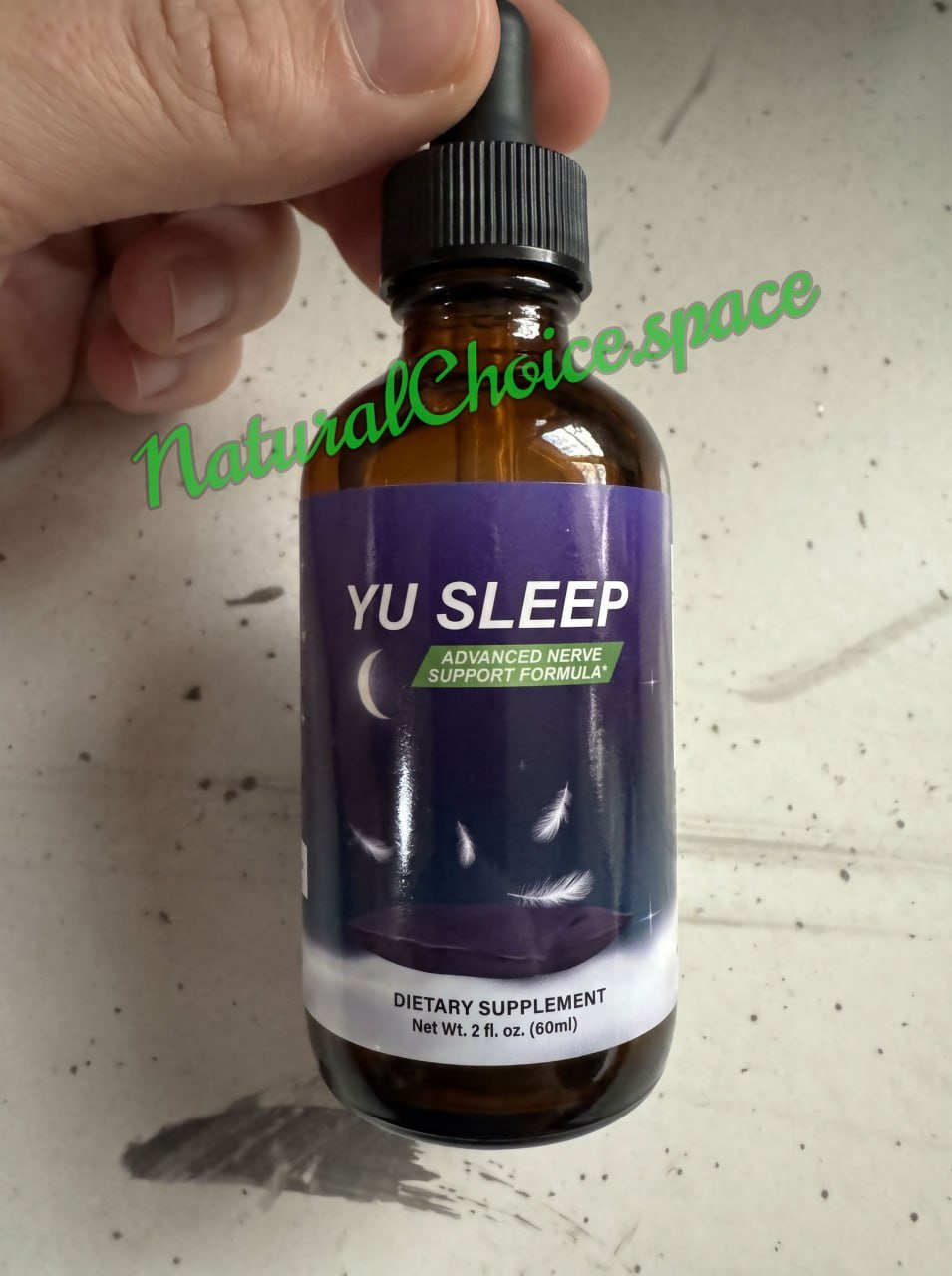
Sleep problems are rarely limited to simply feeling tired at bedtime. Difficulty falling asleep, waking repeatedly during the night, and getting seven or eight hours in bed without feeling restored the next morning can affect concentration, mood, appetite, physical recovery, and everyday productivity. Modern habits such as late-night screen exposure, irregular schedules, stress, caffeine, and inconsistent bedtime routines can further interfere with the biological signals that normally prepare the brain and body for sleep.
This detailed review examines Yu Sleep, a liquid nighttime supplement positioned around supporting the body’s natural sleep-pressure and relaxation systems. The formula, ingredients, scientific rationale, potential benefits, limitations, safety considerations, side effects, and practical value are examined closely to determine whether it deserves consideration from adults looking for deeper, steadier, more restorative sleep without relying solely on a high-dose melatonin product.
Yu Sleep At a Glance: Complete Product Overview
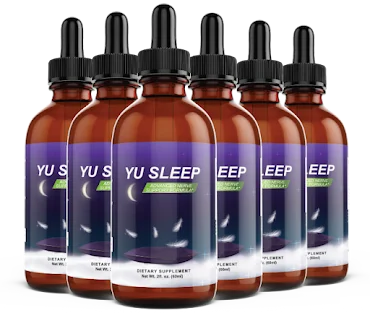
Yu Sleep takes a broader approach than supplements built around a single sleep ingredient. Its formula combines melatonin with magnesium glycinate, L-theanine, GABA, 5-HTP, tart cherry, lemon balm, apigenin, and B vitamins, creating a product intended to address both nighttime relaxation and biological sleep signaling.
| Product Detail | Yu Sleep Information |
|---|---|
| Product Name | Yu Sleep |
| Product Type | Liquid dietary supplement for nighttime sleep support |
| Primary Goal | Support easier sleep onset, fewer nighttime disruptions, deeper rest, and more refreshed mornings |
| Formula Style | Multi-ingredient liquid formula targeting relaxation, sleep signaling, and nervous-system activity |
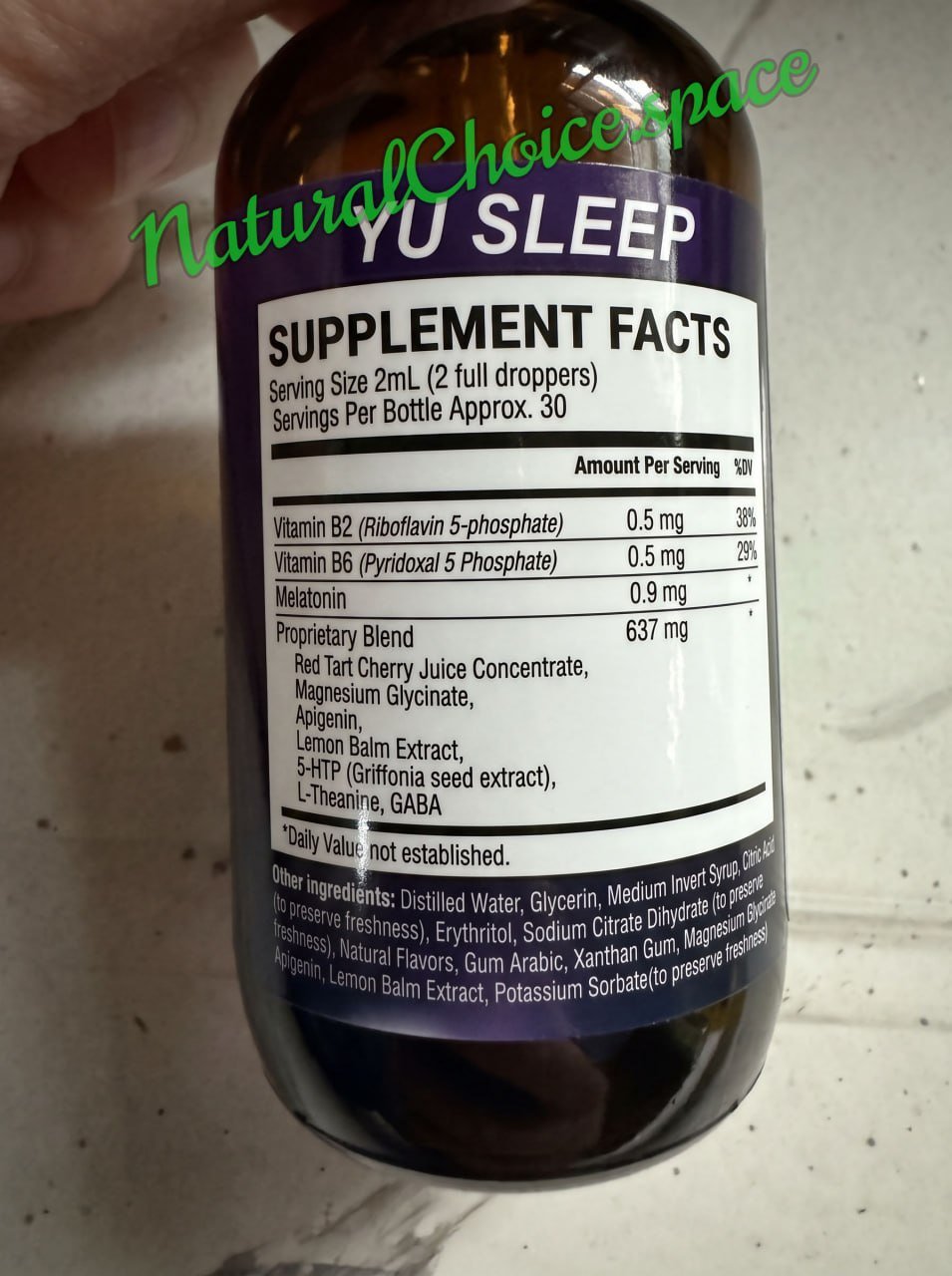
| Highlighted Ingredients | Red Tart Cherry Extract, 5-HTP, Vitamins B6 & B2, Magnesium Glycinate, Apigenin, Lemon Balm Extract, L-Theanine, Melatonin, and GABA |
| Melatonin Amount | The disclosed label lists 0.9 mg of melatonin per serving, which is considerably lower than many high-dose sleep supplements |
| Suggested Timing | Approximately 30 minutes before bedtime |
| Recommended Use | 2 droppers before bed, according to the directions supplied for the product |
| Best Suited For | Adults struggling with winding down, inconsistent sleep quality, nighttime waking, or unrefreshing sleep |
| Form | Liquid drops |
| Expected Timeline | Some users may notice changes during the first several nights, while more consistent improvements may require regular use |
| Guarantee | 60-day money-back guarantee on qualifying official-website purchases |
| Editorial Rating | ★★★★★ 4.6/5 |
| Official Website | ✅ Click Here |
What Exactly Is Yu Sleep?
Yu Sleep is a liquid nutritional supplement developed for adults who want additional nighttime support without depending on a formula built around an unusually large dose of melatonin. Its design combines ingredients that participate in different aspects of nighttime physiology, including nervous-system relaxation, serotonin and melatonin pathways, muscle function, and the mental transition from daytime alertness into rest.
An important distinction is that Yu Sleep should not be described as a treatment for insomnia or another diagnosed sleep disorder. It is a dietary supplement, not a sleeping medication. Persistent insomnia, loud snoring with breathing pauses, unexplained extreme daytime sleepiness, or sleep problems lasting for months deserve medical evaluation rather than repeated self-treatment with supplements.
The Scientific Rationale Behind Yu Sleep
The formulation strategy behind Yu Sleep is more defensible than simply combining a collection of fashionable sleep ingredients. Melatonin has the largest research base among the formula’s components. A 2026 review of systematic reviews found that the overall direction of evidence generally favored melatonin over inactive comparators for sleep outcomes, although study quality, populations, and definitions of sleep quality varied considerably.
L-theanine is another particularly interesting component. A 2025 systematic review and meta-analysis covering 19 articles found improvements in several subjective sleep outcomes, including overall sleep quality and sleep-onset latency, although the researchers also noted that additional studies using isolated L-theanine are needed.
The evidence surrounding magnesium is less decisive. A 2026 systematic review concluded that results remain inconsistent and that current evidence does not support magnesium as a routine insomnia treatment, although modest benefits may occur for selected outcomes or individuals. That distinction matters because a biologically sensible ingredient is not automatically a proven sleep therapy.
Tart cherry also has preliminary human evidence. Small randomized trials have reported improvements in selected sleep measures, including sleep time or nighttime wakefulness, but sample sizes have generally been small. This makes tart cherry interesting as part of a broader formula without justifying exaggerated claims that it independently solves chronic sleep problems.
Overall, the scientific strength of Yu Sleep comes primarily from combining several ingredients with plausible or researched roles in relaxation and sleep, rather than from clinical trials demonstrating that the finished Yu Sleep formula itself produces a particular result. That difference is important when judging supplement marketing responsibly.
How Yu Sleep Is Intended to Work
The central idea behind Yu Sleep is to support several processes involved in becoming sleepy rather than forcing sedation through one ingredient. The product’s marketing describes this in terms of supporting the body’s sleep-pressure system, particularly the gradual buildup of the drive to sleep as the day progresses.
From a practical standpoint, the formula can be understood through several overlapping pathways. Melatonin provides a direct nighttime timing signal, while tart cherry contributes naturally occurring compounds associated with sleep physiology. L-theanine, lemon balm, apigenin, magnesium, and GABA are included largely for their calming or relaxation-oriented properties. Meanwhile, 5-HTP participates in biochemical pathways related to serotonin, which is connected with melatonin production.
This does not mean the supplement literally resets every aspect of an individual’s sleep system. Sleep is affected by circadian timing, adenosine signaling, light exposure, mental health, medications, caffeine, exercise, medical conditions, and behavior. Yu Sleep is therefore best viewed as a nighttime support tool that may make the transition into sleep easier when combined with sensible sleep habits, rather than a substitute for correcting the underlying causes of severe sleep disruption.
Inside the Yu Sleep Formula: Ingredient Analysis
Before examining individual components, it is worth addressing safety. Yu Sleep contains several biologically active ingredients, and natural does not automatically mean appropriate for every person. Particular caution is sensible for people using antidepressants, sedatives, blood thinners, seizure medication, antibiotics, or other prescription drugs.
The disclosed formula also uses a proprietary blend for several ingredients, meaning the exact individual quantities of every component are not fully broken out. Consumers taking medications, pregnant or breastfeeding women, and people with chronic medical conditions should discuss the complete label with a qualified healthcare professional before starting it.
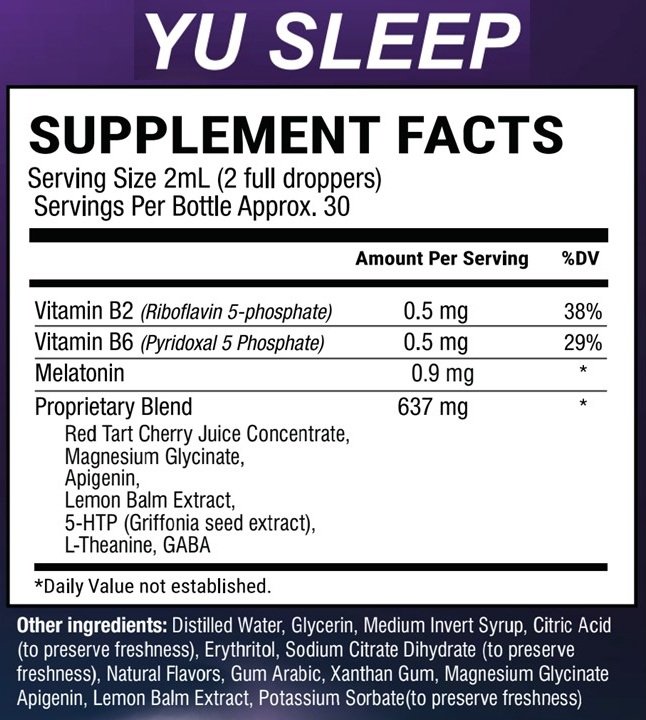
🍃 Red Tart Cherry Extract
Red tart cherry is one of the more distinctive ingredients in the formula. Tart cherries naturally contain phytochemicals and small amounts of melatonin, and research has explored their possible influence on sleep duration, sleep efficiency, and melatonin metabolism. Small human trials have produced encouraging results, although the research remains preliminary rather than conclusive.
Within Yu Sleep, tart cherry makes sense as a supporting ingredient rather than the primary driver of the product. Its strongest value is its complementary position alongside melatonin and calming compounds, potentially supporting normal nighttime physiology without turning the entire formula into a high-dose melatonin supplement.
🍃 5-HTP
5-hydroxytryptophan, commonly called 5-HTP, is an intermediate compound used by the body during serotonin production. Serotonin participates in mood regulation and also sits upstream of melatonin synthesis, giving 5-HTP a reasonable biological connection to nighttime sleep pathways.
The ingredient nevertheless deserves greater caution than many ordinary vitamins. 5-HTP should not casually be combined with serotonin-affecting medications, including many antidepressants, because excessive serotonergic activity can become medically serious. Anyone taking psychiatric medication should obtain professional guidance before using a formula containing 5-HTP.
🍃 Vitamin B6 & B2
Vitamin B6 supports numerous enzymatic reactions involving amino-acid metabolism and neurotransmitter synthesis. Vitamin B2, or riboflavin, contributes to cellular energy production and normal metabolic processes. Neither should be interpreted as a direct sleeping pill, but both can support biological pathways needed for normal neurological function.
Their inclusion also illustrates the supportive rather than sedative nature of part of the formula. B vitamins help provide nutritional cofactors rather than producing immediate drowsiness. The disclosed amounts are relatively modest, which is preferable to unnecessarily loading a bedtime supplement with very high B-vitamin doses.
🍃 Magnesium Glycinate
Magnesium participates in hundreds of enzymatic reactions and contributes to normal muscle, nerve, and neurological function. Magnesium glycinate pairs magnesium with the amino acid glycine and is frequently selected for nighttime products because it is generally considered a practical supplemental form.
Sleep-specific research, however, remains mixed. Magnesium may be particularly relevant when intake or status is inadequate, but it should not be marketed as a universally effective insomnia cure. Its role in Yu Sleep is better understood as supporting normal neuromuscular relaxation while complementing the formula’s other nighttime ingredients.
🍃 Apigenin
Apigenin is a naturally occurring flavonoid found in several plants, including chamomile. It has attracted interest in sleep formulations because laboratory research suggests interactions with pathways associated with nervous-system relaxation.
Human evidence is less developed than it is for melatonin or L-theanine. That does not make apigenin useless, but expectations should remain reasonable. Its inclusion adds another relaxation-oriented botanical component rather than serving as proof that Yu Sleep will produce pharmaceutical-strength sedation.
🍃 Lemon Balm Extract
Lemon balm has a long history of traditional use for relaxation and nervous tension. Modern supplements frequently pair it with ingredients such as L-theanine, magnesium, or melatonin because difficulty mentally disengaging at night is a common reason people remain awake.
For someone whose main challenge is feeling mentally stimulated at bedtime, this part of the formula may be particularly relevant. Lemon balm’s purpose is less about knocking a person out and more about supporting a calmer pre-sleep state in which natural sleep can occur more easily.
🍃 L-Theanine
L-theanine is an amino acid naturally associated with tea leaves and is one of the most compelling ingredients in Yu Sleep. Unlike a conventional sedative, L-theanine is generally studied for promoting relaxation without necessarily producing heavy daytime-type drowsiness.
Recent systematic evidence suggests potential improvements in subjective sleep quality and sleep onset. That makes L-theanine particularly well matched to users whose sleep difficulty begins with an inability to mentally settle. It strengthens Yu Sleep’s relaxation side without requiring the formula to rely entirely on melatonin.
🍃 Melatonin
Melatonin is a hormone produced naturally by the body in response to darkness and plays an essential role in circadian timing. Supplemental melatonin can be helpful in certain circumstances, particularly when sleep timing is disrupted.
Yu Sleep’s disclosed 0.9 mg melatonin amount is noteworthy because many commercial products contain several milligrams per serving. More is not automatically better with melatonin, and some consumers specifically prefer lower-dose formulas because larger amounts can occasionally produce vivid dreams, headaches, dizziness, or next-day sleepiness.
🍃 GABA
Gamma-aminobutyric acid, or GABA, is a major inhibitory neurotransmitter involved in reducing neuronal excitability. That makes it an obvious target for relaxation-focused supplements, although questions remain about how effectively supplemental GABA crosses the blood-brain barrier and how consistently oral supplementation affects sleep.
Its inclusion should therefore be viewed with measured expectations. GABA adds another relaxation-focused element to Yu Sleep’s multi-pathway design, but it is not a guarantee of immediate sedation or uninterrupted sleep.
Six Potential Benefits of Yu Sleep
The strongest reason to consider Yu Sleep is that it attempts to address more than one reason a person may struggle at night. Sleep problems can involve difficulty winding down, delayed sleep onset, frequent waking, poor sleep quality, or waking without feeling restored.
The following benefits represent reasonable potential outcomes based on the formula and its ingredients, rather than guaranteed medical results.
★ 1. May Make Falling Asleep Feel Easier
Yu Sleep combines melatonin with L-theanine, lemon balm, magnesium, apigenin, and GABA, creating several possible routes toward a calmer bedtime transition. This could be useful for people who physically go to bed on time but remain awake because their mind still feels active.
The advantage is that the formula is not built solely around escalating melatonin dosage. Supporting relaxation while providing a modest melatonin signal may offer a more balanced approach for adults who dislike heavily sedating formulas.
★ 2. May Support More Continuous Sleep
Repeated nighttime awakenings can make eight hours in bed feel like four hours of real rest. Yu Sleep is positioned to support sleep continuity through its combination of relaxation-focused ingredients and compounds related to sleep signaling.
No supplement can guarantee that someone will sleep straight through the night, particularly when waking is caused by sleep apnea, pain, urinary problems, alcohol, menopause, medication, or environmental disturbance. For ordinary restless sleep, however, the broader formula may offer more support than a basic single-ingredient product.
★ 3. Could Promote More Restorative Mornings
A successful sleep supplement should ultimately improve how a person functions the next day, not simply increase the sensation of drowsiness at bedtime. Users want to wake feeling mentally clearer and physically restored rather than sedated.
Because Yu Sleep uses a relatively modest disclosed melatonin amount alongside non-melatonin ingredients, it may appeal to people trying to avoid the heavy morning feeling sometimes associated with stronger nighttime formulas. Individual response still varies considerably, especially during the first several uses.
★ 4. Supports Nighttime Relaxation
Stress and mental overstimulation are major barriers to sleep for many adults. L-theanine, lemon balm, magnesium, apigenin, and GABA give Yu Sleep a substantial relaxation-oriented component.
This makes the formula especially interesting for people who describe being physically tired but mentally awake. Reducing pre-sleep tension can make good sleep habits easier to follow, particularly when supplementation is paired with reduced evening screen exposure, dimmer lighting, and a consistent bedtime.
★ 5. Provides a Lower-Melatonin Multi-Ingredient Approach
Consumers increasingly recognize that high-dose melatonin is not automatically superior. Yu Sleep’s disclosed 0.9 mg dose means the formula can provide melatonin while depending on other ingredients for much of its overall positioning.
That design gives Yu Sleep a distinct identity compared with gummies containing 5 mg, 10 mg, or more melatonin per serving. People who have experienced unpleasant dreams or morning grogginess from stronger melatonin supplements may find the lower-dose approach more appealing, although sensitivity varies.
★ 6. Offers a Convenient Bedtime Routine
Consistency matters in sleep. A liquid taken shortly before bed can become part of a predictable wind-down routine, providing a behavioral cue that the active part of the day is ending.
Convenience should not be underestimated. A complicated supplement routine is difficult to maintain, whereas two droppers roughly 30 minutes before bed can be incorporated into an existing nighttime ritual relatively easily. That simplicity may improve adherence for people who dislike swallowing several capsules.
Yu Sleep Rating: 4.6/5
After examining its formula, positioning, scientific rationale, convenience, and limitations, Yu Sleep earns an editorial rating of 4.6 out of 5.
Overall Rating: ★★★★★ 4.6/5
Formula Quality: ★★★★★ 4.8/5
The multi-ingredient design is the strongest part of Yu Sleep. Rather than depending entirely on melatonin, the product includes L-theanine, magnesium glycinate, tart cherry, lemon balm, apigenin, 5-HTP, and GABA, producing a more comprehensive nighttime formula.
Scientific Rationale: ★★★★★ 4.5/5
Several ingredients have meaningful scientific support, especially melatonin and L-theanine. The rating stops short of five stars because evidence varies considerably between ingredients, and research on individual ingredients cannot automatically be treated as proof that the completed proprietary formula produces identical effects.
Ease of Use: ★★★★★ 4.7/5
The liquid delivery format is straightforward and avoids pills. Taking two droppers before bedtime should be manageable for most users and fits naturally into an evening routine.
Transparency: ★★★★☆ 4.2/5
The disclosed melatonin and vitamin quantities are useful. However, several ingredients are contained within a combined proprietary blend rather than having every individual amount listed separately. Greater dose transparency would make scientific comparison easier.
Value & Purchase Protection: ★★★★★ 4.7/5
The official 60-day guarantee provides a reasonable evaluation period. The strongest value is likely for consumers specifically seeking a multi-ingredient liquid formula rather than a cheap standalone melatonin tablet.
Final Score: ★★★★★ 4.6/5. The rating reflects a thoughtfully constructed supplement with several strong ingredient choices, while still recognizing that individual results are variable and the product itself should not be confused with a clinically proven treatment for insomnia.
Yu Sleep vs Popular Sleep-Support Brands
A useful way to judge Yu Sleep is to compare its strategy with the type of mainstream sleep supplement commonly found online and in retail stores. The comparison below deliberately focuses on the category rather than singling out one competing brand.

| Comparison Area | Yu Sleep | Typical Popular Sleep Brand |
|---|---|---|
| Formula Strategy | Uses a broad blend addressing relaxation, sleep signaling, neurotransmitter pathways, and nutritional support. | Frequently revolves around melatonin with one or two additional calming ingredients. |
| Melatonin Approach | Uses a disclosed 0.9 mg melatonin serving, allowing other ingredients to carry more of the formula. | Many mainstream products use approximately 3–10 mg melatonin per serving, depending on the product. |
| Relaxation Support | Includes L-theanine, lemon balm, apigenin, magnesium glycinate, and GABA alongside melatonin. | May contain L-theanine or a botanical, although simpler products sometimes contain only melatonin. |
| Sleep-Support Diversity | Combines nine highlighted active components, giving the formula several potential mechanisms. | Generally favors simpler formulations designed primarily for convenience and low retail cost. |
| Delivery Format | Liquid droppers allow a pill-free nighttime routine. | Gummies, tablets, softgels, and capsules dominate the mainstream market. |
| Best Fit | Better suited to someone deliberately seeking a comprehensive bedtime formula rather than a single active ingredient. | Often ideal for people wanting an inexpensive, straightforward melatonin product for occasional use. |
| Formula Sophistication | Stronger emphasis on combining calming compounds with sleep-cycle support. | Usually easier to understand but often less comprehensive. |
| Dose Transparency | Some nutrients are disclosed separately while several components share a proprietary blend. | Many mainstream brands individually disclose ingredient quantities, although this varies by product. |
| Purchase Protection | Official purchases are promoted with a 60-day guarantee. | Return conditions depend on the retailer and manufacturer and may provide a shorter evaluation period. |
Yu Sleep’s clearest advantage is therefore formula breadth rather than proof of superior clinical performance. Someone who simply wants inexpensive melatonin can find many cheaper options. Someone seeking melatonin plus several relaxation-oriented compounds in one liquid formula has a stronger reason to prefer Yu Sleep.
How to Take Yu Sleep Correctly
According to the supplied directions, Yu Sleep should be taken as 2 droppers approximately 30 minutes before bed. Consistency is sensible because changing the timing dramatically from one night to another can make it difficult to determine how the product affects sleep.
The manufacturer indicates that many customers report noticeably deeper sleep, fewer nighttime awakenings, and more refreshed mornings, sometimes beginning during the first several nights. These should be treated as reported experiences rather than guaranteed timelines. The supplied product information suggests easier sleep may become noticeable during nights one through three, sleep continuity during the first week, and refreshed mornings over the first one or two weeks, with longer-term use positioned for more complete results.
For practical use, avoid taking more than directed in an attempt to speed results. Taking the supplement shortly before a consistent bedtime while limiting caffeine late in the day, reducing evening alcohol, and controlling bright light will provide a much fairer test of whether the formula is actually helping.
Yu Sleep Pros and Cons
The strengths and limitations of Yu Sleep become clearer when the formula is judged as a complete consumer product rather than only by its ingredient list.
| Pros | Cons |
|---|---|
| Comprehensive ingredient profile: The formula goes beyond basic melatonin by combining tart cherry, L-theanine, magnesium glycinate, lemon balm, apigenin, 5-HTP, GABA, and B vitamins. This provides broader nighttime support than many single-ingredient sleep products. | Proprietary-blend limitation: Although some amounts are disclosed, every component of the main blend is not individually quantified. Consumers who want exact milligram-by-milligram comparison with clinical trials may find this frustrating. |
| Modest melatonin amount: The disclosed 0.9 mg serving is attractive for consumers who prefer avoiding very high melatonin doses while still receiving a direct circadian sleep signal. | Results cannot be guaranteed: Sleep problems have many causes. A supplement may help ordinary nighttime restlessness but cannot be expected to correct sleep apnea, severe anxiety, chronic pain, hormonal problems, or diagnosed insomnia automatically. |
| Strong relaxation component: L-theanine, magnesium, lemon balm, apigenin, and GABA give the formula considerable emphasis on unwinding before bed rather than simply creating stronger drowsiness. | Medication interactions require attention: 5-HTP, melatonin, magnesium, and other ingredients can matter when prescription medications are involved. This is not a supplement that medication users should combine blindly with everything else they take. |
| Liquid delivery: People who dislike swallowing capsules may appreciate a dropper format that can be incorporated into a short bedtime routine. | May cost more than basic alternatives: Consumers looking only for melatonin can buy simpler products at substantially lower prices. Yu Sleep makes more financial sense when the broader formula is actually desired. |
| Several ingredients have human sleep research: Melatonin and L-theanine have particularly meaningful supporting evidence, while tart cherry and magnesium have varying levels of human research. This gives the formula a more credible rationale than an entirely speculative botanical mixture. | |
| 60-day purchase protection: Qualifying orders placed through the official website receive a 60-day money-back guarantee, giving customers more than a few nights to decide whether the formula suits them. |
Possible Yu Sleep Side Effects
Because Yu Sleep contains multiple active ingredients, side effects are possible even though the formula is positioned as natural. Melatonin may cause headache, dizziness, vivid dreams, nausea, or next-day drowsiness in some individuals. Magnesium can cause digestive discomfort or loose stools, particularly at larger supplemental amounts.
5-HTP may produce nausea or gastrointestinal discomfort and deserves particular caution when other serotonin-affecting substances are involved. Calming ingredients may also increase sleepiness when combined with alcohol, sedatives, or other nighttime products. Anyone experiencing persistent or severe symptoms should stop using the product and seek appropriate medical advice.
Is Yu Sleep Safe for Regular Use?
For a generally healthy adult who follows the labeled directions, Yu Sleep uses ingredients commonly found in dietary supplements. That does not mean the formula is automatically appropriate for everyone.
The most important precautions apply to people taking prescription medication, individuals with chronic medical conditions, pregnant or breastfeeding women, and anyone already using another melatonin or sleep supplement. Long-term melatonin safety also has less evidence than short-term use, so medical guidance is sensible when regular use becomes prolonged.
Can Yu Sleep Be Taken With Medication?
Anyone using medication should treat Yu Sleep as something worth discussing with a physician or pharmacist before combining it with prescriptions. The formula contains several ingredients capable of interacting with medications or producing overlapping effects.
Particular caution is warranted with antidepressants and other serotonin-affecting drugs because of 5-HTP, as well as anticoagulants, epilepsy medications, sedatives, and other sleep aids. Magnesium can also affect the absorption of some antibiotics and bisphosphonates, while melatonin requires additional caution for people taking blood thinners or epilepsy medication.
Who May Benefit From Yu Sleep, and Who Should Avoid It?
Yu Sleep is most logically suited to adults seeking nutritional support for ordinary sleep difficulties rather than people attempting to self-treat an unexplained medical sleep disorder.
People who may find it suitable include:
- Adults who struggle to wind down mentally: The combination of L-theanine, lemon balm, apigenin, magnesium, and GABA places considerable emphasis on relaxation before sleep.
- People experiencing inconsistent sleep quality: Individuals who sleep but frequently feel that their nights are light or restless may appreciate the broader formulation.
- Consumers who dislike high-dose melatonin: With 0.9 mg melatonin disclosed per serving, Yu Sleep offers a different approach from products providing several milligrams at once.
- People who prefer liquid supplements: The dropper format can be easier for users who dislike capsules, large tablets, or sugary sleep gummies.
- Adults looking for one comprehensive formula: Combining several common nighttime ingredients in one product eliminates the need to purchase separate bottles of melatonin, magnesium, L-theanine, and botanical extracts.
People who should avoid it or obtain professional guidance first include:
- Pregnant or breastfeeding individuals, because several botanical and neuroactive ingredients have insufficient pregnancy-specific safety data.
- Children and adolescents unless specifically advised by a clinician, since adult sleep supplements are not automatically appropriate for younger users.
- People taking antidepressants or serotonergic medication, particularly because the formula contains 5-HTP.
- Anyone taking blood thinners, epilepsy medication, sedatives, certain antibiotics, or multiple prescription drugs, because ingredient-drug interactions may occur.
- People with severe or unexplained sleep problems, especially loud snoring, gasping during sleep, prolonged insomnia, or extreme daytime sleepiness. Those symptoms may require medical assessment.
What Could Be Better About Yu Sleep?
Despite the generally strong formula, Yu Sleep is not perfect. Several areas would improve transparency and make the product easier to evaluate scientifically.
- More complete ingredient-dose disclosure would help. A proprietary blend gives the total combined amount without fully revealing how much magnesium glycinate, L-theanine, GABA, apigenin, lemon balm, tart cherry, or 5-HTP contributes individually. Exact amounts would allow consumers to compare the formula directly with doses used in published research.
- The finished formula needs stronger product-specific clinical evidence. Individual ingredients may have research behind them, but that is not identical to testing Yu Sleep itself in a randomized controlled trial. Product-specific human research would significantly strengthen claims about how consistently the full combination performs.
- It is more complex than some people need. Someone whose only problem is occasional jet lag or a temporarily shifted sleep schedule may be perfectly satisfied with a simpler product. The broader Yu Sleep formula makes greater sense for consumers specifically interested in multi-pathway nighttime support.
- Online marketing claims should still be interpreted cautiously. Promises involving dramatic sleep restoration or precise improvement timelines should never be treated as guaranteed outcomes. Sleep response is highly individual and strongly influenced by lifestyle, medical conditions, medication, and sleep environment.
Is Yu Sleep a Scam?
There is not enough evidence to fairly label Yu Sleep a scam simply because it is a dietary sleep supplement. The disclosed formula contains recognizable ingredients used widely in nighttime supplements, and several components have legitimate human research supporting at least some sleep-related effects.
That said, consumers should separate the scientific evidence for individual ingredients from marketing promises about the complete product. Yu Sleep is more credible when viewed as a multi-ingredient sleep-support supplement than when interpreted as a guaranteed solution for chronic insomnia. Buying through the official purchase channel and keeping order documentation also provides stronger consumer protection.
Alternatives to Yu Sleep Available on Amazon
Consumers comparing Yu Sleep with easier-to-find retail products have several mainstream alternatives. These options are not automatically better; they simply serve different budgets, preferred formats, and ingredient priorities.
- OLLY Sleep Gummies: A popular gummy-based option combining melatonin with L-theanine and botanical ingredients such as chamomile, passionflower, and lemon balm. It is convenient and widely available, although the formula is simpler and uses a different melatonin strategy.
- Nature Made Wellblends Sleep & Recover: This gummy formulation combines melatonin, L-theanine, and magnesium. It may suit shoppers who prefer a recognizable retail brand and clearly disclosed core ingredient amounts rather than a larger botanical blend.
- Natrol Melatonin: Natrol offers several melatonin strengths and formats. It is best viewed as a straightforward alternative for someone who specifically wants melatonin rather than the multi-ingredient approach used by Yu Sleep.
- Natural Vitality SLEEP Gummies: This option combines magnesium, melatonin, and L-theanine in a gummy format. It may appeal particularly to consumers who prioritize magnesium but do not need tart cherry, 5-HTP, GABA, lemon balm, or apigenin in the same formula.
- Lemme Sleep Gummies: Lemme combines melatonin, magnesium, L-theanine, and calming botanical ingredients in a vegan gummy. Its higher melatonin content and gummy format make it meaningfully different from Yu Sleep’s lower-melatonin liquid approach.
Availability, formulas, prices, and seller quality on Amazon can change. Consumers should check the current Supplement Facts label and seller information before purchasing rather than relying on an older listing or review.
Yu Sleep 60-Day Money-Back Guarantee
One useful purchase consideration with Yu Sleep is the advertised 60-day money-back guarantee. A two-month trial period is considerably more practical than expecting every person to decide after two or three nights whether a sleep supplement suits them.
The most important condition is where the product is purchased. The guarantee is specifically associated with qualifying orders made through the official website. Buying from an unrelated marketplace, reseller, auction listing, or unofficial seller should not be assumed to provide the same protection.
Customers should keep their confirmation email, order number, receipt, bottles, and any return instructions associated with the purchase. Guarantee terms can change, so reviewing the conditions shown at checkout before ordering is sensible. The guarantee adds confidence, but it should still be treated as a formal return policy with conditions rather than a reason to ignore the product label or proper use.
Yu Sleep Bonuses

Frequently Asked Questions About Yu Sleep
Q: How quickly can Yu Sleep start working?
A: Yu Sleep is marketed as something users may begin noticing within the first several nights. The supplied product information suggests easier sleep may appear during nights one through three, with improved sleep continuity developing during the first week. Individual response can differ substantially, so these timelines should be considered expectations rather than guarantees.
Q: Does Yu Sleep contain melatonin?
A: Yu Sleep does contain melatonin, with the disclosed label information listing 0.9 mg per serving. This is lower than the several-milligram doses common in many mainstream sleep products and allows the formula to rely more heavily on its complementary calming ingredients.
Q: Can Yu Sleep make someone groggy the following morning?
A: Yu Sleep is designed around refreshed mornings, but next-day sleepiness remains possible with virtually any supplement containing melatonin or other calming ingredients. Sensitivity, bedtime, total sleep duration, medications, alcohol, and individual metabolism can all influence morning response.
Q: Should Yu Sleep be taken every night?
A: Yu Sleep is positioned for consistent nighttime use according to its directions. Anyone planning prolonged daily supplementation, however, should periodically reassess why the product is needed, particularly if sleep remains poor despite ongoing use.
Q: Can Yu Sleep be combined with another melatonin supplement?
A: Combining Yu Sleep with additional melatonin is generally unnecessary unless a healthcare professional has recommended a specific total dose. Stacking several nighttime products can unintentionally increase melatonin and duplicate ingredients, increasing the chance of grogginess or other side effects.
Q: Is Yu Sleep suitable for serious insomnia?
A: Yu Sleep is a dietary supplement and should not replace medical evaluation or evidence-based treatment for chronic insomnia. Adults experiencing persistent difficulty sleeping for months should consider professional assessment because behavioral treatment, medical conditions, medication effects, or another sleep disorder may need attention.
Q: What makes Yu Sleep different from ordinary sleep gummies?
A: The main difference with Yu Sleep is its broader liquid formula. Rather than combining only melatonin with one supporting ingredient, it includes tart cherry, 5-HTP, magnesium glycinate, apigenin, lemon balm, L-theanine, GABA, and B vitamins alongside melatonin.
Q: What happens if Yu Sleep does not provide the expected results?
A: Qualifying Yu Sleep purchases made through the official website are promoted with a 60-day money-back guarantee. Customers should follow the current return instructions associated with their order and keep purchase records until they are confident the product suits them.
Final Verdict: Is Yu Sleep Worth Considering?
Yu Sleep stands out most for its formula design. Melatonin, L-theanine, magnesium glycinate, tart cherry, lemon balm, apigenin, GABA, 5-HTP, and B vitamins create a more layered nighttime supplement than the typical single-purpose melatonin tablet. The lower disclosed melatonin amount is also appealing for consumers who want sleep-cycle support without beginning with a very large dose.
The evidence should remain in perspective. Some ingredients, particularly melatonin and L-theanine, have meaningful human research, while evidence for other components is more preliminary or mixed. Yu Sleep therefore deserves consideration as a sleep-support supplement, but it should not be presented as a proven treatment for insomnia, sleep apnea, anxiety disorders, or another medical condition.
For an adult seeking a pill-free, multi-ingredient formula aimed at relaxation, easier sleep onset, improved nighttime consistency, and better morning recovery, Yu Sleep receives a strong 4.6/5 editorial rating. Those who want to evaluate the formula themselves can visit the official Yu Sleep website here and review the current offer, Supplement Facts, purchasing terms, and guarantee before ordering.
References
The scientific assessment in this review prioritizes independent medical and peer-reviewed evidence rather than product marketing sources.
- Iyer S, et al. Exogenous Melatonin and Sleep Quality: A Scoping Review of Systematic Reviews. Journal of Clinical Pharmacology, 2026. This review examined a large body of systematic-review evidence on melatonin and sleep outcomes. PubMed: Exogenous Melatonin and Sleep Quality
- Bulman A, et al. The Effects of L-Theanine Consumption on Sleep Outcomes: A Systematic Review and Meta-Analysis. Sleep Medicine Reviews, 2025. This analysis evaluated randomized trials investigating L-theanine and sleep-related outcomes. PubMed: L-Theanine and Sleep Outcomes
- Lopresti AL, Smith SJ, Drummond PD. Magnesium Supplementation for Sleep in Adults: A Systematic Review of Randomized Controlled Trials. Journal of Dietary Supplements, 2026. This review highlights the mixed and generally low-certainty evidence surrounding supplemental magnesium as a sleep intervention. PubMed: Magnesium Supplementation for Sleep
- Losso JN, et al. Pilot Study of Tart Cherry Juice for the Treatment of Insomnia and Investigation of Mechanisms. American Journal of Therapeutics. A small placebo-controlled crossover study examining tart cherry juice and objective and subjective sleep measures. PubMed: Tart Cherry Juice and Insomnia Study
- National Center for Complementary and Integrative Health. Melatonin: What You Need to Know. An evidence-based overview covering potential benefits, limitations, safety concerns, and medication considerations associated with melatonin supplementation. NCCIH: Melatonin — What You Need to Know
Disclaimer
This Yu Sleep review is provided for general informational and educational purposes only and should not be considered medical advice, diagnosis, or treatment. Dietary supplements can affect individuals differently and may interact with medications or medical conditions. Anyone who is pregnant, breastfeeding, managing a health condition, taking prescription medication, or experiencing persistent sleep problems should consult a qualified healthcare professional before using Yu Sleep or another sleep supplement. This article may contain affiliate links, which can result in compensation if a purchase is made through them, at no additional cost to the buyer.