

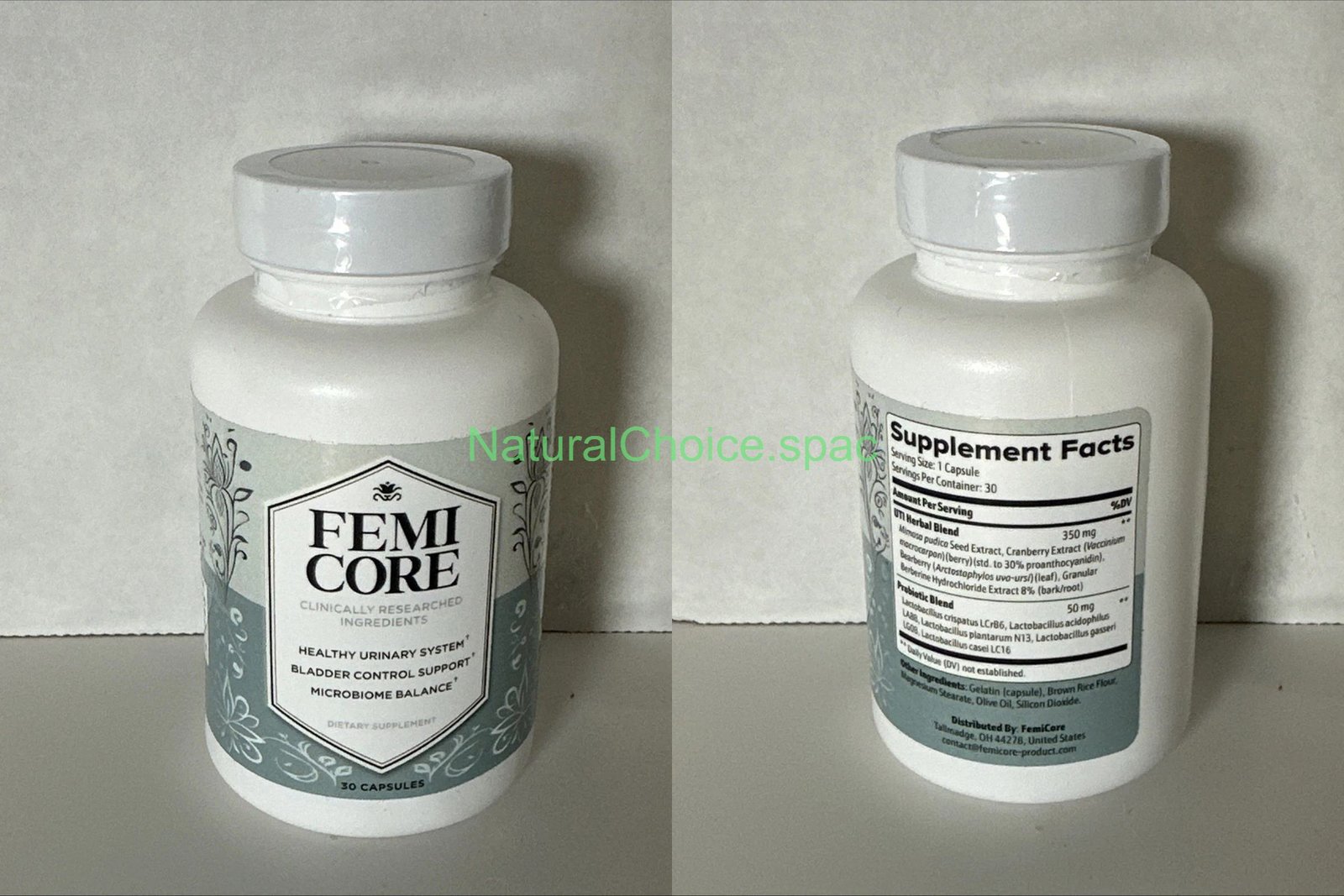
Bladder leakage is more common than many people realize, particularly among women as they get older, after pregnancy, or when pelvic-floor and urinary-tract changes begin affecting bladder control. Urinary incontinence can interfere with exercise, sleep, travel, social confidence, and everyday routines. Researchers have also become increasingly interested in the female urinary microbiome, including whether differences in microbial communities are associated with urinary symptoms and recurrent urinary-tract problems.
This detailed FemiCore review examines the formula from several practical angles, including its ingredients, proposed microbiome-supporting approach, potential benefits, limitations, side effects, safety considerations, and the type of person most likely to consider it. Particular attention is given to whether FemiCore offers a sensible approach for women seeking nutritional support for bladder control, urinary microbiome balance, and long-term urinary-system health, while keeping expectations grounded in the available research.
FemiCore Overview
| Product Detail | Information |
|---|---|
| Product Name | FemiCore |
| Product Type | Dietary supplement formulated for female bladder and urinary-system support |
| Primary Purpose | Supports bladder control, urinary microbiome balance, and a healthy urinary environment |
| Formula Style | Herbal extracts combined with multiple Lactobacillus probiotic strains |
| Notable Ingredients | Mimosa Pudica, Bearberry, Cranberry Extract, Granular Berberine, Lactobacillus Crispatus, Lactobacillus Acidophilus, Lactobacillus Plantarum, Lactobacillus Gaseri, and Lactobacillus Cassei |
| Recommended Use | One capsule every morning with a large glass of water |
| Stimulants | Marketed as stimulant-free |
| Main Audience | Adult women interested in additional nutritional support for bladder control and urinary health |
| Refund Period | 60-day money-back guarantee on qualifying purchases made through the official ordering channel |
| Purchase Type | One-time purchase according to the current product information |
| Important Limitation | FemiCore is a dietary supplement and should not be considered a treatment for urinary incontinence, infection, or another diagnosed medical condition |
| Official Website | ✅ Click Here |
What Is FemiCore?
FemiCore is a women’s bladder-support supplement built around the idea that urinary comfort depends on more than bladder-muscle strength alone. Its formula combines plant-derived ingredients with several Lactobacillus species that are commonly discussed in research involving vaginal, intestinal, and urinary microbial environments.
The manufacturer positions FemiCore particularly toward women dealing with episodes of unexpected leakage, bladder urgency, or declining confidence in urinary control. Its promotional explanation places considerable emphasis on restoring beneficial bacteria within the urinary microbiome. That concept has legitimate scientific interest, although claims that a specific supplement can directly correct the underlying cause of urinary leakage should be interpreted more cautiously.
FemiCore is therefore best viewed as a supportive nutritional formula rather than a medical treatment. Anyone experiencing new, severe, painful, or rapidly worsening urinary symptoms should seek medical evaluation because urinary leakage can have several causes, including pelvic-floor dysfunction, overactive bladder, infection, medication effects, hormonal changes, neurologic conditions, and other health problems.
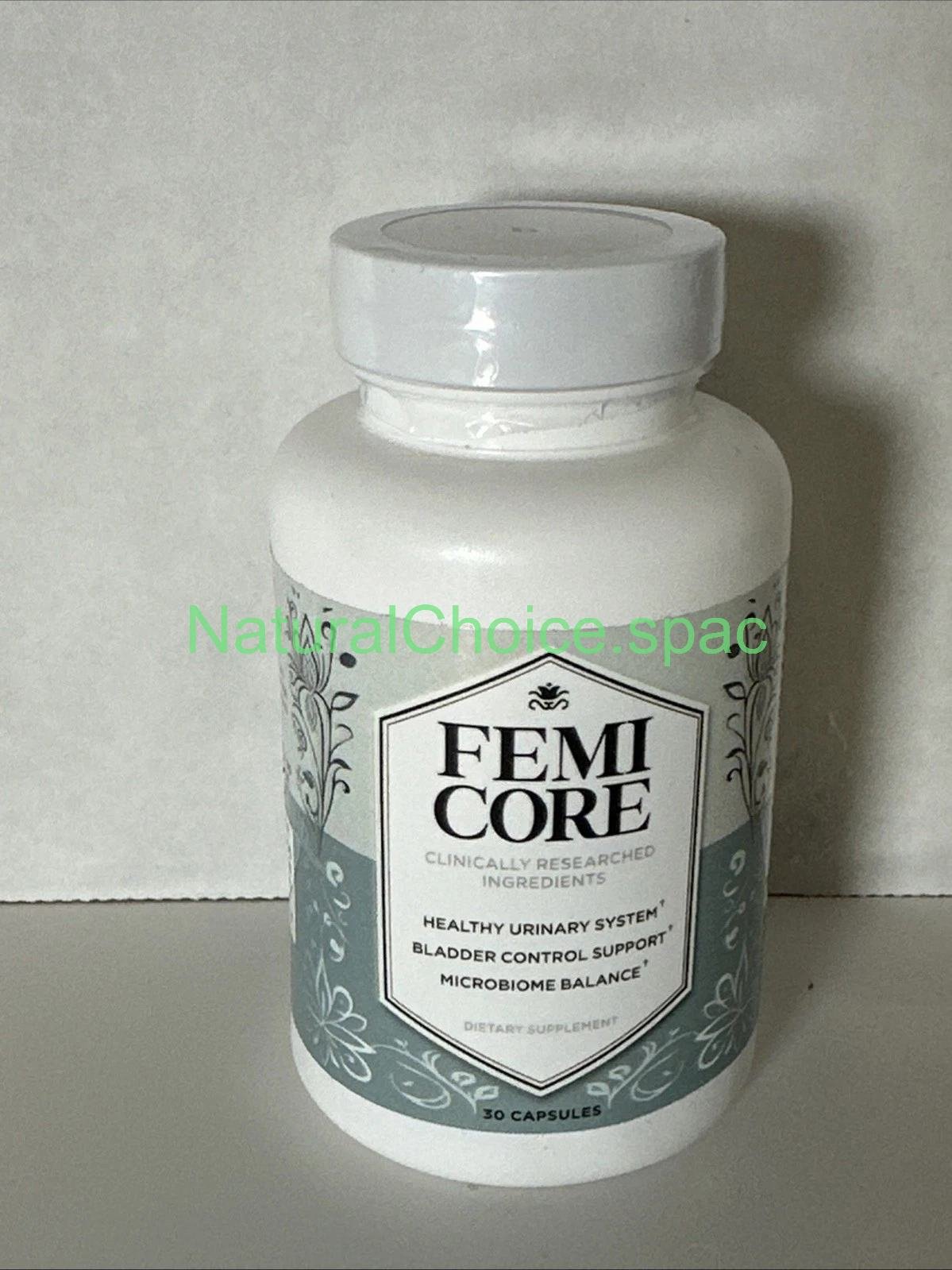
What Science Says About the FemiCore Approach
One of the more interesting aspects of FemiCore is its focus on microorganisms rather than relying exclusively on traditional bladder herbs. Scientific understanding of the urinary tract has changed considerably over the last decade. The bladder is no longer universally viewed as a completely sterile environment, and researchers are investigating relationships between urinary microbial communities and conditions including urgency and urinary incontinence.
Research into Lactobacillus species is especially relevant. Certain Lactobacillus organisms naturally occur within healthy female microbial communities and may help maintain an environment less favorable to potentially harmful organisms. A randomized study involving intravaginal Lactobacillus crispatus, for example, found encouraging results in women with recurrent urinary-tract infections, although the intervention, dosage, and delivery method were different from an oral product such as FemiCore.
Cranberry has stronger human evidence than many urinary-support botanicals. A large Cochrane review involving thousands of participants concluded that cranberry products can reduce the likelihood of symptomatic, culture-confirmed urinary-tract infections in some susceptible populations, including women with recurrent UTIs. This evidence relates to UTI prevention rather than urinary leakage itself, which is an important distinction.
FemiCore nevertheless has an important evidence limitation: research on an individual ingredient cannot automatically be treated as proof that the complete FemiCore formula produces the same outcome. Dosage, strain identity, probiotic viability, delivery method, and ingredient interactions all matter. The formula therefore has scientifically interesting components, but stronger conclusions would require controlled clinical trials conducted specifically on FemiCore.
How Does FemiCore Work?
FemiCore appears to use several complementary strategies. The probiotic portion is intended to support beneficial microbial populations, while cranberry and selected botanical compounds provide additional urinary-system support. Cranberry proanthocyanidins are particularly interesting because they can interfere with the ability of certain bacteria, especially some strains of E. coli, to adhere to urinary-tract surfaces.
The Lactobacillus blend takes a different route. Species such as Lactobacillus crispatus, L. acidophilus, L. plantarum, and L. gasseri are associated with beneficial microbial ecosystems. The theoretical goal is to create conditions that support microbial balance rather than relying solely on herbs aimed at short-term urinary comfort.
FemiCore’s marketing also discusses environmental toxins and dioxins as drivers of urinary microbiome disruption. That specific explanation should be treated as a marketing hypothesis rather than an established clinical explanation for urinary leakage. Urinary incontinence is multifactorial, and existing clinical evidence does not establish removal or neutralization of dioxins through FemiCore as a proven mechanism.
Ingredients in FemiCore
Ingredient quality deserves careful attention with any urinary-health supplement. Botanical compounds can produce side effects or interact with medications, while probiotic benefits depend heavily on the exact strain, dose, manufacturing conditions, and viability through the end of shelf life.
Natural does not automatically mean risk-free. Women who are pregnant, breastfeeding, immunocompromised, taking prescription medication, or receiving treatment for kidney, liver, metabolic, or urinary conditions should discuss the complete ingredient label with a healthcare professional before beginning FemiCore.
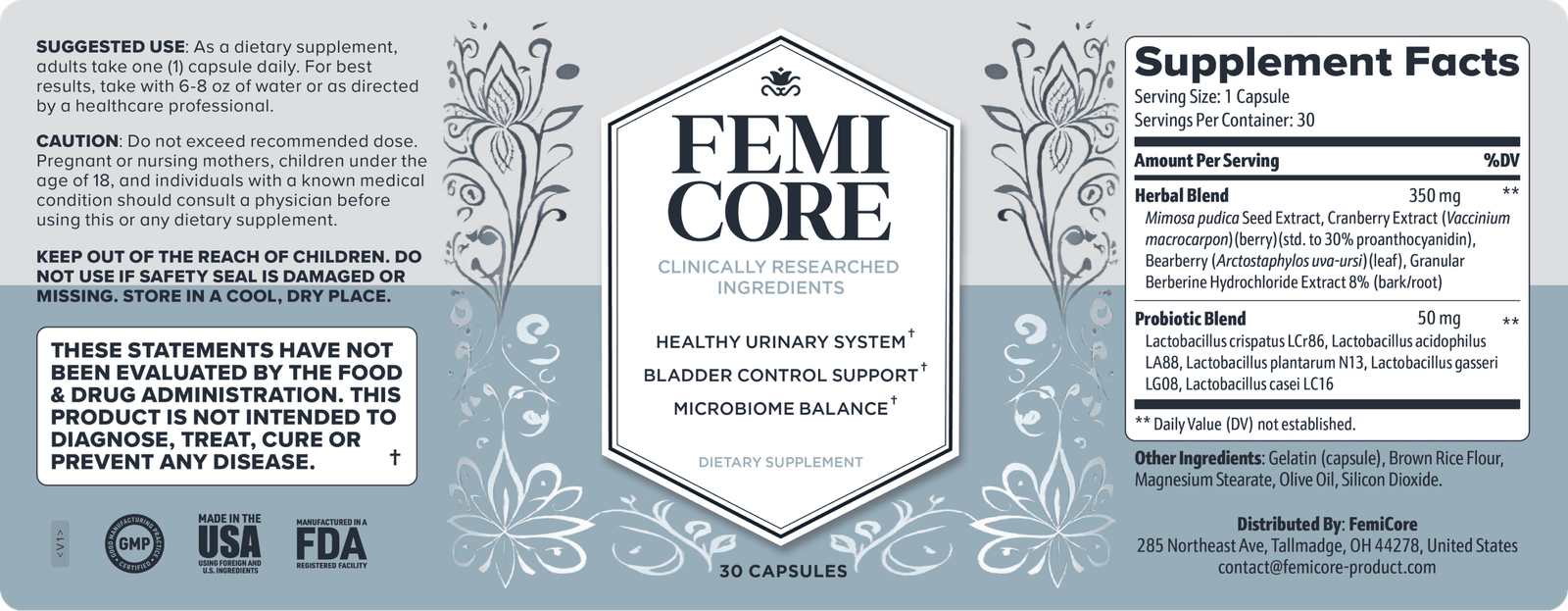
🌿 Mimosa Pudica
Mimosa Pudica is a botanical used traditionally in several herbal systems. Different parts of the plant contain naturally occurring phytochemicals, including flavonoids, tannins, and other plant compounds that have attracted laboratory research for antimicrobial and antioxidant activity.
For FemiCore, Mimosa Pudica should be considered a supporting botanical rather than a clinically proven bladder treatment. Human evidence showing that oral Mimosa Pudica reduces urinary leakage is limited, so expectations should remain moderate despite its interesting phytochemical profile.
🌿 Bearberry
Bearberry, commonly known as uva ursi, has a long history of traditional use for urinary complaints. Its leaves contain arbutin and related compounds, which have been researched for their effects within the urinary tract.
Bearberry deserves more caution than a typical food-derived ingredient because concentrated preparations are not necessarily appropriate for prolonged or unrestricted use. Dose matters considerably, particularly for anyone with kidney or liver concerns, making disclosure of exact formula quantities especially valuable.
🌿 Cranberry Extract
Cranberry is among the most recognizable ingredients in urinary-health supplements. Its proanthocyanidins are believed to interfere with attachment of certain bacteria to urinary-tract surfaces, particularly uropathogenic E. coli.
Clinical research has produced meaningful evidence for cranberry in reducing recurrent UTIs in some groups. However, preventing recurrent infection is different from directly strengthening bladder muscles or curing incontinence, so cranberry should be viewed as a urinary-health ingredient rather than a stand-alone solution for leakage.
🌿 Granular Berberine
Berberine is a naturally occurring plant alkaloid studied extensively for metabolic, gastrointestinal, and antimicrobial properties. Its inclusion gives FemiCore a broader botanical component alongside the probiotic blend.
The main issue with berberine is interaction potential. NCCIH notes that berberine may cause gastrointestinal symptoms and can interact with medications. It is also generally avoided during pregnancy and breastfeeding. This makes professional guidance especially important for women already using prescription drugs.
🌿 Lactobacillus Crispatus
Lactobacillus crispatus is one of the most compelling organisms in the formula because it is frequently associated with healthy vaginal microbial communities. Researchers have investigated it for its potential role in reducing susceptibility to recurrent urinary infections.
One controlled trial found fewer recurrent UTIs among women receiving an intravaginal L. crispatus preparation, although the study was relatively small and used a different delivery route from FemiCore. The evidence therefore supports biological plausibility without proving that FemiCore itself will provide the same outcome.
🌿 Lactobacillus Acidophilus
Lactobacillus acidophilus is a widely used probiotic species associated primarily with digestive and vaginal microbial support. It produces lactic acid, contributing to an environment that may discourage excessive growth of certain unwanted organisms.
The ingredient list provided for FemiCore mentions L. acidophilus twice. Unless the product label specifies two distinct strains, this should generally be interpreted as the same species rather than two separate active ingredients. Exact strain designation and CFU count would make the probiotic portion easier to evaluate scientifically.
🌿 Lactobacillus Plantarum
Lactobacillus plantarum is a versatile probiotic organism found in fermented foods and used extensively in probiotic research. Much of the strongest evidence surrounding this species relates to gastrointestinal health and interactions within the intestinal microbiome.
Its inclusion in FemiCore may complement the broader microbial-support strategy because gut, vaginal, and urinary microbial ecosystems can influence one another. However, evidence specifically showing that oral L. plantarum improves bladder-control symptoms remains limited.
🌿 Lactobacillus Gaseri
Listed by the manufacturer as Lactobacillus Gaseri, the organism is more commonly written scientifically as Lactobacillus gasseri. It naturally occurs within portions of the human gastrointestinal and female reproductive microbiota.
Its presence broadens FemiCore’s probiotic diversity. That is potentially useful because a healthy microbial environment involves communities rather than a single microorganism, although clinical effectiveness still depends on the specific strain and viable dose delivered.
🌿 Lactobacillus Cassei
The listed Lactobacillus Cassei most likely refers to Lactobacillus casei, a familiar probiotic species used in foods and supplements. It has primarily been researched for digestive and immune-related applications.
Within FemiCore, its main contribution is likely general microbiome support rather than a direct bladder-specific action. As with the other probiotics, strain identification and CFU information would improve transparency considerably.
Potential Benefits of FemiCore
The potential advantages of FemiCore come mainly from combining urinary-support botanicals with probiotics. These benefits should be considered supportive possibilities rather than guaranteed medical outcomes, particularly because controlled trials on the finished product have not been established.
★ 1. Supports Better Bladder-Control Confidence
FemiCore is primarily designed for women concerned about occasional leakage and bladder urgency. Supporting the surrounding urinary environment may make it a reasonable nutritional addition for women already taking practical steps such as pelvic-floor exercises and bladder training.
The strongest expectation should be gradual support rather than an immediate tightening effect. FemiCore is not equivalent to pelvic-floor rehabilitation or medical treatment, but its formulation provides a different nutritional angle.
★ 2. Helps Support the Urinary Microbiome
The multi-species probiotic combination is one of FemiCore’s strongest conceptual features. Several Lactobacillus species are naturally associated with healthy female microbial ecosystems.
Maintaining beneficial bacteria may help create an environment that is less favorable to unwanted microorganisms. This does not guarantee freedom from UTIs or leakage, but it gives the formula a more targeted purpose than supplements containing only general vitamins.
★ 3. Provides Cranberry-Based Urinary Support
Cranberry adds one of the better-researched natural ingredients used in urinary-health formulas. Its activity against bacterial adherence provides a practical mechanism distinct from the probiotics.
This combination may be especially appealing to women who want broader urinary support rather than a single-ingredient cranberry capsule. Still, FemiCore should never replace antibiotics when a bacterial UTI requires medical treatment.
★ 4. Combines Botanical and Probiotic Strategies
Many bladder supplements focus heavily on herbs, while probiotic products may contain no urinary-specific botanicals. FemiCore combines both approaches in one capsule.
That design is convenient for people who would otherwise purchase several separate supplements. It also allows the formula to address different aspects of urinary wellness, although combining more ingredients naturally increases the importance of checking medication compatibility.
★ 5. May Support Long-Term Urinary Comfort
Bladder wellness is influenced by hydration, pelvic-floor strength, hormones, microbial balance, bowel habits, medications, and underlying health conditions. FemiCore cannot control all of these variables, but it may serve as one element of a broader urinary-health routine.
Women who use the supplement should combine it with sensible habits including adequate hydration, avoiding chronic constipation, maintaining a healthy weight where appropriate, and seeking professional evaluation for persistent symptoms.
★ 6. Convenient Once-Daily Routine
FemiCore requires only one capsule each morning with water, making adherence simpler than protocols requiring several doses throughout the day.
Convenience matters with supplements because even a well-designed formula is unlikely to offer meaningful value when taken inconsistently. The once-daily format is therefore a practical strength for long-term users.
FemiCore Rating: 4.8/5
Overall Rating: ★★★★★ 4.8/5
Formula Quality: ★★★★★ 4.8/5
The combination of cranberry, botanicals, berberine, and several Lactobacillus species gives FemiCore a more interesting formulation than a basic single-ingredient bladder supplement.
Urinary-Support Strategy: ★★★★★ 4.9/5
The focus on urinary microbiome support is scientifically relevant and makes the formula distinctive.
Ingredient Transparency: ★★★★☆ 4.4/5
The largest weakness is the lack of clearly presented individual probiotic strain identifiers, CFU counts, and ingredient quantities in the available promotional information.
Ease of Use: ★★★★★ 5/5
One capsule per day is simple and practical.
Guarantee: ★★★★★ 5/5
A 60-day refund period gives buyers more time to evaluate tolerance and personal experience.
The 4.8/5 editorial rating reflects the thoughtful combination of urinary-support ingredients, ease of use, and refund policy. It is not a rating of proven medical effectiveness, since more direct clinical research on the finished FemiCore formula would strengthen the evidence considerably.
FemiCore vs Popular Bladder-Support Supplements
FemiCore differs from many mainstream urinary supplements because it attempts to combine microbiome support and traditional urinary botanicals in the same formula rather than relying almost entirely on cranberry or a basic herbal blend.
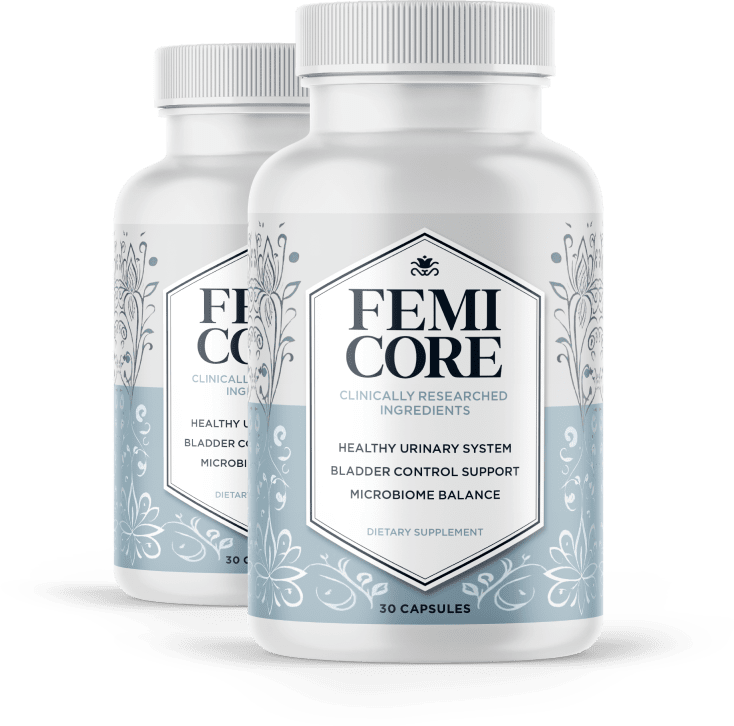


| Comparison Area | FemiCore | Typical Popular Bladder Supplement |
|---|---|---|
| Formula Approach | Uses herbs, cranberry, berberine, and several Lactobacillus probiotics to create a broader urinary-microbiome strategy. | Often built around one or two bladder herbs or cranberry alone. |
| Microbiome Support | Multiple Lactobacillus species make microbial balance a central part of the formulation. | Probiotics may be missing entirely or included as a secondary ingredient. |
| Cranberry Support | Includes cranberry alongside complementary ingredients rather than making it the entire formula. | Frequently relies heavily on cranberry as the primary urinary-support ingredient. |
| Convenience | One capsule each morning makes the routine straightforward. | Some formulas require multiple capsules or divided daily doses. |
| Potential Weakness | Exact strain, CFU, and individual ingredient dosage transparency could be stronger. | Simpler formulas sometimes disclose ingredient quantities more clearly. |
| Best Fit | Better suited to consumers specifically interested in a combined microbiome and botanical strategy. | Better suited to people wanting a simple, narrowly focused supplement. |
| Overall Difference | More comprehensive formulation philosophy, particularly because of the Lactobacillus blend. | Often simpler and easier to evaluate, but potentially less comprehensive. |
FemiCore’s advantage is therefore breadth rather than proof of superiority. There is no reliable head-to-head clinical trial establishing that FemiCore medically outperforms competing products.
How To Use FemiCore
The recommended routine is to take one FemiCore capsule every morning with a large glass of water. Using it at approximately the same time each day can make consistency easier.
Taking more than the recommended amount should not be assumed to produce faster results. Anyone who develops persistent stomach discomfort, allergic symptoms, unusual urinary symptoms, or another unexpected reaction should discontinue the supplement and seek appropriate advice.
Pros and Cons of FemiCore
| Pros | Cons |
|---|---|
| 1. Multi-angle formula: Combines probiotics, cranberry, berberine, and additional botanicals instead of relying on a single ingredient. | 1. Limited finished-product research: Evidence on individual ingredients does not prove that the complete formula prevents or resolves urinary leakage. |
| 2. Strong microbiome focus: The inclusion of several Lactobacillus species reflects growing research interest in female urinary and vaginal microbiota. | 2. Probiotic transparency could improve: Exact strains and CFU levels are important when judging probiotic research and effectiveness. |
| 3. Includes cranberry: Cranberry has considerably more human urinary-health research behind it than many lesser-known herbal ingredients. | 3. Medication interactions are possible: Berberine and certain botanicals make professional guidance important for users taking prescription medication. |
| 4. Convenient daily routine: One capsule each morning is easier to maintain than complicated multi-dose protocols. | 4. Not appropriate for every urinary problem: Painful urination, blood in urine, fever, repeated infections, or sudden severe incontinence require medical evaluation rather than self-treatment. |
| 5. Stimulant-free positioning: This makes the formula more suitable for people who do not want caffeine or stimulant ingredients. | |
| 6. 60-day refund window: Qualifying official-site purchases provide a meaningful period in which customers can evaluate the product rather than committing without a refund option. |
What Are the Possible Side Effects?
Potential reactions depend on individual sensitivity and dosage. Probiotics can occasionally cause temporary bloating, gas, or digestive changes, particularly when first introduced.
Berberine can cause nausea, abdominal discomfort, constipation, or diarrhea and may interact with medications. Bearberry and other botanical ingredients can also create problems when used inappropriately. Serious or persistent symptoms warrant discontinuing the product and obtaining medical advice.
Is FemiCore Safe?
For a generally healthy adult using the product according to label directions, FemiCore’s ingredients are broadly familiar within the dietary-supplement market. However, natural ingredients are not automatically suitable for everyone, particularly during pregnancy, breastfeeding, or treatment with prescription medications.
Claims that a supplement is manufactured in an FDA-approved facility should be worded carefully. The FDA does not approve dietary-supplement manufacturing facilities in the same manner that it approves medications. Dietary-supplement manufacturers are instead expected to comply with applicable FDA regulations and current Good Manufacturing Practice requirements. The currently available FemiCore material also states that the product itself has not been evaluated by the FDA. Manufacturing-location or GMP-certification claims should be verified directly from the current bottle label or manufacturer documentation before publication as confirmed facts.
Can FemiCore Be Taken With Other Medications?
Medication compatibility deserves particular attention because berberine can interact with medicines and alter the way certain drugs are processed. NCCIH advises people taking medications to speak with a healthcare provider before using berberine-containing supplements.
This is especially relevant for women taking medications for diabetes, blood pressure, immune suppression, blood clotting, or other chronic conditions. Bringing the complete Supplement Facts panel to a physician or pharmacist is safer than assuming that a natural formula cannot interact with prescription drugs.
Who Should Use FemiCore, and Who Should Avoid It?
FemiCore is most appropriate for adults who understand that the product is designed for nutritional urinary support rather than disease treatment.
- Women interested in additional bladder-support nutrition: The product may complement pelvic-floor work, hydration management, and other lifestyle measures.
- Women interested in urinary microbiome support: Its Lactobacillus blend makes FemiCore particularly relevant to consumers looking beyond conventional cranberry-only products.
- Adults who prefer once-daily supplements: The simple morning routine may improve consistency.
FemiCore should generally be avoided or professionally reviewed first by:
- Pregnant or breastfeeding women: Berberine-containing products are generally not recommended during pregnancy or breastfeeding.
- People taking prescription medication: Possible botanical-drug interactions require professional review.
- People with persistent or severe urinary symptoms: Blood in the urine, fever, pelvic pain, painful urination, repeated infections, difficulty emptying the bladder, or sudden severe leakage deserves medical assessment.
- People with significant kidney, liver, or immune-system conditions: Several ingredients may require additional caution in these situations.
What Could Be Better About FemiCore?
Several aspects of FemiCore could be strengthened despite the formula’s appealing concept.
- More precise probiotic labeling would help. Listing the exact strain designations and viable CFU counts would make it much easier to compare the formula with published probiotic research.
- Ingredient quantities deserve greater visibility. When botanicals such as berberine and bearberry are included, knowing the actual dose matters for both effectiveness and safety.
- The marketing mechanism can sound more certain than the science supports. The relationship between the urinary microbiome and bladder symptoms is an important research area, but claims involving toxins or a single root cause should not be interpreted as established medical fact.
- Independent FemiCore clinical trials would improve confidence. The current rationale depends mainly on research involving individual ingredients and related probiotic strains.
Is FemiCore a Scam?
Nothing about the basic concept of combining cranberry, Lactobacillus probiotics, and urinary-support botanicals makes FemiCore inherently implausible. The formula contains recognizable ingredients with varying amounts of scientific research behind them, and the seller currently describes a 60-day refund policy.
At the same time, credible ingredients do not automatically validate every marketing claim. FemiCore should be judged as a dietary supplement intended to support urinary wellness, not as a guaranteed cure for incontinence, recurrent UTIs, or another medical disorder.
Alternatives to FemiCore Available in the Market
Consumers who do not want a multi-ingredient formula can consider cranberry-only supplements, particularly standardized products that disclose their proanthocyanidin content. This approach offers a simpler formulation and is easier to evaluate against cranberry research.
Another option is a clearly labeled women’s probiotic that provides specific Lactobacillus strains and CFU counts. Women whose primary problem is stress or urge incontinence should also consider non-supplement approaches such as professionally guided pelvic-floor therapy or bladder training because these address mechanisms that supplements cannot directly correct.
FemiCore 60-Day Money-Back Guarantee
FemiCore currently comes with a 60-day money-back guarantee, giving qualifying customers an opportunity to evaluate the formula without treating the purchase as completely irreversible.
The guarantee should be considered especially important when buying a supplement whose results can vary significantly between individuals. Customers should purchase through the official ordering channel if they want the manufacturer’s stated 60-day guarantee, retain the packing slip and bottles, and review the current refund instructions before ordering because refund procedures can change.
FemiCore Bonuses



Frequently Asked Questions About FemiCore
Q: What is FemiCore mainly designed to support?
A: FemiCore is designed primarily to support female bladder control, urinary-system wellness, and microbiome balance. It combines botanical ingredients with multiple Lactobacillus probiotics rather than relying solely on cranberry.
Q: How quickly should results be expected?
A: There is no clinically established timeline that applies to everyone. Dietary supplements generally require consistent use, and urinary symptoms can have many different causes. Persistent symptoms should not simply be managed by continuing a supplement indefinitely without medical evaluation.
Q: Does FemiCore treat urinary tract infections?
A: FemiCore should not be used as a substitute for diagnosis or treatment of a UTI. Cranberry and certain probiotics are being studied for preventative support, but an established bacterial infection may require medical treatment.
Q: How many capsules are taken daily?
A: The recommended routine is one capsule each morning with a large glass of water. Taking additional capsules should not be assumed to improve effectiveness.
Q: Can FemiCore be taken long term?
A: Long-term suitability depends on the full dosage, individual health status, medications, and tolerance. Ingredients such as bearberry and berberine make professional guidance worthwhile before extended use.
Q: Can FemiCore be used during pregnancy?
A: Pregnancy is a situation where professional guidance is essential, particularly because FemiCore contains berberine. NCCIH advises against berberine use during pregnancy and breastfeeding.
Q: Is FemiCore useful only for older women?
A: The marketing is heavily oriented toward women experiencing age-related bladder concerns, but urinary symptoms can occur at many ages. Younger women with persistent leakage should still investigate causes such as pelvic-floor dysfunction rather than assuming the problem is purely microbiome related.
Q: Where should FemiCore be purchased?
A: Anyone choosing FemiCore should use the official ordering channel, especially when the 60-day refund policy is important. Buying through unrelated third-party sellers may create uncertainty regarding authenticity, storage, return eligibility, or guarantee coverage.
Final Verdict on FemiCore
FemiCore offers an interesting combination of cranberry, berberine, urinary-support botanicals, and multiple Lactobacillus probiotics. The formula is more thoughtfully targeted than many simple cranberry products, particularly for women interested in the growing research surrounding microbial balance and urinary health.
Its main limitation is evidence specificity. Research supports several concepts behind the formula, but that should not be confused with proof that FemiCore itself eliminates urinary leakage. Greater disclosure of probiotic strains, CFU counts, and individual ingredient quantities would also make the product easier to evaluate.
For women looking for a convenient once-daily supplement to complement sensible bladder-health habits, FemiCore is a promising supportive option with a broad formulation and a 60-day guarantee. Anyone dealing with persistent, painful, worsening, or unexplained urinary symptoms should obtain professional medical evaluation rather than relying on supplementation alone.

References
- Williams G, et al. Cranberries for preventing urinary tract infections. Cochrane Database of Systematic Reviews. A comprehensive systematic review evaluating cranberry products for UTI prevention across multiple populations.
PubMed – Cranberries for Preventing Urinary Tract Infections - Stapleton AE, et al. Randomized placebo-controlled trial of Lactobacillus crispatus for recurrent urinary tract infection prevention. Clinical Infectious Diseases. Research examining Lactobacillus crispatus and recurrent UTI risk in women.
PubMed – Lactobacillus crispatus Trial - Wolfe AJ, et al. Oral probiotics and the female urinary microbiome. A randomized controlled trial examining relationships between oral probiotics and microorganisms within the female lower urinary tract.
PubMed – Oral Probiotics and Female Urinary Microbiome - National Center for Complementary and Integrative Health. Berberine information and safety. Evidence-based guidance concerning berberine research, digestive side effects, pregnancy precautions, and medication interactions.
NCCIH – Berberine and Weight Loss - National Center for Complementary and Integrative Health. How medications and supplements can interact. Consumer guidance explaining why supplements should be evaluated for possible prescription-drug interactions.
NCCIH – Medication and Supplement Interactions
Disclaimer
This FemiCore review is provided for general informational and educational purposes only and is not medical advice. Dietary supplements are not intended to diagnose, treat, cure, or prevent disease. Anyone who is pregnant, breastfeeding, taking medication, managing a medical condition, or experiencing persistent urinary symptoms should consult a qualified healthcare professional before using FemiCore or another dietary supplement.